

Using artificial intelligence does not simply mean giving it a command.
It means entering into a silent dialogue with something that does what you decide.
Many stop at the surface: they generate texts, create images, ask questions.
But you are not here to stay on the surface.
If you are here, it is because you understand that AI can become an advanced mental tool.
An invisible extension of your thinking, your strategy, your will.
I will guide you on a path where artificial intelligence is not a technology to be learned, but a force to be directed.
And no, it won't be a guide like the others.
I won't explain things you can find anywhere.
Discover what AI can do when you stop using it like everyone else

Most people who say they use artificial intelligence in an advanced way are actually just playing with a tool they haven't yet learned to respect.
The error is not technical, it is conceptual.
It is believed that it is enough to ask a question, get an answer, and declare yourself satisfied.
But those who act like this don't drive, they react.
It doesn't build, it consumes.
He doesn't decide, he accepts.
Artificial intelligence is not there to amaze you.
It is there to execute a mental drawing that only you can draw.
Using artificial intelligence in an advanced way means thinking in terms of a system, not a single output.
It means building prompts with logic, chaining tools, automating decisions, connecting sources and results organically.
Those who really use it define roles, divide tasks, orchestrate processes.
Writes complex instructions that take into account the tone, the context, the objective.
Create modular conversation structures that replicate professional reasoning.
Use AI to analyze documents, extract patterns, generate strategies on real data.
The common user thinks in terms of “prompts”.
You will start thinking in terms of conversational architectures.
Stop asking yourself “what can AI do”.
Ask yourself “what kind of intelligence do I want you to develop for me”.
This is the real difference between those who receive output and those who obtain leverage.
Between those who test tools and those who transform them into invisible infrastructures.
You have in front of you the same tool that everyone has.
But only those who have the right mental structure can bend it to their strategy.
And this, even if no one tells you, can start now.
Not because you know everything.
But why a part of you has already started to think differently.
And it is precisely from that change that real power begins.
If you continue to think like everyone else, AI will give you the same answers it gives everyone
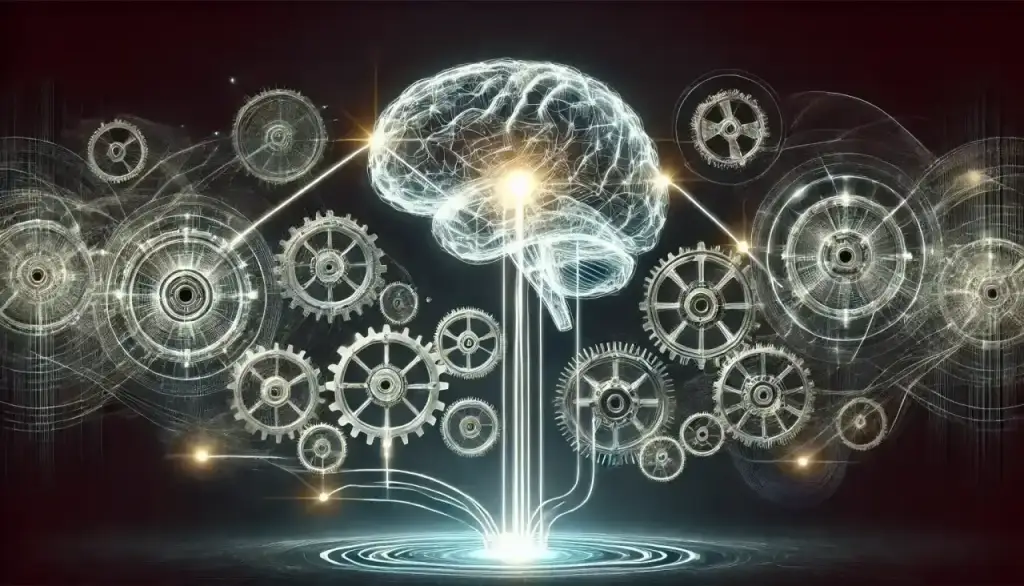
Do you have an idea? Artificial intelligence can build it.
Do you have a doubt? It can offer you a hundred different perspectives.
Do you just have noise? It can give it a useful shape.
Do you have a strategy? It can speed it up.
Do you have a vision? It can give it structure, time, language.
But all this happens only if you start thinking in a new way.
You don't need to be an AI expert.
We need to act like a mind that reasons by models, not by attempts.
Because those who think in models don't ask just any questions.
Ask questions that generate structure.
And structure, in AI, is everything.
Look at these two prompts.
The first is common. Everyone uses it.
Amateur prompt: “Write me a motivational LinkedIn post.”
The second is designed by a strategic mind.
Advanced prompt: "Write a post for LinkedIn aimed at senior managers in the logistics sector, with a professional but direct tone, which conveys the ability to optimize processes with concrete digital solutions. Use first-person storytelling, with a closing that invites discussion."
AI is not neutral.
It responds to precision with precision. It responds to the void with banalities.
This is why thinking better means achieving more.
You don't need to know all the tools.
You need to know the way you bend them to your architecture.
Every word you write in the chat is a brick of your competitive advantage.
Every structure you design is a thought form of your operational power.
Common questions generate common results.
But an advancedly designed question changes everything.
Because it imposes a structure, a context, a direction.
And AI responds exactly like a well-trained mind: it follows those in authority.
If you are confused, she will be.
If you are precise, she becomes so.
If you demand strategy, it produces structure.
This is the difference between those who get sentences… and those who get systems.
Between those who play with AI... and those who use it to build their own invisible advantage.
AI reflects the mind that activates it.
And your mind, now, is already changing the way you think.
When you use AI in an advanced way, you no longer speak: you command
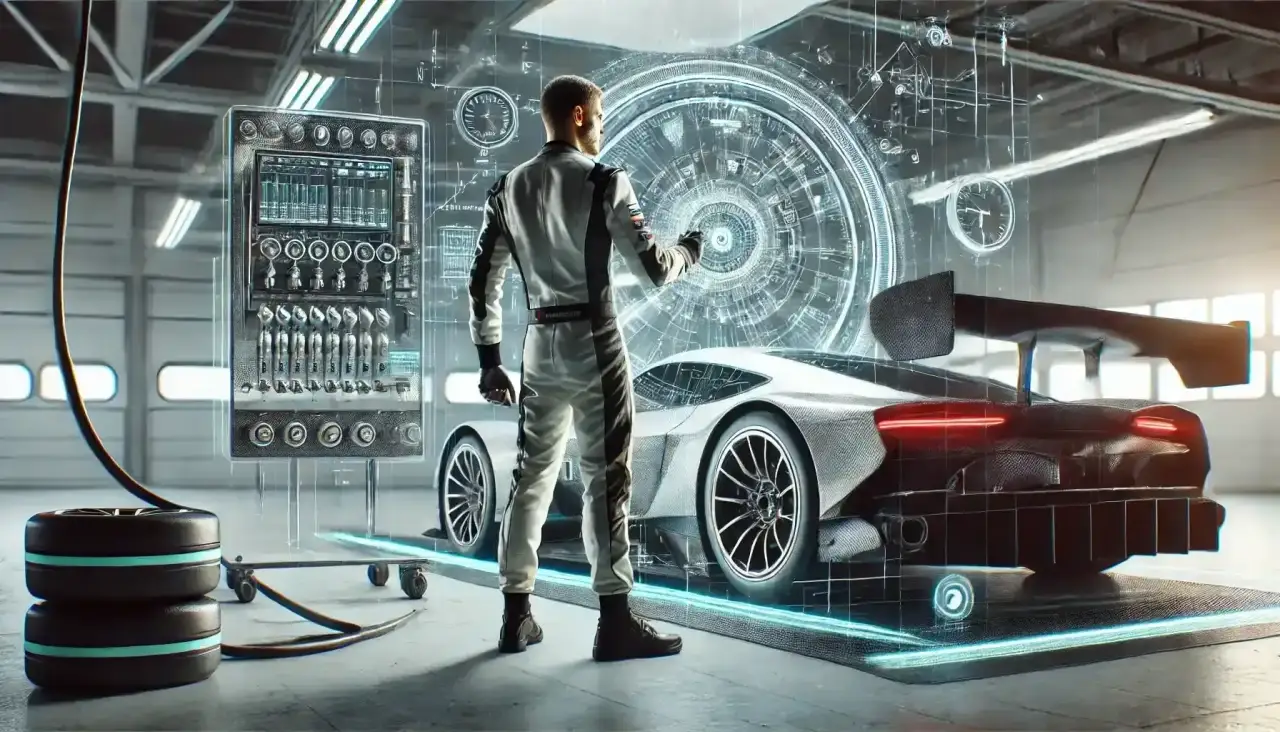
Those who work with artificial intelligence in an advanced way don't say it. It does.
He wastes no time wondering if the tool is powerful enough.
Plan, refine, orchestrate.
In silence, but with a relentless method.
Defines roles, objectives, expected behaviors.
Talk to the machine like you would talk to an elite collaborator.
“I explain the context, I tell you the goal, and then I want you to generate a proposal aligned with my vision.”
This is how AI works when it recognizes that on the other side there is not a user, but an architect.
And at that point the technology adapts.
He responds better.
Anticipate.
It is shaped by the priorities of those leading the conversation.
You don't need to know all the models.
You need to govern the logic of your interaction.
A three-step structure is sufficient:
- Definition of the context
Every interaction with artificial intelligence must start from a clear framework. Without context, AI navigates in the void and returns only approximation. With context, however, it becomes precise, targeted, aware of your intentions.
- Precision on target
It's not enough to just “get something”. You have to be able to say exactly what do you want to achieve, who is it aimed at, in what style, with what purpose. AI is not intuitive, it is reactive. The more direct you are, the more helpful she becomes.
- Indication of the type of result desired
Do you want a list, a narrative text, an action plan? Tell him. Specify form and function. When the output is defined first, the AI stops “trying” and starts trying produce consistently.
Everything else is style. And style is the mental trace you leave in every interaction: your invisible signature.
If you get used to building like this, AI will no longer seem like a tool.
It will feel like an invisible part of your creative process.
And while others play with the answers, you will start building decision infrastructures.
Because those who speak well... get words. But whoever structures thought… obtains multiplied executive power .
Consciously choose how to use artificial intelligence in an advanced way

You can continue as always.
Ask, receive, adapt.
Or you can take the leap.
Design, lead, build your strategic automation mental infrastructure.
Neither choice is wrong.
But only one takes you to a place from which it is impossible to return.
Because when you start using artificial intelligence in an advanced way, something inside you will change.
Not the AI. You.
Because AI doesn't change people.
AI amplifies who you are.
If you are messy, it will amplify your confusion.
If you are precise, it will multiply your effectiveness.
If you have vision, it will explode it in a hundred new directions.
But if you just try it, it will remain a toy.
If you use it to confirm who you are… it becomes applied mental power.
For this reason, those who choose to really use artificial intelligence in a strategic way begin to study it as one studies an ally.
Not to understand it in the abstract, but to make it part of your workflows, your projects, your way of thinking.
And that's exactly what happens in the artificial intelligence programming course
An operational approach that teaches you to integrate AI into your real processes, using C#, .NET and the only technology that never ages: the strategic mind.
It is not a course to learn how to use a tool.
It is a path to becoming the type of professional that artificial intelligence recognizes as an architect.
And here comes the real question.
Not if the AI works.
But if you are ready to become the kind of mind that she recognizes as a guide.
And when that answer comes… it will be impossible to ignore.
Artificial intelligence changes everything… if you start using it in an advanced way (even without realizing it)

At first you'll just feel like you're writing better prompts.
Then you'll start to notice that your responses are more coherent, faster, more connected to your true goals.
Not because AI has changed. But because you changed the way you think about them.
You'll start planning before you even write.
You will divide the problem into blocks.
You will distinguish between structure, content, context and tone.
You'll start using AI to create entire flows:
Emails generated from a predefined scenario.
Editorial plans created starting from real objectives.
Code generated based on standards you have established.
And when someone asks you: “But how do you use artificial intelligence so well?”, you won't be able to answer with a single technique.
Because it won't be a technique.
It will be a way of thinking.
Your thought will have become architecture.
And mental architecture is what distinguishes a user from a professional.
A professional who doesn't just write code or use tools, but who builds intelligent systems driven by personal logic.
This is what we begin to develop together in artificial intelligence programming course.
Because the real transformation is not knowing what to ask the AI.
It's knowing how to make her listen to you.
Using artificial intelligence in an advanced way is a calling for few. And you know it.

Whoever stops at the surface gets answers. Whoever goes deep gets leverage.
At this point, it is no longer a question of understanding what artificial intelligence can do.
It's about deciding who do you want to be while she works.
You can remain among those who try tools, compare outputs, and are satisfied with any result.
Or you can choose to become that rare figure who transforms every interaction with AI into a mental construction.
Because whoever has method, gets method.
Whoever has vision gets strategy.
Whoever has confusion receives fragments.
AI doesn't work miracles. It makes enhanced copies of your mental structure.
You don't have to know everything. But you have to know where to drive.
This is the real turning point that those who have completed the passage know well.
It's not about knowing the models or APIs by heart. It's about knowing how to recognize a conversational opportunity and bending it to your own logic.
A mental designer does not question the AI: assigns her a role.
It builds flows, defines constraints, anticipates scenarios.
And AI, in response, transforms itself into an assistant, an operational arm, an intellectual mirror.
This type of advanced use cannot be improvised.
It requires an internal shift, a new intellectual posture.
A more refined, structured, directive language.
Practical training that starts from the way you think and ends up with the way you write.
The Better Developer Method: from curious user to strategic mind
In artificial intelligence programming course you don't learn to use a tool.
You learn to design mental architectures that AI can interpret, follow, enhance.
We don't teach you how to copy prompts. We train you to build replicable systems to solve real problems, with an organized mind and a code that follows you, not chases you.
You will find out how to combine C#, .NET, and AI automation in one direction: yours.
Because you don't need to become an expert in everything.
You need to become a leader of your own logic.
If it's for you, you already know.
There's no need to convince yourself.
If these words spoke to you, it's no coincidence.
It's because a part of you recognizes the language of those who work deeply.
And he knows how to distinguish fleeting enthusiasm from permanent transformation.
The artificial intelligence programming course it's not for everyone.
It is for those who have already understood that using AI is not enough: you have to drive it.
And if you've made it this far, maybe... you've always known it.
Leave your details in the form below