

There is a precise moment in which those who work seriously with artificial intelligence stop being enthusiastic and start to become lucid.
It's not the moment the first prompt works, nor the moment the model returns a surprisingly brilliant answer.
It's when, after weeks of use, you realize that everything that was done left no trace.
Every interaction starts from scratch, every conversation seems to have no past.
Any improvement achieved yesterday disappears today.
It is at that point that something starts to creak, because a sensation emerges that is difficult to ignore: you are talking to a system that does not learn, but simulates learning from scratch every time.
And the more you work with solutions like this, the more apparent that becomes it's not enough to have a powerful model if what makes it really useful over time is missing.
Anyone experiencing this moment should not feel like a beginner.
But he is someone who has already overcome the initial enthusiasm phase, who has integrated APIs, tested flows, built prototypes, and now realizes that the real limit is not the quality of the answers, but the total absence of continuity.
This is where the right question arises, the one that separates the occasional user from those who are starting to think like architects.
How can I make sure that the system doesn't start from scratch every time, but build something that lasts over time?
From this question the concept of artificial memory takes shape, not as an accessory function, but as a structural foundation of any system that wants to be truly intelligent.
AI Memory: What It Really Means

When talking about memory in the field of artificial intelligence, we often tend to use a familiar concept to describe something that, in reality, is profoundly different from what we know in everyday life.
Human memory is made of experiences, connections, associations that stratify over time.
The memory of an artificial system, however, it does not exist naturally: must be designed, built and maintained.
A linguistic model, by its nature, does not keep traces of previous interactions.
Each request is processed as if it were the first, without any awareness of what came before or what will happen next.
This means that, without external intervention, the model does not learn in the usual sense of the term.
Many misunderstandings arise right here.
We tend to think that if a system responds well, then it is learning.
Actually it's just reacting in a statistically consistent way to what is provided to him at that moment.
Memory, therefore, is not an intrinsic property of the model, but an architectural element that must be designed with the same attention with which databases, flows or business logic are designed.
To understand what talking about artificial memory really means, it is useful to explicitly clarify what memory is not in an artificial intelligence system:
- It is not the model's ability to "remember" previous conversations independently.
- It is not a passive accumulation of data or unstructured logs.
- It is not a form of continuous learning similar to the human one.
- It is not an innate property of the model, but a behavior designed from the outside.
Clarifying what memory is not helps to better understand what it can and should become when it is designed correctly.
It is what allows us to maintain continuity, to recognize recurring patterns, to build a context that does not dissolve with each interaction.
When you understand this step, it completely changes the way you look at artificial intelligence.
It is no longer seen as an oracle to be questioned, but like a system that needs to be educated, structured and guided over time.
And it is precisely in this space that the real difference arises between an interesting experiment and a solution that can support processes full of complexity and responsibility.
Why models forget information
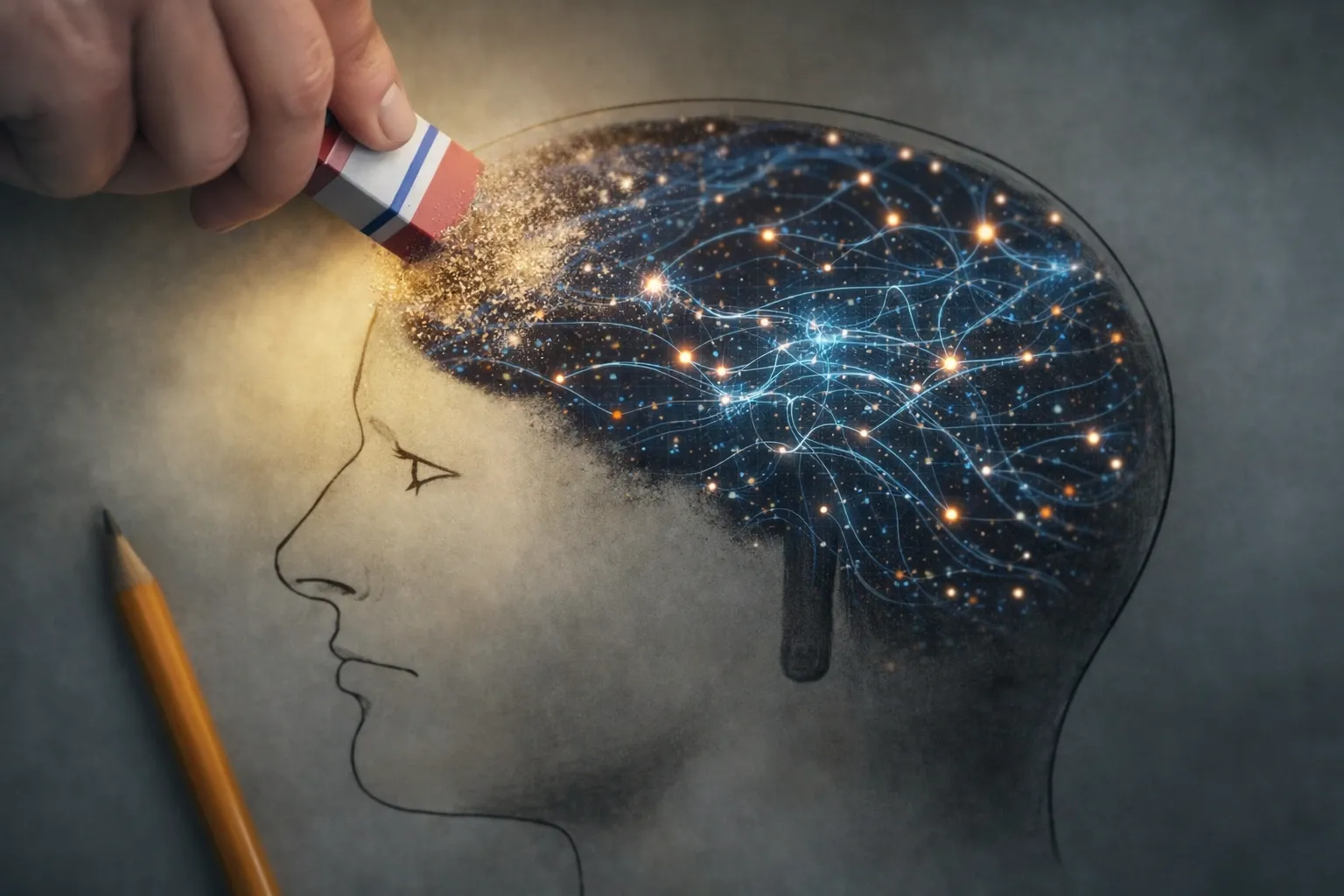
When you start working seriously with artificial intelligence, there always comes a moment when you realize that something doesn't add up.
The model responds well, sometimes surprisingly accurately, but just change the context slightly because everything that seemed acquired vanishes.
It's not a bug.
It is the natural behavior of systems that were not designed to remember, but only to react.
Language patterns have no memory in the human sense of the term.
They do not accumulate experience, they do not build an internal history, they do not develop a cognitive identity.
Each request is an isolated event, an instant photograph that leaves no trace.
This means that even if a system responds well one hundred times, on the hundred and first time it knows nothing about what happened before.
For those working on real projects, this quickly becomes a structural problem.
A system that does not remember forces us to repeat instructions, to reconstruct contexts, to continually provide explanations.
The result it is a feeling of constant fragility, as if every interaction were a gamble.
The key point is that models do not accidentally “forget”; they forget why they were designed to work the way they do.
Their strength lies in immediate processing, not in conservation.
And it is precisely this characteristic that makes a higher level of design necessary.
When we talk about memory in the AI field, in fact, we are not talking about a function to be activated, but about an architecture to be built.
It means deciding what needs to be remembered, for how long, in what form and with what priority.
It means establishing relevance criteria, updating rules, information retrieval mechanisms.
Without these choices, the system remains a prisoner of the present.
It responds well, but does not evolve; it works, but it doesn't grow.
This is where many projects stop, even if they technically work, because the lack of memory is not only a technical limit, but a conceptual brake.
It prevents us from building continuity, to capitalize on experience, to transform use into learning.
This is why those who work seriously with AI, sooner or later, always arrive at the same point: understanding that without a memory strategy we cannot talk about intelligence, but only about automatic reaction.
This step is often overlooked because it is not immediately visible.
It doesn't produce spectacular demos, it doesn't impress in the first few minutes.
But in the medium term it makes all the difference between a fragile system and a reliable one.
When memory is absent, every new request is a starting over.
When memory is designed, each new interaction becomes a piece that strengthens the system.
And it is here that the concept of "intelligence" stops being a slogan and begins to become a concrete, measurable quality that can be built over time.
If the model doesn't remember, it can't learn.
If he doesn't learn, he doesn't progress, and if it doesn't progress, it remains just a brilliant, but sterile tool.
This is why the real challenge is not to make a model speak, but to teach him to remember in the right way.
If you are starting to realize that the real limit is not the model, but the absence of a structure that allows him to remember and learn over time, then you are already one step ahead of most developers.
In Programming course with AI you don't simply learn to "use" AI, but to design systems that do not depend on improvisation, capable of growing, adapting and maintaining coherence over time.
This is where we go from experimenting to building solutions that actually work in production.
Like Qdrant it allows for persistent memory

There always comes the point of wanting to give real continuity to a system based on artificial intelligence.
At that moment, the question stops being “how do I get better answers.”
The question becomes much more concrete: How do I build a memory that works over time?
A memory that does not transform the system into something fragile, unmanageable or needlessly complex.
This is where tools like Qdrant come in, not as a technological fad, but as an architectural answer to a real problem.
The substantial difference compared to a traditional database is in the way information is represented and retrieved.
We no longer work with rows, columns and exact correspondences, but with meanings, similarities and conceptual relationships.
This radically changes the way a system can “remember” something, because it does not simply retrieve what is identical, but what is relevant in the current context.
In concrete terms, a vector memory allows you to obtain advantages that go beyond simple data storage:
- Retrieve information based on meaning and not to literal correspondence.
- Connect similar concepts even when expressed in different forms.
- Dramatically reduce noise informative during the search.
- Maintain consistency in your answers even in complex or dynamic contexts.
It is precisely this ability to work on meaning, rather than on form, that makes a truly useful memory possible over time.
When using a vector engine like Qdrant, each piece of information is transformed into a numerical representation that captures the meaning of the content, not its surface form.
This means that the system does not look for identical words, but similar concepts.
It doesn't compare strings, but intentions.
This is where memory stops being an archive and it becomes a true cognitive extension of the system.
The model no longer has to “remember everything” because it can retrieve what matters when it is needed, based on the current context.
This approach allows you to build applications that appear to remember, understand and adapt, while remaining technically consistent and controllable.
The real strength of this approach, however, lies not only in the technology, but in the possibility of governing it.
A vector-based memory can be updated, refined, filtered.
It can grow with the system, without degrading its performance.
It can be organized by domains, roles, levels of importance.
This means that you are not simply adding an extra component, but you are defining a new way of thinking about flow of information.
The system stops being a black box that produces answers and becomes a structure that reasons by association, just like an expert person would do by connecting events, experiences and contexts.
In this sense, memory is not a technical accessory, but the heart of the system's behavior.
It is what allows us to move from a reactive interaction to a conscious interaction.
From a set of isolated responses to a coherent path over time.
When a memory is designed well, the system begins to show a new quality: continuity.
The answers no longer seem to be generated "in the moment", but created on a knowledge base that grows, refines and adapts.
And it is precisely this continuity that makes the illusion of intelligence possible, even knowing that it is a mechanism built with engineering precision.
This is where we understand why talking about memory is not a technical detail, but a strategic choice.
Because once the system is able to remember in the right way, everything else (precision, reliability, usefulness) becomes a natural consequence.
AI memory applied to RAG

When addressing the topic of artificial memory applied to artificial intelligence systems, it is essential to clarify that it is not a simple storage mechanism.
Instead, it is a real paradigm shift in the way a system processes, retrieves and uses information.
Retrieval Augmented Generation was born from the need to overcome the limits of traditional models.
These models respond based on what they “know” at the time of training, but have no real continuity over time.
With RAG, the model no longer works in isolation, but constantly communicates with an external knowledge base, updated and structured.
This means that each response is not the result of a simple statistical generation, but the result of a process that combines information recovery and synthesis capabilities.
The real value of this approach emerges when the system must deal with complex, changing or rich in specific information contexts.
In these cases, memory is no longer an accessory, but becomes the heart of the functioning of the entire system.
Through RAG, the model can draw on documents, company knowledge, historical data and updated content without having to incorporate them into their training.
This allows you to keep knowledge always updated and coherent, avoiding the rigidity typical of static models.
The real strength of the RAG lies in its ability to connect the current context with relevant information preserved over time.
It's not simply about retrieving data, but about selecting what is relevant based on the current situation.
This way, the system not only responds correctly, but also contextually appropriately.
Memory therefore becomes a reasoning tool, not a simple archive.
When designed correctly, it allows the system to behave consistently even in complex and variable scenarios.
This approach drastically reduces the risk of generic responses or out of context, increasing the overall reliability of the solution.
The real difference emerges over time, when the system is used continuously.
Every interaction contributes to enriching the context, improving the quality of future responses.
RAG thus allows you to build a memory that is not static, but evolutionary, capable of adapting to changes in the application domain.
In this sense, memory is no longer a simple technical support, but a strategic component of architecture.
It's what allows the system to grow together with the organization who uses it.
When memory is consciously designed, the system not only responds better, but becomes progressively more useful and reliable.
It is this step that transforms a set of features into a truly intelligent platform.
And this is where RAG demonstrates its full value, not as a trendy technology, but as the foundation of truly scalable and sustainable solutions over time.
If it is clear to you that a RAG without a real memory strategy it's just a more sophisticated search engine, then you are already thinking like someone who designs serious systems.
In Programming course with AI Let's address this very point: how to transform the use of models and vectors into solid, maintainable and real value-oriented architectures for the business.
Not theory as an end in itself, but design choices that make the solutions reliable over time.
Concrete advantages of an artificial memory

Even if an artificial memory is designed correctly at the time of design, the benefits do not emerge as an immediate spectacular effect, but as a progressive transformation of the way the system works.
It is not a dramatic improvement, but a new stability is created that is felt day after day, interaction after interaction.
The first concrete advantage is operational continuity.
A system with memory he brings with him what he has already learned, recognizes recurring patterns, maintains coherence over time, does not start from scratch every time.
This means that the answers are not only correct, but contextualised, aligned with previous decisions and consistent with how the system has been used up to that point.
In practice, the accumulated experience is not lost.
Each interaction becomes a brick that helps make the system more stable and reliable.
It is a subtle change, but those who experience it notice it immediately: the system seems to "understand better", even if in reality it is only working on a well-organized memory.
Another decisive advantage concerns the reduction of operational complexity.
When memory is designed correctly, there is no longer any need to repeat instructions, explain contexts or reconstruct the big picture every time.
The system retrieves the information independently relevant and uses them in the most appropriate way.
This translates into less friction, fewer errors, and less time spent correcting or clarifying.
Those who use it can focus on valuable decisions, rather than wasting energy constantly driving the car.
Then there is an often underestimated but crucial aspect: trust.
When a system demonstrates consistency over time, people begin to trust it, and trust it it radically changes the way it is used.
A reliable system is not questioned with distrust, but involved in decision-making processes, it becomes a real support, not an experiment to be handled with caution.
This transition is essential if the goal is integrate artificial intelligence into operational flows newspapers and not relegate it to a simple accessory tool.
Another concrete advantage concerns scalability.
A system with well-designed memory grows in an orderly manner, without accumulating clutter.
It can handle larger volumes of data, users and use cases without losing internal consistency.
This is particularly relevant when AI becomes an integral part of business processes.
Without a solid memory structure, any expansion increases the risk of inconsistencies and unpredictable behavior.
With well-designed memory, however, growth becomes sustainable and controllable.
Finally, there is a more subtle but decisive advantage: the quality of decisions.
A system that remembers, connects information and keeps track of past experiences is able to provide more contextualized, more sensible, more useful answers.
Not because it “understands” like a human being, but because it operates on a structured and coherent information basis.
It is in this passage that artificial intelligence stops being a simple reactive tool and starts to become a real support.
Not because he thinks, but because he remembers the right way.
And it is precisely this ability to build continuity over time that distinguishes an experimental system from a solution ready to be used in real, complex and constantly evolving contexts.
Real examples of AI with memory

When we talk about artificial memory, the point is not to imagine futuristic scenarios, but observe what is already happening in organizations that have started to use it in a concrete way.
In many structured companies, memory is no longer an abstract concept, but an operational element that affects daily work.
An emblematic example is that of large financial companies, where internal support systems are not limited to answering isolated questions, but they reconstruct the context of the requests drawing on a vast internal knowledge base.
Reports, analyzes and historical documents are recalled in a coherent manner, allowing consultants to obtain answers aligned with the decisions already made and the logic of the organization.
In this way the AI does not improvise, but thinks like someone who really knows the history of the company.
A similar approach is also found in advanced technical assistance systems, such as those adopted by SaaS platforms (software accessible via the internet) that manage large volumes of requests.
In these contexts, artificial intelligence does not simply provide standard answers, but recognizes recurring patterns, identifies already validated solutions and proposes them in a targeted way.
This is the case, for example, of support systems that use a memory based on internal documentation and previously resolved cases, drastically reducing intervention times and improving the quality of service.
Here memory is not used to "remember everything", but to avoid starting from scratch every time.
Another area in which this approach shows all its strength is the management of corporate knowledge.
There are platforms that allow you to query the entire information asset of an organization as if it were a single shared brain.
A system capable of connecting documents, decisions and dispersed knowledge into a coherent and easily queryable structure.
Documents, strategic decisions, procedures and notes become part of a memory that can be consulted contextually, preventing critical information from remaining buried in archives or linked to individual people.
In this way knowledge it doesn't disperse when someone changes roles or it leaves the company, but remains available and reusable.
In all these cases, the point is not intelligence in the abstract sense, but continuity.
A system that remembers, connects and reuses what it has already seen becomes a real decision support.
It does not replace human judgment, but strengthens it, offering a solid context to think about.
It is this ability to maintain memory over time that transforms a set of automatic responses into a reliable tool, capable of accompanying people and organizations in daily and strategic choices.
When you observe systems that really work, you understand that the difference is not in the algorithm, but in the architectural decisions made at the beginning.
In Programming course with AIWe work precisely on this: transforming real cases into repeatable solutions, avoiding structural errors that block growth.
If you want to stop improvising and start designing solutions that stand the test of time, this is the right starting point.
Common mistakes to avoid with AI memory

Preparing to seriously address the topic of artificial memory, one of the most frequent mistakes is thinking that it is enough to "add" it to a system existing to automatically solve all problems.
Over time, some recurring errors emerge that compromise the effectiveness of any memory-based system:
- Accumulate information without a strategy selection or update.
- Confusing amounts of data with quality of knowledge.
- Ignoring context where the information is retrieved.
- Rely completely on technology without a human control logic.
All these errors have the same origin: the idea that memory is an accessory, rather than a structural component of the system.
This belief often leads to building fragile solutions, which seem to work in the first tests but they collapse as soon as they increase in complexity and real load.
The first mistake is treating memory as a simple data container.
Many systems store information without a precise logic, accumulating heterogeneous contents that become difficult to query and even more difficult to interpret.
In these cases memory does not help, but confuses, because returns information disconnected from context where they should be used.
A second very common mistake is to think that "more memory" automatically equates to "better answers".
In reality, accumulating data without a clear structure worsens the quality of the result.
The system begins to fish for irrelevant content, mix distant concepts and produce increasingly less reliable answers.
Memory, to really work, it must be selective, not omnivorous.
Another frequent problem arises when memory is designed without considering the evolution of the system.
Many solutions work well at first, but do not include mechanisms for updating, cleaning or reorganizing information.
With time, what was supposed to be a support becomes a burden, slowing performance and reducing the quality of responses.
Then there is the most subtle, but also the most dangerous mistake: completely delegating the task of "understanding" to technology.
An artificial memory does not replace human judgment, nor can it decide what is important in an absolute sense.
Without clear guidance, it risks amplifying noise, ambiguity and poor choices.
Many projects fail precisely because we start from the technology instead of the problem.
You implement a sophisticated solution without having defined what the system really needs to remember, why it needs to do it and in which situations that memory will be useful.
The result is a complex structure that adds no real value.
Yet, when memory is designed with intention, everything changes.
It is no longer a passive deposit, but a living element that evolves together with the system.
It becomes a strategic support, not a cost to manage.
Understanding these mistakes is essential to avoiding them.
Because the difference between a system that works and one that fails rarely lies in the technology chosen, but almost always in the way it is designed and integrated.
And it is precisely from this awareness that the possibility of building something really solid arises and long-lasting.
The future of artificial memory applications

If we observe the evolution of digital systems with a minimum distance, it becomes evident that the real leap does not concern computing power, but the ability to remember.
The future of artificial intelligence is not made of increasingly faster responses, but of systems that understand the context in which they operate and maintain it over time.
For years we have become accustomed to thinking of AI as a set of isolated functions, capable of solving individual problems but incapable of building continuity.
That model is showing all its limits.
Companies are no longer looking for tools that respond, but systems that accompany the processes, that adapt, that grow together with the organization.
The direction is clear: the future belongs to solutions that know how to remember, correlate and learn progressively.
Not because they "imitate the human being", but because they better reflect the way organizations work.
Decisions are never born in a vacuum, but from a context made of constraints, past experiences, objectives and compromises.
In this scenario, artificial memory becomes the element that allows AI to escape from the experimental dimension and enter the operational one.
A system with memory not only reacts to inputs, but recognizes patterns, understands priorities and maintains coherence over time.
This makes it reliable, predictable and truly useful in the long run.
The applications of the future will not only be evaluated for the quality of the answers, but for their ability to learn from experience.
An assistant who forgets everything after every interaction cannot support complex processes.
A system that remembers, however, becomes progressively more effective because it integrates the past into present decisions.
This change will have a profound impact on the way companies design software.
We will no longer just talk about functionality, but about memory as a central architectural component.
Those who know how to design systems capable of storing, interpreting and using information over time will have a real competitive advantage.
In this context, artificial intelligence stops being a simple automation tool and becomes a true strategic ally.
Not because it "thinks", but because it preserves what matters and makes it available when needed.
The future belongs to who will be able to build systems that remember, they learn and adapt without losing coherence.
And it is precisely in this capacity that the difference between a software that works and one that really makes the difference lies.
Those who really work with AI know one fundamental thing: the problem is not "using AI", but building systems that really know how to remember, adapt and grow over time.
And this is exactly where many stop while few decide to take the next step.
The Programming course with AI was created for those who no longer want to limit themselves to experimenting, but want to design solutions that really work.
Not to collect demos, but to build systems that stand up over time, that generate concrete value and that don't collapse at the first difficulty.
If you have recognized the limits of "disposable" models, if you have realized that without a real architecture, memory becomes a problem rather than an advantage, then this path speaks exactly to you.
Here you don't find theory as an end in itself, but a different way of thinking about software, AI and on the role you want to have as a professional.
This is not a course for those looking for shortcuts.
It's for those who want to stop improvising and start building systems that work, today and over time.
Leave your details in the form below