

Have you ever built something beautiful with your own hands, something you were proud of, just to see it collapse when you needed it most?
It happens to architects when the building they designed starts to creak.
It happens to chefs when the perfect dish is ruined at the last second.
And it happens to us developers when the API that seemed invincible decides to give up just when all eyes are on us.
It's not just a matter of code going wrong.
It's that one feeling of betrayal that hits you in the chest.
That voice in your head that whispers, “Maybe I'm not as good as I thought.”
A system can pass every unit test and still fail in production.
It is the classic scenario in which the API, although technically correct, was not built with due attention to fault tolerance.
It is in these moments that we understand how different the logic of "it works now" is from that of "it continues to work".
ASP.NET Core has established itself as one solid platform for those who develop APIs that must stand the test of time.
It doesn't just provide tools for writing endpoints: it offers native mechanisms to handle exceptions, control security, monitor flows, and prevent bottlenecks.
When a team adopts ASP.NET Core with a architectural vision, the goal is no longer simply "writing working code", but building reliable, maintainable solutions ready to handle even the unexpected.
It's not just about operational tranquility, but about real technical maturity, which allows a project to remain stable even under pressure.
This guide is not yet another technical tutorial that you will forget in a week.
It's my gift to you: everything I wish I'd known before that disastrous presentation.
It's the roadmap that it will transform your approach to APIs from “I hope it works” to “I know it will work.”
I will take you by the hand through every single aspect, but not like a cold and distant manual does.
As would a friend who has already walked that thorny road and wants to spare you from the scratches he has made.
You will discover why some APIs thrive while others die silently.
You will understand the secret of those who manage to sleep peacefully even after having been released into production.
You will learn to build systems that not only work today, but will continue to work when everyone else has given up.
I'm not promising you the magic solution to all the world's problems.
I'm promising you something more precious: the competence to face any challenge with the confidence of someone who knows what they're doing.
At the end of this journey, when you look back, you will no longer recognize the developer you were.
You will have acquired that inner tranquility that only comes from true mastery.
That confidence that can be seen in the eyes of those who have transformed their passion into mastery.
Your smartphone will continue to ring at night, but this time it will be for congratulate you, not to wake you up with bad news.
Are you ready to start this transformation?
Because RESTful APIs are the first building block of any modern system

Have you ever walked into a crowded restaurant, sat down at a table and waited for someone to notice you?
The minutes pass slowly while you observe waiters moving in confusion, without a clear direction, as if each one was following a different script.
Some customers receive immediate attention, others seem forgotten in a corner, with their eyes lost and their patience hanging in the balance.
It's one feeling of abandonment disguised as service.
Now imagine the opposite.
A serene, orderly environment, where every movement is part of a choreography perfect.
As soon as you cross the threshold, a waiter welcomes you with a smile, takes you to your table, naturally hands you the menu and takes your order following a protocol that the staff knows by heart.
No frantic rush, no forgotten dishes.
Every customer receives attention, every request is answered and every wait has meaning.
It's not just a question of efficiency, it's a question of experience.
This is exactly the difference between a web application built without precise rules and one that uses well-designed RESTful APIs.
In the first case, you have components that talk to each other in a disorderly way, each with their own language, each convinced that they are at the center of the system.
In the second, you have a cohesive ecosystem where each party knows exactly what to do, when to do it, and how to react to each other's requests.
REST isn't just an acronym to slip into interviews to seem up-to-date.
It's a philosophy concrete fact that 70% of developers implement poorly, calling anything that uses HTTP and JSON "RESTful".
Behind the concept of "Representational State Transfer" lies something deeper than a simple technical convention: there is the desire to establish a universal language between applications.
Think of RESTful APIs as a shared dictionary, where every verb has a clear meaning, every endpoint a precise intent, every response a well-defined value.
When the frontend needs data, it knows how to get it.
When the backend needs to respond, it knows exactly how to do so in a readable, predictable, reliable way.
It's like going from a Tower of Babel to a clear conversation.
But it's not just order.
It is freedom; a freedom that arises from standardization.
Because, when you no longer have to invent every time how to communicate between systems, you can finally focus on what matters: build solutions that work, truly improve the user experience, create code that others can understand without having to decipher it.
GET, POST, PUT, DELETE: you know them.
But how many senior developers have you seen using POST to read data "because it's more secure"?
Spoiler: it's not.
But when you use them right, they become instruments in a symphony that every developer in the world can follow without stumbling.
REST gives you the ability to write code that speaks a familiar language to anyone, anywhere in the world.
And when you combine it with ASP.NET Core, that symphony comes to life with rare elegance.
The framework accompanies you like an invisible conductor, helping you to respect good practices, without ever forcing you into too rigid cages.
RESTful APIs, if designed well, are not just a good habit.
They are a professional investment.
They are the guarantee that your code can be understood, extended and maintained even years after you have written it.
And it is precisely there that the real difference arises between those who write code and those who build value.
Build a solid API foundation in ASP.NET Core, before writing code

Have you ever tried to assemble a piece of furniture without looking at the instructions, convinced that you could understand everything on your own?
At first it seems easy: pieces of wood, screws, an Allen key.
Then, after two hours of swearing and failed attempts, you find yourself with a rickety structure that collapses at the first gust of wind.
API applications follow the same ruthless law.
You can throw random code in a folder, create controllers wherever you want, mix business logic with system configuration, and maybe at first everything will seem to work.
But when the time comes to add a feature, fix a critical bug, or pass the project to a colleague... you'll find that you've built a house of cards that's destined to collapse.
The structure of an ASP.NET Core application is not useless bureaucracy.
When you create a new API project with the Visual Studio template, you're not just getting nicely organized files and folders, you're inheriting years of collective wisdom, of mistakes made by thousands of developers before you, of field-tested solutions in scenarios you can't even imagine.
Every folder has a reason to exist, every file has a precise responsibility, every convention hides a lesson learned at a cost.
Controllers, Models, Services, Middleware.
Names that seem cold on paper but that tell stories of projects saved from oblivion.
The essential structure of every well-architected API project:
- Program.cs: the conductor who decides who plays and when
- Controllers: managers who coordinate without doing everything themselves
- Models: the shared grammar that ensures everyone speaks the same language.
- Services: the beating heart where true business logic lives
- Middleware: The invisible filters that process every incoming request
Each folder has a specific responsibility, each file solves a specific problem.
The Controllers folder houses your business managers.
Each controller is a specialized manager who knows how to manage a specific domain of your application.
ControllerBase is not magic.
It's a class with methods that simplify tedious things like parameter binding and response serialization.
That's all.
Too bad that 90% of the controllers I see are managers who do everything: validation, business logic, data access, logging.
Like that colleague who doesn't know how to delegate and then complains about burnout.
It doesn't do everything by itself, but coordinates the work of other components with the elegance of those who know how to delegate in the right way.
When a controller begins to accumulate responsibilities that are too different from each other and becomes a central point of the entire logical flow, that is the first sign that your architecture has lost balance and is starting to creak under the weight of undistributed decisions.
Models are not just inert data containers, they are the common language that allows all parts of your application to understand each other.
They are the defining social contract how information travels through the system.
Designing clear and consistent models means giving months of tranquility to the you of the future.
But the real magic happens in the Services folder, where the business logic that makes the heart of your application beat lives.
There are no magician's tricks or improvised creative solutions here, there is code that solves problems real with the elegance of well-thought-out simplicity.
Dependency Injection is not just a sophisticated design pattern; it's the difference between building monolithic applications that are impossible to test and modular systems that grow gracefully.
When you configure your services in the DI container, you are creating an ecosystem where each component can evolve independently without breaking the rest of the system.
It's like turning a forever stuck puzzle into bricks that you can recombine endlessly.
This structure it doesn't limit your creativity, it enhances it.
When you know exactly where to put each piece of code, when you have clear conventions to follow, when your application breathes at a predictable pace, then you can focus on solving complex problems with elegant solutions.
The developer who truly understands the ASP.NET Core architecture doesn't waste time reinventing the wheel.
It uses the solid foundation that the framework gives it to build skyscrapers of functionality that touch the clouds.
If this architecture has given you a glimpse of how robust your next application could become, perhaps it's time to ask yourself: what do you really need to build it without compromises, without wasted time, without avoidable errors?
There is a path that starts from here and leads much further.
And it starts with just one step.
Leave your contact details, and one of our consultants will let you know if it's the right one for you.
Controllers in ASP.NET Core: The exact point where chaos becomes order

Do you remember the first time you drove alone, when you got into the car with no one next to you and felt the sudden weight of freedom?
My hands were shaking slightly, my heart was beating fast, and despite having studied every driving theory, every rule, every sign... everything seemed different, more difficult, more real.
It was your first real test.
Creating an API controller in ASP.NET Core is often just like this: you know in theory what to do, but when you're faced with the blank page, the mind is crowded with doubts and insecurity takes over.
You've read articles, watched tutorials, but now it's your turn to take the wheel and make the application move decisively, without hesitation.
What if you get everything wrong?
The truth is that you don't have to be perfect on the first try, nor do you have to feel ready in every detail.
The great thing is, you're not alone: ASP.NET Core is designed to do just that accompany you on this journey, not to get you into trouble.
It provides you with guides, handles, already beaten paths that you can follow without losing your creativity.
It's like having an internal navigator.
When you start writing your controller class, you're not just typing lines of code, you're building a bridge between an idea and its realization, between something that was previously only in your head and a structure that can actually be used by others.
Your controller becomes the gateway to the features you imagined.
It's not just code.
And if it all seems too complicated, breathe.
The beauty of this approach is that you don't have to make everything up from scratch, but you can rely on already tested conventions, on models that work and that allow you to learn as you go.
Every method you add, every little action you build, is a step forward in your evolution.
You are learning by doing.
Writing your first method that responds to an external request is a special moment.
You take something simple, like retrieving information to show, and transform it into a concrete gesture that connect your work to someone out there, waiting for a clear and functional answer.
It is a form of invisible dialogue.
You begin to understand that each part of the controller has a role, but you don't need to know them all by heart to get started. All it takes is a small mental scheme, a clear intent, and the rest will come by itself.
Like when you learn to speak a new language: at first you stutter, but then the words come.
And they become fluid.
And when you finally press “Run” and see your first result appear on the screen, perhaps a simple message in JSON or a confirmation of success… something happens there.
You're not just testing a feature, you are looking at the tangible result of your effort, of your desire to grow.
And it's a powerful feeling.
You have built something that did not exist before, and which can now be used, touched, expanded.
You've taken the first step toward becoming not just a developer who writes code, but one who creates connections between people, systems, and ideas.
Welcome to your first real controller.
Design clean, predictable calls by making sense of HTTP requests

Have you ever entered a bookshop where the books seem to be distributed by someone who doesn't believe in order, logic or clarity?
You are looking for a novel and you find a law manual in your hands, or you are looking for inspiration and stumble across an essay on thermodynamics.
Every step is a gamble, every corner a bet, every shelf an invitation to waste time instead of discovering something useful.
You feel confused, ignored, almost rejected from a place that was supposed to help you, not make you feel lost.
Now visualize the opposite: an orderly, elegant, welcoming environment, where each book is in its place and each section already tells you what you will find.
As soon as you enter, your gaze understands the map, your hands instinctively go towards what you are looking for, without hesitation or unnecessary frustration.
Novels on the right, travel guides on the left, biographies at the bottom, technical manuals far from fantasy stories and personal stories.
In a few moments you feel accompanied, as if whoever designed that space knew you and had thought of you.
This is the power of an API built with order, consistently, with respect for the HTTP verbs that are its natural language.
It's not about technicalities for purists, but about making every interaction with your system understandable, stable, predictable, and therefore rewarding.
HTTP verbs like GET, POST, PUT and DELETE are not simply details relegated to technical documentation, but represent the invisible grammar that allows the digital world to communicate coherently and function smoothly.
Using them correctly means writing a melody that others can play, understand, improve without stumbling.
Here's what they express at the heart of every well-designed API:
- GET: it is used to obtain data without modifying it, it is safe to repeat and perfect for everything that only needs to be read
- POST: it creates new resources, it is the gesture that gives life to something, and every time you call it the result changes, because it generates something new
- PUT: Updates or completely replaces an existing resource, is consistent over time, and repeatable without side effects if the data does not change
- DELETE: deletes a resource and even if it is called several times, it always produces the same result: what needs to disappear, disappears
When you write everything using POST because “it works anyway”, you are giving up the clarity and trust you could generate in those who use your API.
It's like mixing novels and tax regulations on the same shelf: maybe someone understands, but almost no one will willingly stop and look.
An API that uses HTTP verbs well is like a neat library: one look is enough to understand where to go, and from there the journey begins.
Whoever reads understands, whoever calls gets what is expected, anyone who builds on your work can improve it without having to rewrite it from scratch.
And when your code begins to convey this feeling of security and coherence, you have reached a level that few really know how to build.
You didn't just write some working lines, you have created a space for others to move into, create, evolve, without losing your compass.
If those verbs have awakened in you the desire to write code that breathes like a human language, it's a sign that something is moving inside you.
Don't be satisfied with knowing how they work: discover how to make them vibrate in a system that speaks to the world with surgical precision and the soul of an architect.
Leave us a contact, we will show you the next level.
How to manage incoming and outgoing data reliably with JSON without misunderstandings

Have you ever tried to tell someone a vivid dream, only to discover that words are never enough to convey the intensity of those confusing and fascinating images you experienced while you slept?
You try to reconstruct the details, you cling to the strongest memories, but something is lost always in the translation between what you feel inside and what you can really say.
You know exactly what you felt, you know what you saw, but when you try to explain it, everything seems blurry, awkward, incomplete, almost gone.
Here, something similar It also happens to C# objects..
They live in an orderly, predictable environment, made up of clear rules and well-defined roles, where each element has a precise function and everything flows in perfect balance.
Each property has a purpose, each class collaborates harmoniously with the others, everything is designed to coexist without conflicts in the application's memory.
But as soon as these objects have to leave their world and communicate with the outside, they must transform, they must adapt to a less protected, more chaotic but also freer reality.
They need to learn to speak in JSON.
The JSON format, i.e. JavaScript Object Notation, is not just a technical tool: it is the language with which applications exchange information on the modern web.
It's simple to read, easy to build, and understood by virtually every technology out there, from the C# backend to the frontend in React, from a Java microservice to a serverless function in Node.
It's like a universal language which allows different worlds to communicate without the need for translators.
It is the invisible basis of many systems that we take for granted today.
When you return an object from an API in ASP.NET Core, you're not just completing a task, you're putting a message out into the world, a message that someone else will have to read, understand, and use to do something useful.
Behind that JSON response, a special translator works: System.Text.Json, which takes care of making everything clear and coherent.
Each serialization is a form of communication which, because it represents an interaction between different worlds.
It's much more like writing a letter than filling out a form.
The fundamental tools for transforming objects into JSON, explained simply:
- If you want a name in the JSON file to be clearer or more readable to the recipient, you can give it a different name than the one used in the code, without changing the internal workings.
- If there is information that is not useful to those looking at the response or that you prefer not to show, you can simply decide not to have it appear in the JSON.
- To make the names in the JSON more similar to those used on modern websites, you can choose a simpler and more recognizable writing style, one that starts with a lowercase letter and then continues with uppercase letters.
- If you have data linked together that risks creating confusion or problems, there is a function that manages it on its own, avoiding errors and simplifying all the work.
- If you want to better control how your JSON looks like while you're working, you can activate a mode that makes it tidier and more readable, with spaces and indents that help you understand each part.
When serialization is neglected or approached superficially, serious problems can arise: confidential data leaking involuntarily, incomprehensible errors for those receiving the answers, frustration for those who expected a clear and simple to use interface.
Serializing doesn't just mean exporting something: it means telling it in a way that makes sense to those who receive it, without leaving anything important out and without including anything dangerous.
This sounds easy in theory, but in a real-world context things can get complex quickly.
When everything works as expected and your JSON appears tidy, readable and complete in the browser, you know you've done much more than "write code".
You created a passage between two worlds, you took something internal and made it useful externally, you allowed others to use your work without misunderstanding.
And perhaps in that moment you realize a profound truth: developing today does not just mean planning, but also, and above all, knowing how to communicate in an effective, precise and human way.
API Security: Avoid surprises in production by protecting what really matters

Imagine being the manager of a private club in the beating heart of Manhattan, where every detail contributes to defining the exclusive identity of the venue.
Every evening dozens of faces crowd at the entrance, some already known, others new, still others with the intention of sneaking in among the guests.
You can't question everyone, you can't let chance decide who comes in, and you have to do it without disrupting the guest's experience.
You need a method.
Your API, in a certain sense, experiences the same dynamic every day, but with even greater complexity and without the elegance of a doorman in a tuxedo.
It has no eyes to recognize faces, it has no hands to restrain intruders, it has no ears to listen to convincing excuses or false stories.
Every request is a gamble, every connection is an unknown, and the speed with which decisions must be made is inhumane.
Criterion is needed.
An exposed endpoint without protections it's like an emergency door left ajar, invisible at first sight but dangerously accessible to those who know how to look for it.
Implementing JWT in ASP.NET Core is not paranoia, but awareness that every byte is an invitation to trust, and every token is a mutual oath.
A well-formed and well-signed JSON Web Token tells a whole story of authentication, authorization and temporal validity.
It's not just technique.
When a user authenticates, he does not receive a simple identifier, but a digital pass containing everything the system needs to know.
Inside a JWT, identities, permissions, roles, deadlines and cryptographic signatures coexist which make each token unique, unalterable and reliable.
It is a technology that allows the user to move between your features without having to call the database every time and increases their professional profile, positioning them better in the market.
The [Authorize] attribute seems like a marginal detail for those who have never seen a system under attack, but it becomes an irreplaceable guardian in production.
With a single keyword, you can lock down entire groups of endpoints, preventing even the most skilled script kiddies from accessing them.
You're saying that you need valid credentials to get in, not just good intentions or known URLs.
It is active protection.
The security levels that every modern API must implement:
- JWT Authentication Tokens signed: who travel with built-in identities and permissions
- [Authorize]: Block endpoints at the controller or action method level
- Role-based Authorization: Defines who can do what with `[Authorize(Roles = "Admin")]`
- Custom Policies: Complex authorization logic based on context and behavior
- HTTPS everywhere: Encryption mandatory, not optional in 2026
To protect all this, HTTPS acts like an invisible cloak that envelops every request, preventing wiretaps, alterations and prying eyes.
in 2026 it is no longer optional, it is no longer a plus: it is the very foundation on which to build relationships of trust between client and server.
Enabling RequireHttps is not just technical correctness, but a moral declaration towards those who entrust their data to you.
It's respect.
But even the best security can fail if failure communication is sloppy, cruel or too explicit to be safe.
Replying with a simple 401 is no longer enough: you have to find a balance between not informing the attacker too much and not frustrating the good faith user.
Good management of authorization errors is like a good bouncer: decisive, silent and capable of discreetly indicating the exit.
It's defensive elegance.
When you manage to build a system that recognizes, protects and guides, you haven't just written code: you've built an armored digital citadel.
And as you watch authenticated users move frictionlessly between your APIs, you realize that safety is not an obstacle to the experience.
It is its most precious guarantee.
When you begin to understand that protecting a system is an act of respect, not just defense, you realize that security is never just technical.
It's identity, it's trust, it's invisible leadership.
If it resonates with you, if you feel that this is the type of software you want to design... leave us your details.
We're looking for someone just like you.
API incident management: inevitable errors, avoidable disasters

Have you ever contacted customer service and heard a frustrating, impersonal response like "An error occurred, please try again later"?
At that moment you are no longer a person with a real problem, but just a nuisance to be resolved as quickly as possible.
You feel ignored, not listened to, almost rejected by those who should be clearly guiding you towards a solution.
It's an experience you won't forget.
Your APIs, if poorly managed, can cause exactly the same feeling of abandonment and disinterest in those who use them every day.
A 500 without a body, a 400 with a generic message, a response that says neither what went wrong nor where to look: the developer who calls your API stops, opens Postman, relaunches the request and wastes twenty minutes reconstructing on his own what you could have told him in three lines of JSON.
Every unstructured error is debug downloaded to those who integrate you. And whoever integrates you, the next time, thinks twice.
You're losing more than just a bad call.
Error management has never been a purely technical issue, and those who believe this live in the illusion of a code devoid of fragility.
Every mistake is an extraordinary opportunity to transform a moment of tension into a gesture of clarity, of help, even of humanity.
When something breaks, and sooner or later it always happens, you can choose whether to raise walls or build bridges.
Choice makes all the difference.
Problem Details, described by RFC 7807, is more than a standard for HTTP errors: it is empathy rendered structure.
Instead of cryptic messages reserved for internal developers, you can finally provide answers that tell what happened and how to deal with it.
Each error becomes a detailed story, with title, description, code, support links and concrete suggestions to get back on track.
It's a map in the labyrinth.
The fundamental elements of error handling that doesn't make you hate your API:
- HTTP Status Codes corrected: 400 for wrong inputs, 401 for lack of auth, 403 for insufficient permissions, 500 only when it's really the server's fault
- Problem Details (RFC 7807): Standard structure with title, detail, type and instance for readable errors
- app.UseExceptionHandler(): Global middleware that turns exceptions into civil HTTP responses
- Structured Logging with ILogger: Full traceability for debugging without going crazy
- Useful messages without exposing internals: Helps resolve the issue without revealing security details
The difference between "Internal Server Error" and a message explaining what went wrong crooked is the difference between an amateur developer and a professional one.
You can know exactly which endpoints fail most often, at what times the problems are concentrated, which users encounter systematic obstacles.
It is no longer blind troubleshooting, but surgery guided by data, analysis and timely traceability.
Every well-thought-out log becomes a source of continuous improvement for your API and for those who use it every day.
It's human optimization.
When you get to build error management that not only prevents disasters, but educates, accompanies and improves the experience, you are doing something rare.
You've turned the one thing everyone wants to avoid into a source of differentiation, loyalty, and real value for developers.
You have demonstrated that even failure, if handled with care, it can become proof of your excellenceb.
You're not just handling errors.
You are building respect.
Versioning, or how to evolve without destroying everything you've built
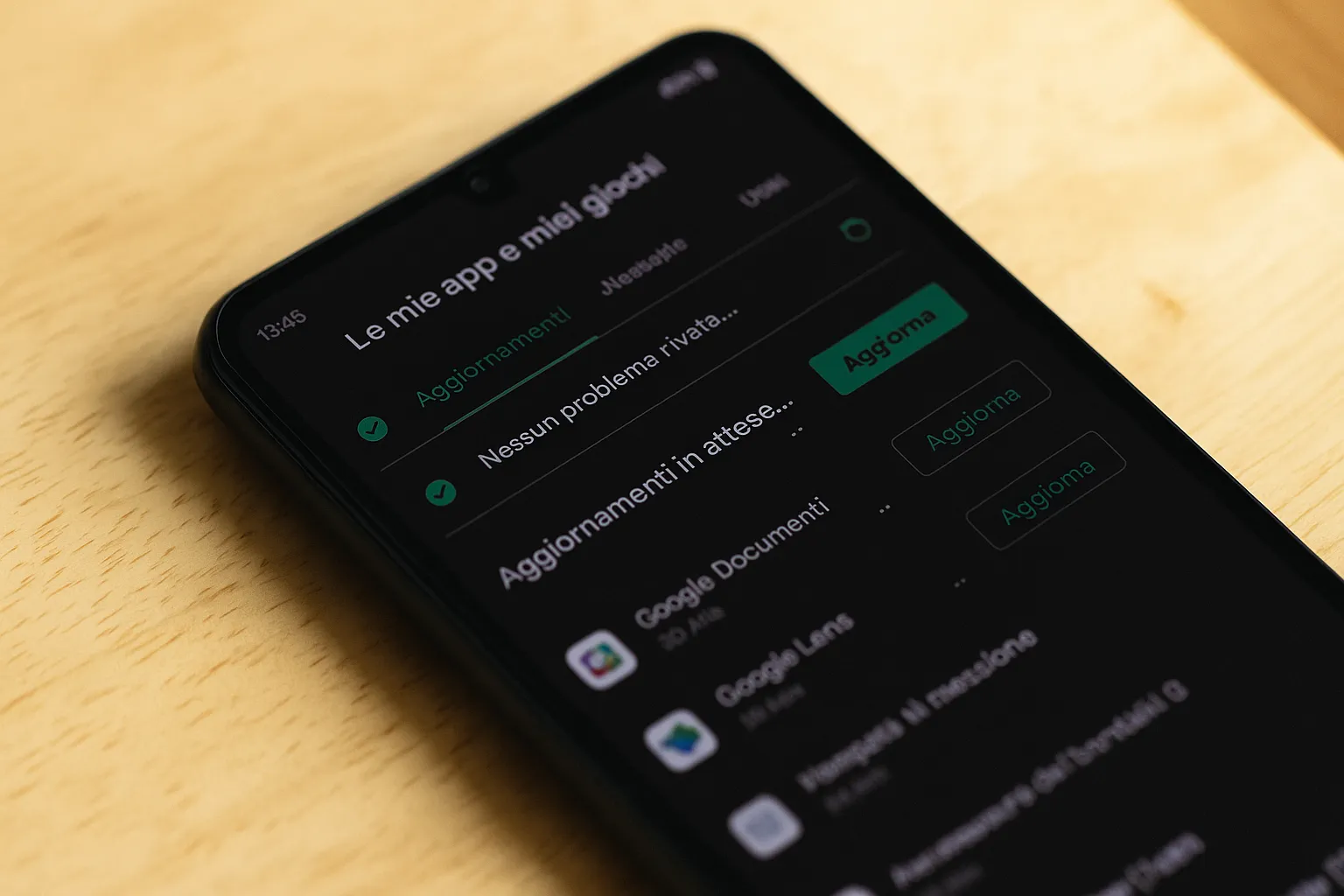
Have you ever updated an app on your phone and suddenly found yourself in an environment you no longer recognize, where every consolidated habit is broken?
The interface you used with your eyes closed has been turned upside down, the buttons you pressed every day have disappeared, the essential functions have been dispersed in incomprehensible menus.
Every familiar gesture becomes effort, every action requires new learning, and within a few minutes you wonder who had the courage to approve such a drastic change.
Do you feel betrayed by whom, until yesterday, made your life easier.
Now imagine that you are the cause of that same frustration for hundreds or thousands of developers who integrate your API into their daily work.
Every time you change the structure of the JSON response without backwards compatibility, every time you remove a parameter because it seems "useless", every time you rename an endpoint just for internal consistency, you are triggering chains of bugs, broken interfaces, business logic that collapses without warning in production environments.
And you don't realize it.
API versioning is not an academic quirk, it is not a bureaucratic formality reserved for those who like to complicate their lives, it is the only way to innovate without destroying, to improve without inflicting pain, to build a reputation based on trust and continuity.
The Microsoft.AspNetCore.Mvc.Versioning library is not just a technical tool: it is the calm voice that guides change without shocks.
It's software diplomacy.
Implementing versioning doesn't just mean better organizing controllers but it means designing with the idea that what works today It doesn't have to stop working tomorrow just because the code has changed.
With a good versioning strategy you can allow different customers to live with different versions, without anyone having to pay the price for the evolution of others.
It's conscious compatibility.
Each approach tells a different way of relating to your users: URL versioning is explicit and reliable, like clear signs on highways.
The header versioning is elegant and discreet, like a private invitation delivered to those who know where to look.
Query versioning is flexible and informal, suitable for more dynamic and experimental contexts.
All valid, none absolute.
Configuring services.AddApiVersioning() is like signing a silent pact with those who will use your API: you won't abandon anyone, even when you have to change.
DefaultApiVersion, AssumeDefaultVersionWhenUnspecified, ApiVersionReader… they are not simple technical options, they are moral choices on how you intend to accompany your users over time.
Will you force them to migrate abruptly or will you guide them gradually, with documentation, alerts and support?
It depends on what kind of leader you want to be.
When you specify that a certain part of your API corresponds to a specific version, you are not just putting a label.
You're making a clear promise: "What happens in here will remain stable, understandable and reliable for as long as this version is active."
It's a promise written into the code, and it's what differentiates a responsible developer from a superficial one.
But the most delicate moment comes with deprecation.
How do you communicate that a version is obsolete without freaking out?
How do you create sunset headers, clear messages, and migration guides without seeming threatening or rude?
Technical empathy is needed.
When you get feedback like “thank you for making the transition so smooth,” you know you've done something amazing.
You have allowed those who depend on your API to update without rewriting everything, to evolve without suffering.
It's not just code version.
It is trust preserved.
If you've come this far, you know that changing without destroying it is one of the rarest qualities in this profession.
And if you have felt the desire to truly master it, not just understand it, then you are already further along than you think.
The rest of the route cannot be found online.
But it can open if you leave your name.
Build professionally, a complete project that you can use in the field

The moment of truth has arrived.
That moment that marks the transition from thought to action, from abstraction to reality, from concept to living code pulsating in the browser.
You have reflected, studied, understood profound mechanisms and invisible structures, but now is the moment when everything must take concrete shape, becoming a manifestation of your intentions techniques and design.
Like a musician who, after months of theory, sits down for the first time at a concert piano and hears: "Now play", you find yourself with your hands on the keyboard, ready to give life to what until yesterday was only an abstract idea.
The heart speeds up and the hands tremble, but this time there is no more room for improvisation or uncertainty.
You're not looking for clues online, nor are you copying lines of code and hoping for good luck.
You have a clear direction, a well-defined map and awareness of every single decision made along the way.
Each line of code thus becomes a declaration of intent, a confirmation of your new level of awareness.
Let's start with the basics.
The model you will use to represent your books is not just a structure made of lines and words, but is like a box that holds stories, information and details that one day someone will read, search and use.
Each of its elements, such as the title, the author, the identification number or the publication date, serves to make each book recognisable, unique, clear.
It's the language you'll use to talk about what really matters.
At this point the operational heart of your application comes into play: a block of code that receives requests from the outside and decides how to respond.
It's not just a set of instructions, but a real intermediary between the user and what you've built behind the scenes.
It receives questions, understands them, and returns tailored answers.
It is the voice of your project.
The instructions you give him are useful make it recognizable and reliable.
You tell him where to be found, how to behave, what types of requests to accept and what data to return.
It's like building the front door of your system and entrusting us with a person capable of welcoming every visitor in the right way, with professionalism and order.
He never misses a beat.
- GetBooks: shows the entire collection with clarity and immediacy, offering an orderly and understandable overview.
- GetBook: welcomes a specific id and takes the user exactly to the desired book, without unnecessary steps.
- CreateBook: Takes data from a new volume and turns it into a living entity within the system.
- UpdateBook: Allows you to edit and improve existing content, maintaining consistency and integrity.
- DeleteBook: Allows you to delete existing content, ensuring system consistency and integrity.
With Entity Framework Core, all of this acquires memory and continuity.
Data doesn't just live in RAM or in the present moment, but is preserved over time as the intellectual heritage of your system.
The context in which you save your data is not just an invisible part of the system, but it is the true archivist that makes it all possible.
Its task is to remember all information, organize it carefully and return it at the right time, even after interruptions, changes or long periods of inactivity.
When you explicitly tell it where and how to save the information, you are not just entering a technical detail, but you are bringing the foundation to life same as your application.
It is a gesture that defines continuity, reliability and capacity for growth over time.
It's like building a solid house, starting with foundations designed to last.
Then comes the time to take one step further: transform an open and anonymous environment into a private, protected and tidy space.
Give access only to those who have the keys right means building trust.
Each person who enters the system does so with a personal card, and every operation is verified, monitored and protected.
It's the best way to avoid unpleasant surprises.
And to make all this understandable to anyone, you don't need to write long manuals.
All you need is a tool that automatically explains how everything works, page after page.
Who wants to use your application you will find clear indications, ready examples and simple instructions.
It's like opening the doors of a museum and accompanying each visitor with an interactive guide who knows every detail.
Each parameter is carefully explained, each response illustrated in detail.
It is a showcase that respects those who decide to rely on your work, making it easier for them to explore and use it.
And then, that magical moment.
Press F5, the build starts, the browser opens and your first well-formatted, coherent, readable and live JSON appears.
That's the baptism of fire, the moment in which each principle discussed comes to fruition before your eyes. You have built something real, functional, useful.
You are no longer the same developer who started reading this guide. You have overcome improvisation and left uncertainty behind.
You have internalized architecture, security, style, clarity and communication.
You've created an API library that not only speaks the language of the world, but does so with elegance and precision.
Welcome to the new phase, welcome to the real business of development.
You've gained the mindset, tools, and confidence to build APIs that not only work in the short term, but who know how to evolve, adapt and thrive over time.
You've learned to think like a software architect, protect like a security expert, communicate like a digital diplomat.
You've transformed lines of code into connecting bridges between different applications, users, and digital worlds.
Your API library isn't just a technical exercise, it's proof that you've become the kind of developer who builds robust, long-lived, and meaningful systems.
The digital future awaits you.
You've seen how every detail, if built with awareness, can transform a simple API into a solid, secure and welcoming system for those who will actually use it every day.
If you also want to create something that lasts, that is understood and respected by those who will use it after you, leave me your contact details: you can talk about it with one of my consultants.
A handful of seconds is enough to make those who can help you listen to you and help you transform your code into a real architecture that grows, protects and communicates.
Fill out the form, and if there are still places available, one of our consultants will contact you in the next few hours.
Together we will see all this become reality.
Leave your details in the form below