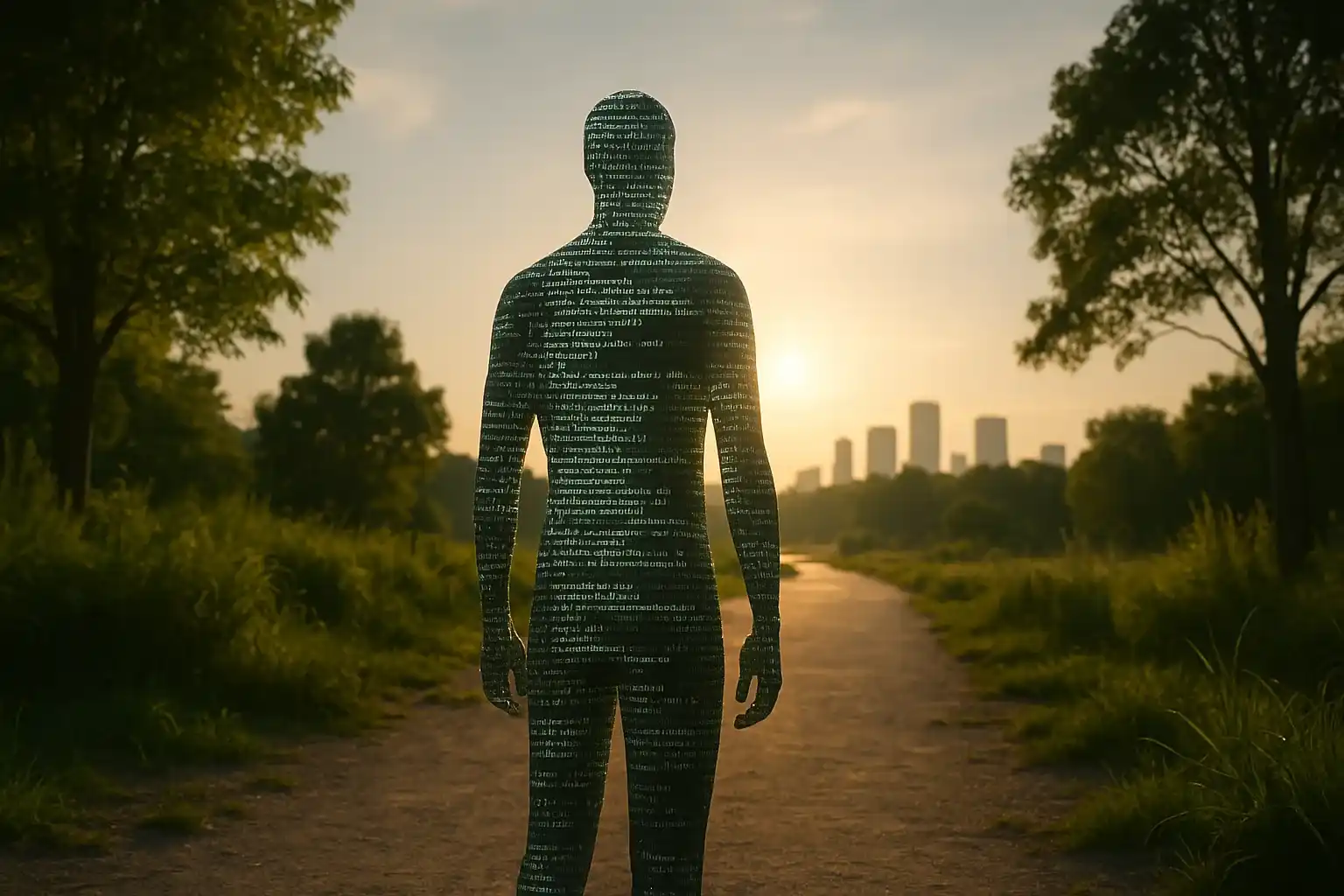

When I started working with computer vision, There were no ready-to-use tools, nor pre-trained models to download with one click, nor, much less, APIs to connect to immediately obtain a result.
Everything had to be built, line after line, and it was precisely this absence of shortcuts that made the work truly interesting.
The idea that software could distinguish a person from any other object was not only fascinating, but posed a challenge that was worth tackling.
So I started with what I knew best: code.
I wrote algorithms to detect movement, interpret shapes and recognize behaviors that could indicate the presence of a human being, without being able to rely on documentation or examples, but only on logic, mathematics and a great desire to try.
At a certain point it worked: the system recognized that that moving figure was a person and correctly distinguished the shadow that followed it, classifying it as something different.
It wasn't perfect, but it was consistent, it worked and it was entirely mine, built from scratch in an era when no one yet talked about these things.
Today the context has changed radically: there are libraries that do everything in a few seconds, ready-made templates, well-documented frameworks and examples available everywhere.
Yet, this very abundance of tools makes it easy to confuse speed of execution with real understanding of what you are doing.
Writing code today is easier, but understanding what happens when a system interprets what it sees still requires solid skills and a deep technical mentality.
If today you want to build software capable of distinguishing, interpreting and reacting precisely, you have many more tools at your disposal than then, but you still need the same thing that was needed at the beginning: the desire to really understand something.
If you have it, you're already at an advantage, because the world needs developers capable of going beyond the surface of the code, designing systems that don't just work, but that also know how to see.
Do you want to learn how to build them?
I can guide you step by step, methodically, without shortcuts, and with the same passion that I had the first day I showed a car what it had ahead of it.
Introduction to computer vision: what it is and how it works
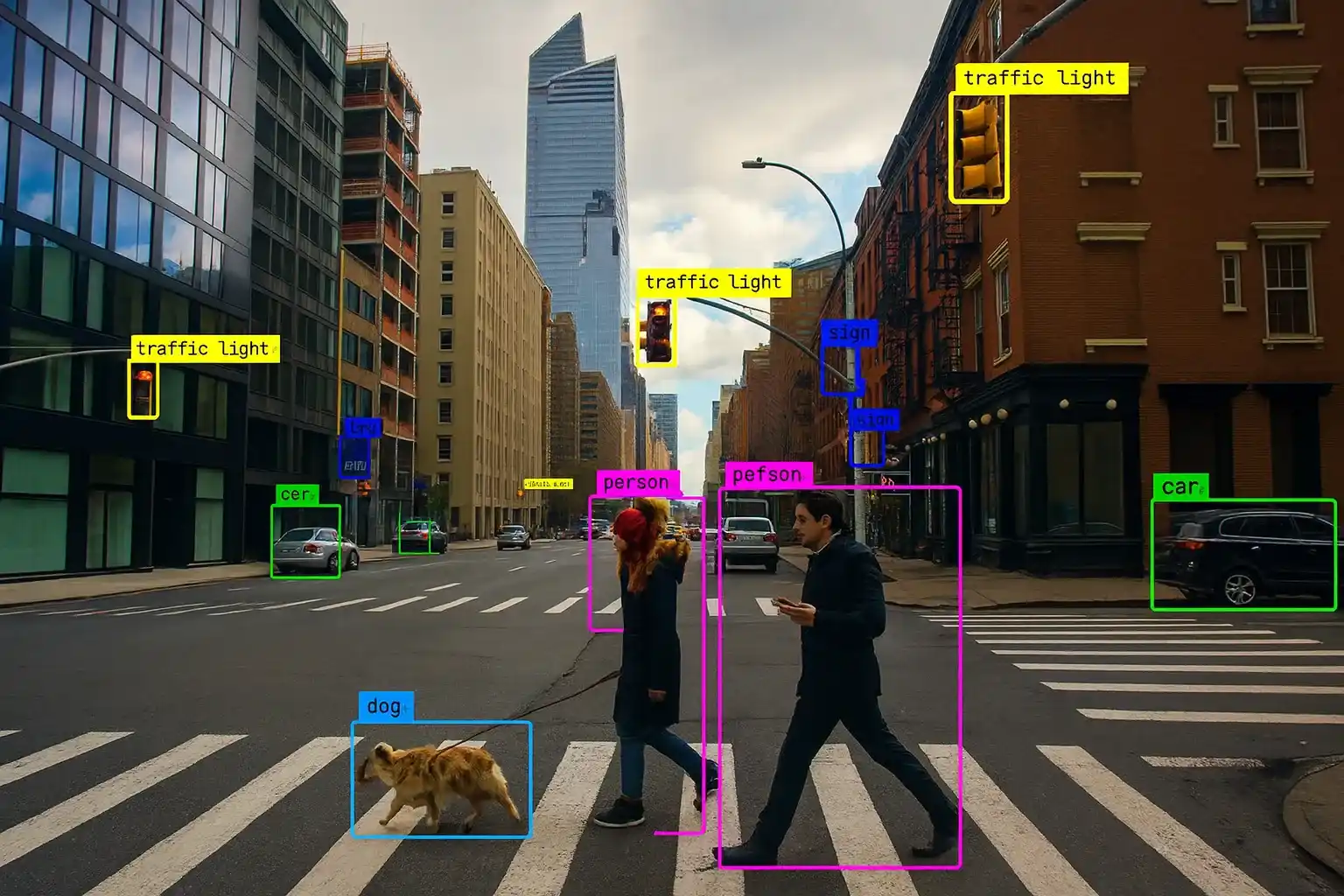
There are moments in the history of technology when everything changes, and often, those with more experience risk being the first to doubt.
Not because he doesn't understand, but because he has seen too many fashions pass, too many languages impose themselves and disappear.
But what we are experiencing now is not another trend: it's a paradigm shift.
It is an evolution that goes beyond efficiency: it is changing the very essence of software, taking machines from logic to sense, from calculation to vision.
Computer Vision is exactly that: teaching computers to interpret the visual world.
It doesn't just read numerical data, but recognizes objects, distinguishes people, understands movements.
It analyzes images and videos, and transforms them into useful information for making automated decisions.
Yet, for many experienced developers this revolution may seem distant, too new.
Too different from the daily work of APIs, backend logic, query optimization, and this is precisely why it is worth looking at it closely.
Because the real transformation begins when those who already have a solid foundation decide to get involved, not to start over, but to take the next step.
The truth is simple: there is no need to become researchers, there is no need to leave what you know.
It just helps connect your current skills to new tools, designed specifically for senior developers.
What follows is not a technical manual, but a mind map.
A journey into Computer Vision, designed to make you understand not only what it is, but why it can become the driving force behind yours second professional career.
Basic techniques: edge detection, segmentation and filtering

Every revolution begins with a first step.
In Computer Vision, the first step it's teaching a machine to see the contours of the world.
Before understanding, he must distinguish, before recognizing, he must separate what is in front of him.
This is where basic Computer Vision techniques come into play:
- Edge detection: Allows the system to identify the outlines of objects, even in complex images.Algorithms like Sobel, Prewitt and Canny act like digital pencils, drawing essential lines and reducing noise.
- Segmentation: allows you to divide an image into coherent regions.A face no longer appears as an indistinct mass of pixels, but as a structure made up of eyes, nose, mouth and other recognizable features.
- Filtering (pre-processing): Acts like a pair of lenses for the camera, reducing noise, improving sharpness and bringing out hidden details.A fundamental phase to guarantee the effectiveness of subsequent algorithms.
But there is something even more important for you as you read.
If you come from a background of clean code, WPF interfaces, rigorous controls and solid architectures: all these tools are now accessible even in .NET, through libraries.
It means that you don't have to change jobs to master computer vision; you just have to look at your profession with new eyes and learn to make the software see what until now it only knew how to process.
And that's exactly what you find in mine Artificial Intelligence programming course: a concrete path, designed for those who want to understand and use AI with the same precision with which they have always written code.
If you too have always thought that AI was something distant, unattainable or out of context, today is the right time to change your perspective.
The techniques you just read are not academic theory: they are real tools, ready to be used in your environment, with your code.
And if you want to understand how to really apply them to your sector, leave us your contacts.
We will show you how to make your experience communicate with the power of visual intelligence.
Object recognition: algorithms and models used
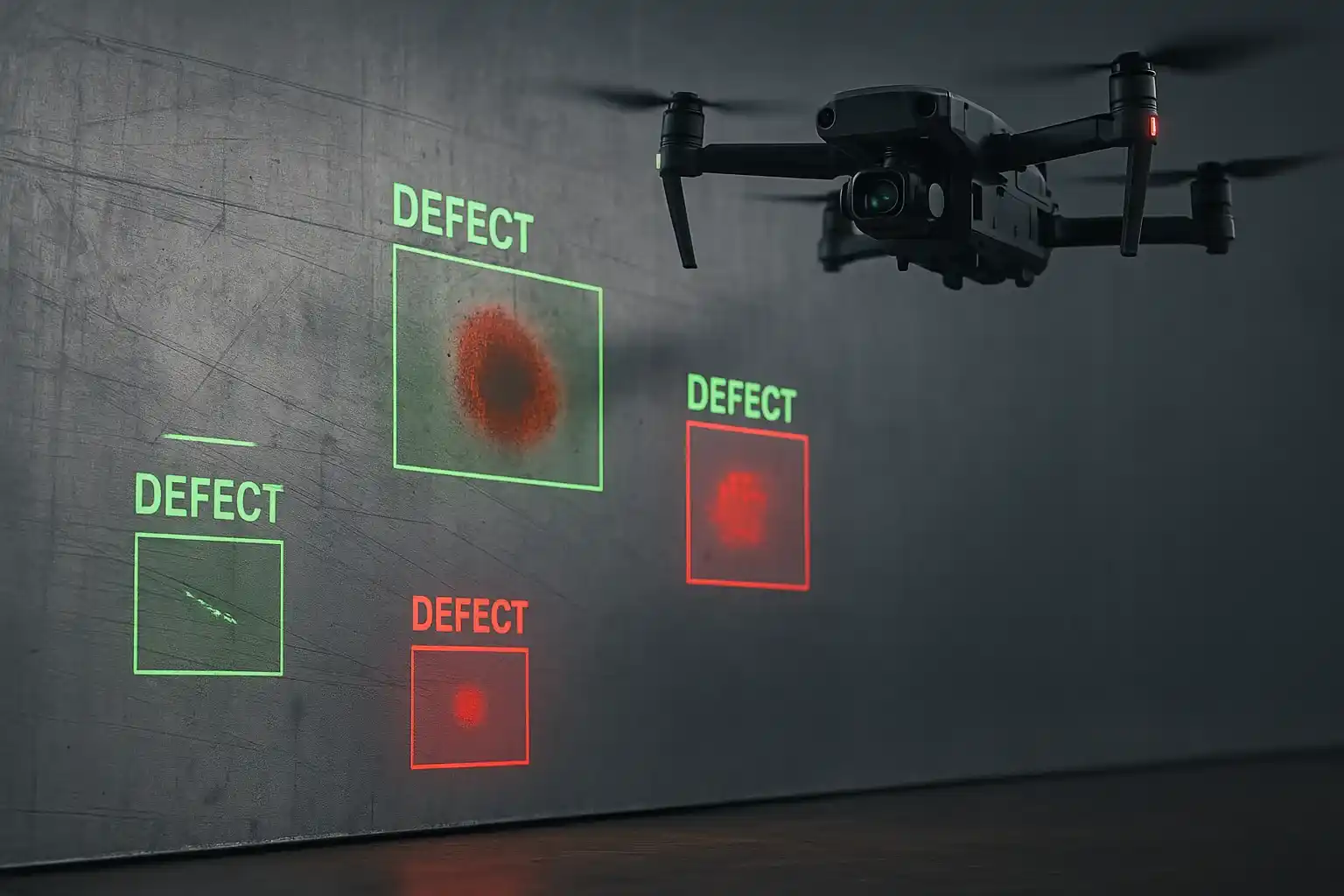
Now that the machine has learned to see contours, it faces a much bigger challenge: understand what he is looking at.
We don't see things as they are, we see them as we are.
Anaïs Nin - writer and diarist (1903 – 1977)
For a human being, recognizing an object is an action that is done almost automatically.
You see a cup on the table and you don't need to think about it: you know that it is a cup, that it contains something, that you can grab.
For an artificial vision system, however, this it is a complex process, made of calculations, probabilities, learning.
Yet, today we have reached a point where a machine can accurately distinguish a car from a pedestrian, a dog from a cat, a flaw in a metal plate from a simple reflection.
How?
This is possible thanks to:
- Advanced visual recognition algorithms, designed to identify objects with extreme precision even in real time.
- Multi-target models, capable of identifying multiple objects simultaneously within a single image or video.
- Learning from massive datasets, which allows models to constantly improve accuracy as they analyze new images.
If all this seems distant from your .NET environment, that's normal, but that's exactly where it is true professional evolution becomes possible.
Today you can integrate these algorithms into a C# project using pre-trained services, or you can train your own via ML.NET, Azure Custom Vision, or OpenAI models exposed via API.
And you can do it without leaving your technical context, without abandoning Visual Studio, without having to learn other languages from scratch.
This is the real revolution: artificial intelligence she's finally in in developer tools professionals, those like you, who aim for highest paying IT jobs and they don't want to start all over again.
Doubts?
It's natural.
But if you're wondering if delving deeper really makes sense, listen to this: companies aren't simply looking for those who know how to use AI, but who knows how to integrate it with criteria scalable solutions, making it reliable, repeatable, robust.
Because AI, however extraordinary, does not forgive improvisation.
If you don't know how to govern it, you risk building systems that create more problems than they solve.
Exactly what an experienced developer can offer, as long as you have it have the right strategy.
Convolutional neural networks (CNNs) for visual recognition

Having reached this point, Computer Vision profoundly changes its nature.
It is no longer limited to detecting shapes or recognizing labels, but begins to think in visual abstractions, just like we humans do.
And it does so through one of the most powerful architectures ever developed: convolutional neural networks, known as CNNs.
CNNs are not a gimmick, they are not a simple algorithm; they are real structures hierarchical systems inspired by the human visual brain.
They work in layers: the first sees edges, the second detects shapes, the third recognizes whole objects.
It is a machine that learns by itself to build a representation of the visual world and, the more you use it, the more intelligent it becomes.
In .NET environments, all this has become accessible thanks to pre-trained models that can be integrated with ML.NET, ONNX and Azure Cognitive Services.
It means you can bring a CNN into an application C#, use it to classify images, detect anomalies, read visual data in real time.
And it is precisely here that two legitimate fears emerge, common to many senior developers: "I didn't study AI at university, how can I understand anything about it?", or "I'm not a mathematician, I've always worked on architectures, logic, APIs... isn't it too different from what I know how to do?"
And that's exactly why the right method can change everything.
The Artificial Intelligence programming course is designed to teach you to use these technologies as practical tools, not as abstract theories.
No formulas to memorize, no academic proofs, just code, examples and an approach that respects your way of thinking.
Because CNNs aren't just for researchers: they are for those who want to build intelligent solutions in the real world, without wasting time on fluff.
CNNs are not magic.
They are concrete architectures, integrated into your daily tools.
If you've ever thought "this isn't for me, I didn't study AI", know that you don't need another degree.
All we need is a path designed for those who already have experience, but want to raise their level.
If what you have read has given you a glimpse of new potential, fill out the form: we can show you how to make it real, in your work, without distorting who you are.
Advanced computer vision techniques: facial recognition and semantic segmentation

So far we have talked about how to teach a machine to see and recognize.
But what happens when millimeter precision is needed?
When do you need to distinguish one face among a thousand, or segment each pixel of an urban scene?
This is where two of the most sophisticated and requested techniques in the business market today come into play: facial recognition and semantic segmentation.
The first allows a system to identify a person with very high precision, even in dynamic environments or imperfect conditions.
It is the basis of every advanced security system, but also of apps that unlock your smartphone, control access, or analyze emotions.
Semantic segmentation, on the other hand, takes an image and assigns a category to each individual pixel.
It doesn't just say "this is a car," it tells you exactly where the curb ends and the wheel begins.
It's what a self-driving car needs to avoid hitting a pedestrian, or a drone to orient itself in complex environments.
All this fascinates you, but does it scare you?
It's normal: it scares you because it seems "too much" compared to your habits.
But stop for a moment: you've learned languages from scratch, tackled legacy environments, handled impossible bugs, and released software into production: you have already overcome challenges far greater than this.
The real block is not technical: it is psychological.
It's the voice that says, "I'm too old to change."
But the truth is that we don't need to change, we need to evolve.
That's exactly the point: you can transform the skills you've already built into something even more powerful and relevant, enriching them with machine vision, predictive power and distributed intelligence, building on the experience you have already gained, not against it.
Connecting gaze, speech and movement in a single system

The true strength of Computer Vision lies not only in its ability to see, but in its ability to communicate with other forms of intelligence.
A system that recognizes an object can stop there, but a system that interprets the context, understands a voice command and activates a physical action, enters a new dimension.
And it is here that Computer Vision merges with Natural Language Processing (NLP) and the Internet of Things (IoT), thanks also to the use of a LLM as copilot.
Imagine this scenario: a camera spots a person.
The voice system asks: “Do you have an appointment?”
The person responds.
The system analyzes the response in real time, checks the correspondence, opens the gate.
It all happens in 3 seconds: it seems like a movie, but it is already a reality in many environments corporate.
Or think about the industrial world: a visual sensor detects a faulty weld.
The NLP system analyzes the report data, the IoT module automatically deactivates the production line.
Zero wasted time, zero margin for error, maximum efficiency.
And the question at this point is: “Can I really do all this starting from my current skills?”
Yes, if you have a method that teaches you how to connect the pieces without getting too lost in the technical details.
Our course Artificial Intelligence programming course shows you how:
- Integrate vision, language and intelligent devices into robust architectures
- Use pre-trained AI APIs that are perfectly compatible with the .NET environment
- Automate the decision flow, drastically reducing code complexity
You don't need to become an expert in everything, you need to know how to manage technologies, and this is the superpower of senior developer.
What you already are.
Where computer vision really changes lives: autonomous cars, safety, medicine
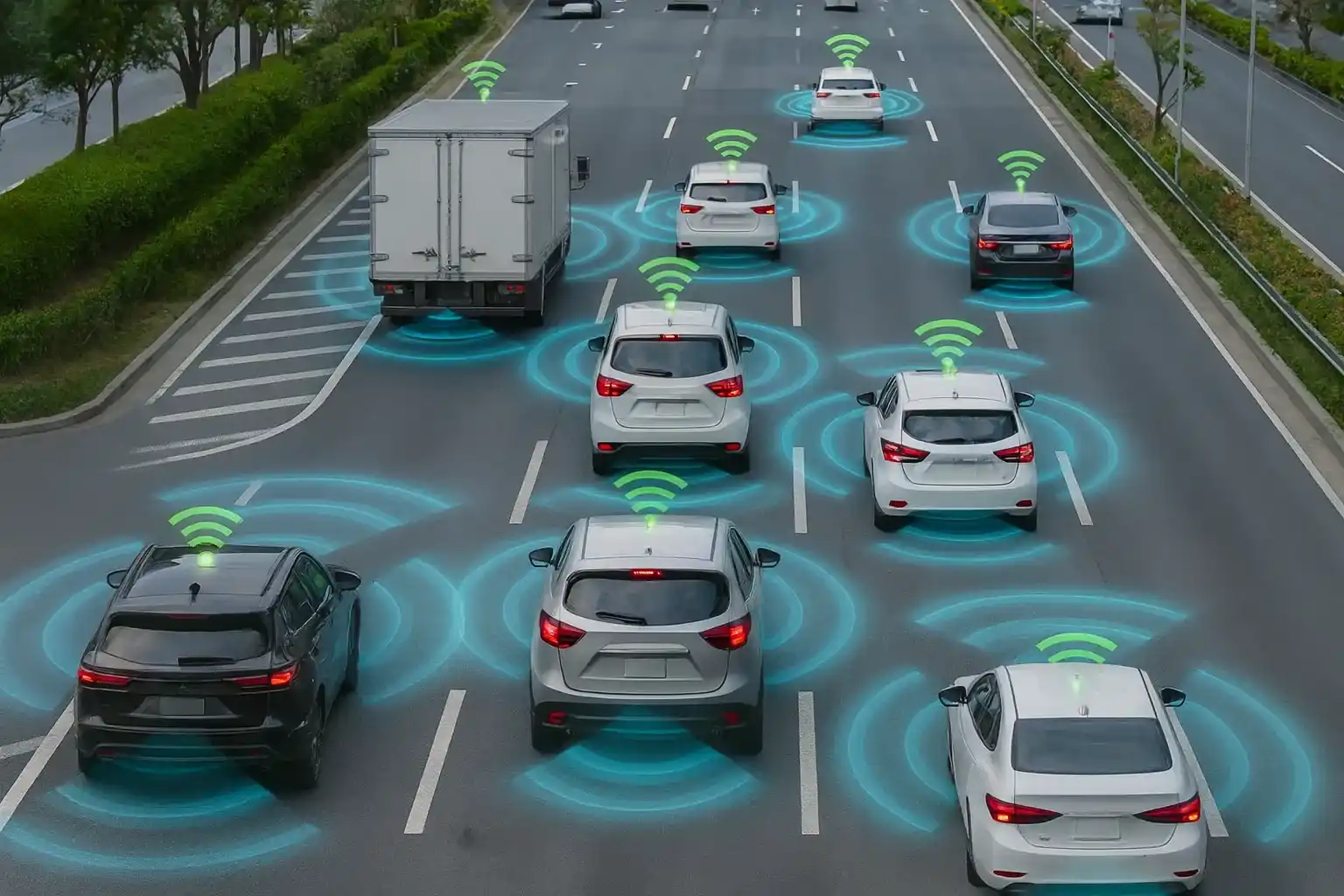
This is where theory gives way to real impact, because Computer Vision is not a laboratory game nor a conference demo.
It's already today a decisive tool in dozens of sectors, and its applications are profoundly changing the way we live, move and heal, such as:
- Autonomous cars they are no longer prototypes.Today they travel kilometers on the road thanks to visual models capable of interpreting signs, recognizing pedestrians, calculating trajectories, predict unpredictable movements.And the engine of all this is a robust visual pipeline, often built by developers like you, but who have decided to enter the AI world instead of staying behind.
- In the field of security, artificial vision has made intelligent and preventive control possible: cameras capable of distinguish suspicious behavior, unauthorized access, abandoned objects.Systems that don't just record but act in real time, without human intervention.
- In the medical field, Computer Vision is revolutionizing diagnostics.From plates to resonances, from suspicions to microscopic analyses: visual models today in many cases they exceed the precision of the human eye, offering decision support to doctors and surgeons.
But in all this, where is the developer, the expert programmer who has been working on the backend, on applications, on architectures for twenty years?
He risks being left out, but not because he isn't up to it: just because he doesn't have it still integrated these technologies into its stack.
This is precisely the goal: to get back into the game as a protagonist, applying Computer Vision to your professional context with real projects, real code and a solid approach that truly accompanies you, without leaving you alone between theory and promises.
If you have read this far, one thing is clear: you are no longer satisfied with knowing, you want to do.
The real world already needs solutions that you could build yourself, with the right tools and the right guidance.
Leave us your data, and we will show you in a call how to concretely apply Computer Vision to your context.
No theory, no shortcuts: just a real comparison, on what matters to you, in your work, with your goals.
The challenges of vision: light, perspective and obstacles
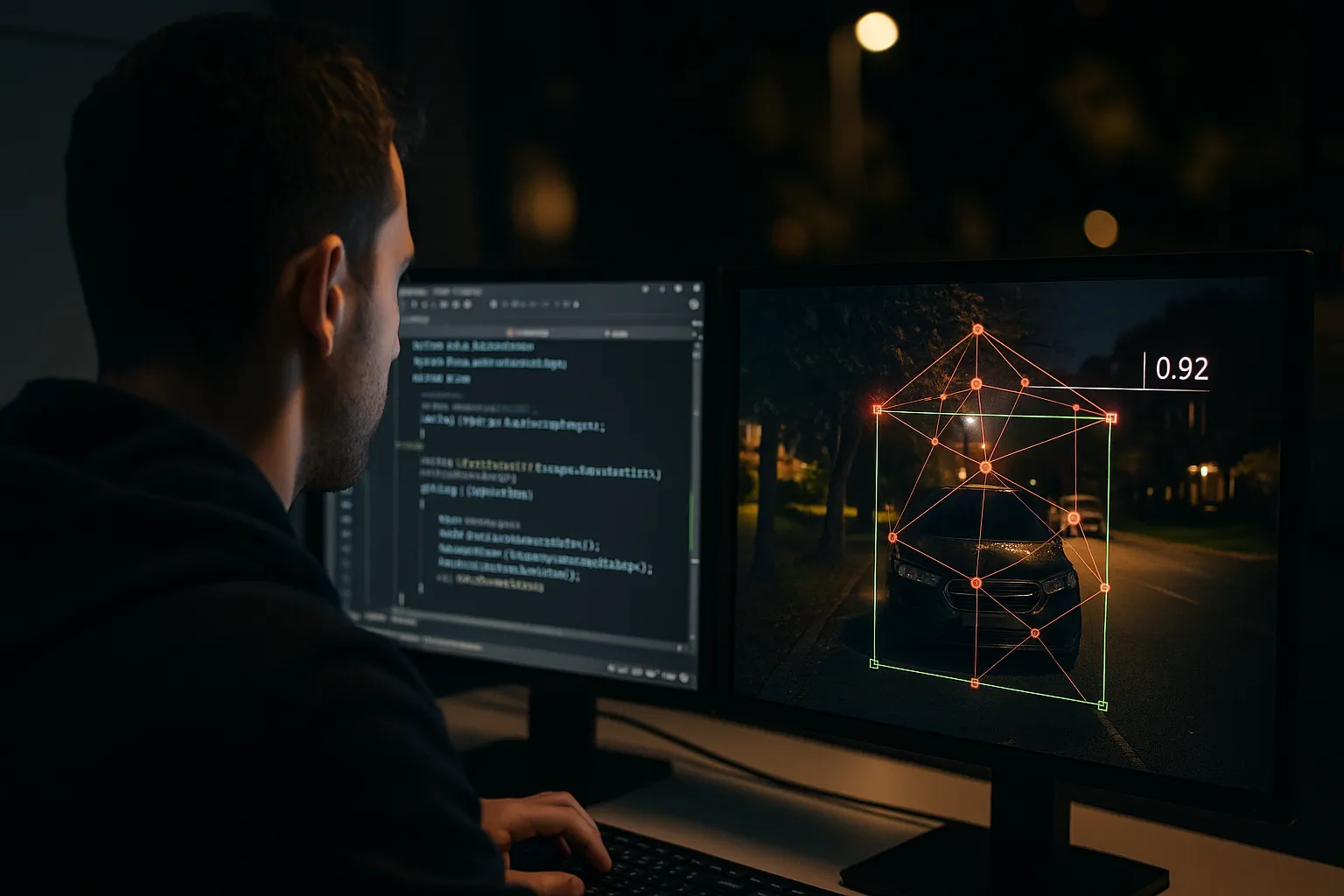
Computer vision, like any powerful technology, is not magic.
It works well, but only if it is intelligently designed.
And the challenges it faces are very similar to the ones we face every day as experienced developers: dirty data, edge cases, unpredictable contexts.
A visual system can fail if the light is wrong, it can misread if an object is partially covered.
It can misclassify if the angle changes too much, and it's not just the algorithm that's needed here.
You need the mind of a mature programmer, you need to know how to manage exceptions, fallbacks, redundancies, testing.
It's useful knowing how to think in terms of industrial projects, not a weekend prototype.
This is precisely what distinguishes those who have learned AI from tutorials, from those who have integrated it by managing the technical debt with awareness.
And if there is one thing that the Artificial Intelligence programming course it's good, it's just this: teach you how to design robust intelligent systems, which work even when conditions become complicated.
It's not enough to run a model locally.
Putting it into production is the moment of truth, and there you need a developer who really knows what he's doing.
Practical example: create an image recognition application

Let's take a step back and imagine something concrete.
A C# application that loads an image and recognizes what it contains: a dog, a car, a can of Coca-Cola.
With ML.NET you can do this in just a few lines of code.
You import a pre-trained model, pass the image, get a prediction.
If you want to go further, you can use Azure Custom Vision to train your custom dataset, export it to ONNX format, and integrate it into your .NET project.
Add a WPF frontend, a logging system, results control… and you have just built a professional intelligent vision system.
This is what we mean when we say that AI is already inside your world.
You don't have to reinvent yourself, but you just need to expand your technical vocabulary.
The time has come to introduce myself, so that you can know who is telling you everything you have read and will read.
Imagine entering the classroom and being greeted by a true expert, a software architect who has been active in the world of technology and programming for more than 25 years.
My name is Matteo Migliore.
I'm not an industry theorist, but I have solid experience in software development.
I created this experience by facing and solving problems with my software and the needs that my clients, coming from the most disparate sectors, presented to me.
Obviously the requests reflected this variety.
This profession It literally changed my life, on an economic level, but also on a personal level.
So, after years of development which I continue to do, I thought of sharing my fortune with those who really aspire to make a breakthrough.
Fortunately, this career remains accessible even after a certain age; the only difficulty is always keeping up to date.
Hence the idea and desire to create courses and do training, proposing a serious method to change your life, unlike those who promise to make millions in a few days, perhaps without skills and without any investment.
With me this improvement is feasible, in the face of commitment, consistency and daily dedication.
I don't promise you that in six months you will get results and make "wheat", but I am certain that you will be able to achieve good results, changing your working conditions forever.
All this can become reality.
Me I know perfectly well what and how I have to do it to take you to this amazing future.
The rest is up to you….
And now that you know who can guide you on this path, let me tell you something important: your experience is not a limit, it's an accelerator.
Your problem is not age, but it is the context that changes faster than we are used to.
But there's good news: you can choose how to react.
You can stay put, hoping that everything will go back to the way it was before, or you can decide that this is the right time to raise the level, take a leap, re-enter the flow of innovation through the front door.
And there's no need to upend your career.
All you need is a course that speaks to you in your language, that respects your background, that truly accompanies you.
If this has intrigued you, know that the Artificial Intelligence programming course it is not made for those starting from scratch.
It is meant for who has already built a career, but he doesn't want to be left behind.
You will build projects useful for your real work.
From visual intelligence to advanced automation, through the strategic use of language models and AI assistants: it is a living, results-oriented laboratory that accompanies you step by step.
He is the bridge between what you are today and what you could become tomorrow: a programmer who does not chase the future, but plans it, with vision and concreteness.
Do it for you, to continue to be relevant in the changing world.
Do it for your job, to offer solutions that are worth more than simple code.
Do it now, before others decide for you.
Discover the course now.
No baseless promises, just skills that last, projects that matter, and guidance that never leaves you alone, and never makes you feel out of place.
Leave your details in the form below