

If you are looking for a concrete way to enter the world of development and automation, PLC programming it is one of the most solid and stimulating roads to travel.
PLCs (Programmable Logic Controllers) are devices used to control industrial processes: they operate machinery, read signals, activate actions.
But all this only happens thanks to the software that controls them, written by programmers like you.
From conveyor belts to robots, up to the most complex systems, everything can be regulated thanks to the software programmed on these controllers.
But what does programming a PLC really mean?
Learn to program a PLC it means seeing your code transformed into real actions: each written line turns on engines, moves robotic arms, optimizes entire production lines.
You don't need a degree to get started: you need determination, a passion for technology and the desire to get involved.
If you recognize these ingredients in yourself, you are already on the right path.
And above all, it is a fast growing sector, where there is real demand for professionals.
So: what opportunities does this ever-evolving profession offer?
In this guide I will accompany you to discover the tools, languages and technologies that every developer should know to take their first steps and stand out in this field.
All about PLC programming software: languages, tools and trends

PLC programming is today one of the pillars of industrial automation, but it is no longer just a question of codes and commands.
It is a rapidly evolving world, where software, interfaces and new technologies intertwine make machines increasingly intelligent, autonomous and connected.
In this context, the programmer's role is not only to make a system "move", but to design systems capable of communicating, adapting and improving over time.
From graphic languages to cloud solutions, from virtual simulations to predictive maintenance, the tools available are increasingly sophisticated and accessible.
Whether you are a technician, an aspiring developer or a company looking for efficiency, understanding how these tools work is the first step to truly enter the industry of the future.
Let's see what the main PLC programming software are, how they work and why today they represent a strategic lever for innovation.
Let's now find out how to get started, starting from the practical basics.
PLC software: where to start to become an industrial programmer

To program a PLC you need specific tools, called PLC programming software, often developed and owned by manufacturers (such as Siemens TIA Portal, Allen-Bradley RSLogix, Schneider EcoStruxure).
These environments allow you to write, test and upload code directly to the device.
The languages used are based on the IEC 61131-3 standard (international standard which serves to ensure that the code is understandable and usable on different systems) and include:
- Ladder Diagram (LD): the most widespread, represents the code as an electrical circuit drawn on paper, simple to read for those coming from the electrical world.
- Structured Text (ST): An uncluttered and powerful text language, perfect for complex operations.
- Function Block Diagram (FBD): it is programmed like a puzzle, connecting functional blocks to each other.
- Instruction List (IL) and Sequential Function Chart (SFC): older, but still useful in areas where the sequential structure is predominant.
The use of precompiled libraries, reusable templates and real-time debugging support (the process by which a programmer finds and eliminates errors) help industrial programmers reduce errors and speed up development times.
Before going into detail about hardware architectures and protocols, it is worth focusing on an increasingly relevant trend in the world of PLC programming: the connection with advanced development environments such as .NET.
This technology, often associated with traditional software development, it is also finding very interesting applications in the industrial sector, offering programmers powerful, flexible, and surprisingly intuitive tools.
But today, alongside these tools, solutions are emerging that break the traditional mold.
One above all?
The connection with .NET it opens up new possibilities for those who want to program professionally.
Combine .NET and C# with PLC programming: develop advanced solutions
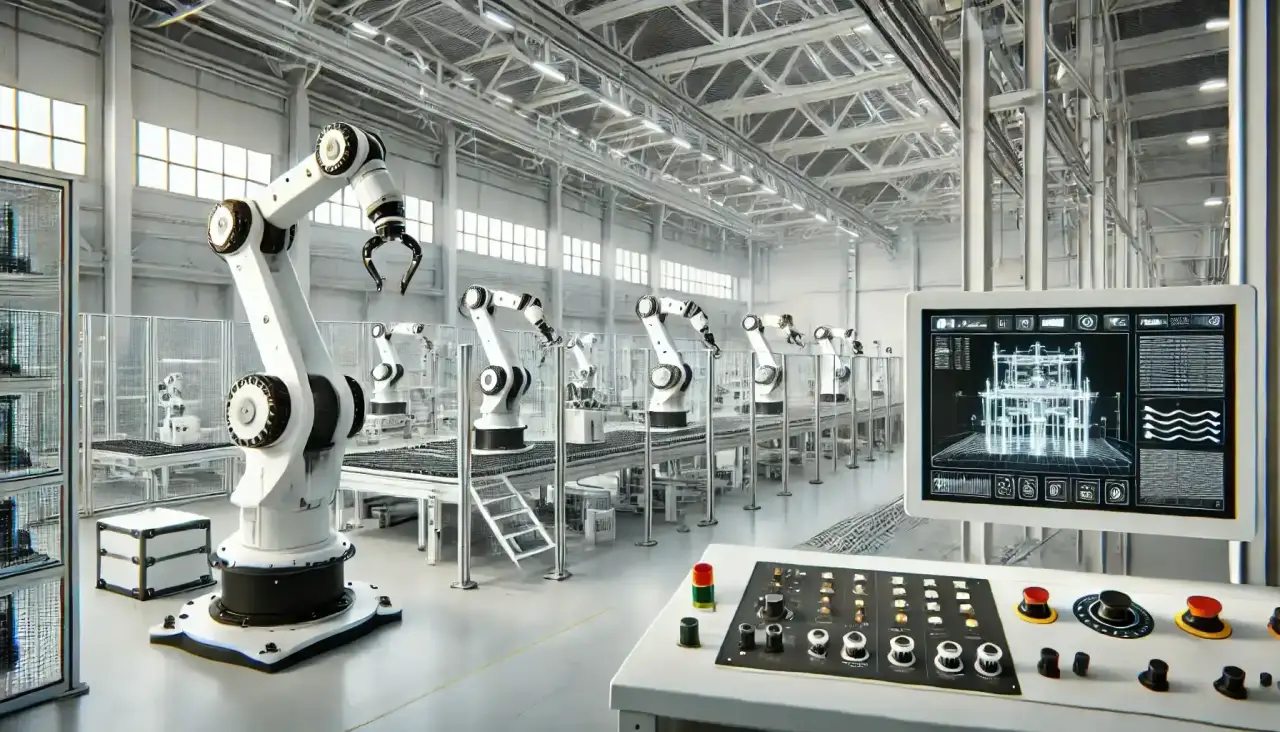
In the context of modern industrial automation, the use of .NET and C# in development to support PLCs is gaining ground.
Although PLCs have dedicated environments and languages, .NET proves invaluable to extend functionality, create interfaces, manage communications and connect devices to the IT world.ù
But why using .NET makes the difference in PLC management and industrial automation:
- The operational and strategic advantages for integrating the PLC into industrial systems
- High stability and performance Applications developed in .NET are highly performing and reliable. Perfect for managing real-time data flows between PLCs and SCADA, MES or Cloud systems.
- Reduced bugs thanks to the strong structure of C# The strongly typed nature of C# helps prevent runtime errors (the point at which a program actually runs), resulting in safer and more robust code, ideal for critical industrial environments.
- Excellent synergy with OPC UA and other industrial protocols Thanks to .NET, it is possible to easily develop applications that use protocols such as OPC UA, MQTT or REST API, fundamental tools for making the PLC communicate with other software, such as SCADA, management systems or cloud platforms. In practice, a fluid bidirectional communication is created, where data travels in both directions: the PLC sends information in real time and receives instructions or updates from other systems.
- Support for predictive maintenance and data analysis Applications developed in .NET can collect data from PLCs, analyze them and send them to cloud platforms for advanced diagnostics and predictive maintenance.
- Compatibility with virtualization and cloud environments These solutions integrate perfectly with virtualized systems and cloud-based architectures, encouraging the adoption of IIoT solutions (Industrial Internet of Things - means connecting machinery, sensors, PLCs and industrial software to each other via the Internet or digital networks).
- The advantages for the programmer: fast and intuitive development with C#
- Clean and modern syntax The C# language is extremely readable, well-structured, and easier to learn than many other industrial languages, making development fast and enjoyable.
- Wide availability of bookshops The .NET ecosystem offers hundreds of ready-to-use libraries to interface with files, databases, APIs, graphical interfaces or industrial devices.
- Advanced debugging and professional development tools Visual Studio, the IDE (Integrated Development Environment). In simple words, it is the program you use to write, edit, test and manage your code) reference for .NET, provides powerful tools for debugging, performance analysis and code refactoring.
- Ease of creating custom graphic interfaces and HMI dashboards It is possible to develop HMI (HMI stands for Human-Machine Interface. In practice, it is the screen or panel through which an operator can communicate with a customized machine or industrial plant (in Windows Form, WPF or web) that communicate with the PLC, offering the operator an intuitive, pleasant and modern interface.
In a market where traditional skills are no longer enough, .NET and C# give you a real competitive advantage.
Knowing how to use them allows you to go beyond simple PLC logic and become a point of reference for development, automation and innovation.
Do you really want to stand out?
This is the right time.
In an increasingly digital landscape, where skills count more than qualifications, choosing to master tools like .NET and C# means investing in your future.
Not only as PLC programmers, but as professionals capable of moving with ease between software, systems and real solutions.
The market is no longer looking for performers.
Look for brilliant minds, capable of solving complex problems and creating value through technology.
If you are reading these lines, it is because there is already a different drive inside you.
That of those who want to be serious.
Do you want to transform this curiosity into competence?
Leave your details here and you will access, with us, tools designed for those who really want to get started.
Enter the world of industrial programming with that something extra that our paths can give you.
With a vision.
And with the right tools.
Write, Test, Deploy: How to Get Your PLC Software Working the First Time
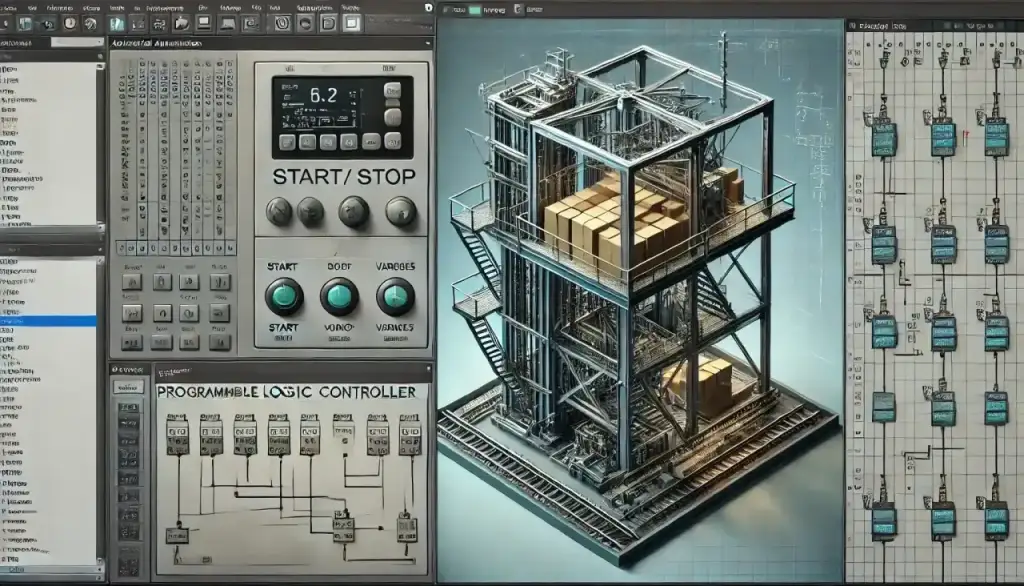
In the development cycle of an automated system, the testing phase cannot be improvised.
Before putting the code to work on a real machine, it is essential to test its behavior in a controlled environment.
And this is where PLC emulators and virtualization platforms come into play: tools that faithfully reproduce the operating environment, allowing you to simulate processes, signals and reactions without risks.
This approach allows you to analyze software behavior in real time, identify and correct any anomalies, optimize logic and improve performance, all without physically touching the system.
It is a guarantee of safety, but also of efficiency, which reduces errors and downtime in the next phase.
Once everything has been validated, we move on to deployment, i.e. the actual implementation: loading the program onto the operating PLC.
In this phase, tools such as code versioning, centralized control of changes, and backup and recovery procedures, which ensure traceability and reliability, become crucial.
Ultimately, from simulation to production, each step today can (and must) be managed methodically and vision.
Whoever masters these tools is not just a programmer: he is a professional capable of bringing concrete innovation to the field.
PLC programming software and communication between systems: how to best manage it

Modern PLC programming is no longer limited to the internal logic of the process, but extends to the interconnection with the entire production ecosystem.
Among the most used technologies we find:
- OPC UA: protocol for communication between PLC, HMI, SCADA and MES systems
- .NET: Used to develop custom interfaces and connectors
- Fieldbus: industrial networks such as Profibus, Modbus, CANopen to connect sensors and actuators
- Two-way communication: essential for receiving and sending data in real time
- Security in remote programming: increasingly important with the adoption of IIoT solutions and remote control
Among the technologies that help connect the testing phase to the operational one, .NET and the C# language offer valid support.
In simple words, they allow you to create "outline" applications that simplify and speed up many operations: for example, customized tools can be developed to simulate the behavior of the PLC, check if everything works correctly before moving on to reality, or graphical interfaces to monitor data and processes in real time.
Once the software is ready, C# also allows you to automate the uploading of the program to the PLC, manage different versions of the code and create secure backups.
All this helps reduce errors, save time and ensures a smooth transition from simulation to fielding.
In practice, it means controlling every phase: from initial development to entry into production.
With the right tools, today you can test everything first, fix on the fly, reduce errors and optimize performance... before you even touch a real machine.
Who is the PLC programmer and why is he the key figure in automation

Being a PLC programmer today means much more than writing code to run a machine.
It is a dynamic role, in which technical creativity and practical problem solving come together.
Who works in this field often finds himself designing tailor-made solutions, improve existing processes and face new challenges every day.
It is a profession where you are never bored and where every project can become an opportunity to learn something new, often in close contact with other professionals from the industrial world.
Furthermore, seeing a production line working perfectly thanks to what you have written is a concrete satisfaction, that gives meaning to work.
Whether you want to work in the field, in the technical office or as a consultant, the possibilities are wide and constantly evolving.
True strength?
Knowing that your skills create efficiency, safety and innovation, every day.
Becoming an industrial programmer: what you really need to get started
The industrial programmer is a constantly evolving technical figure.
Today, in addition to knowledge of PLC programming languages, transversal skills are required in:
- Industrial automation
- Process control
- Cybersecurity
- Integration with SCADA and MES systems (for production monitoring)
- Predictive maintenance
Those who choose this path can work in different fields: from food to pharmaceuticals, from automotive to advanced logistics.
And the prospects are excellent: industry 4.0 has caused the demand for these professionals to surge, well paid and often sought after even abroad.
In this constantly evolving scenario, knowing tools like .NET and C# can really make the difference for a PLC programmer.
It's not just about writing code to control a machine, but about knowing how to create intuitive interfaces, intelligent connectors between different systems, or efficiently manage communication with external software.
Being familiar with these tools, which are also widely used in the world of "traditional" software development, makes the profile of an industrial programmer more versatile, complete and competitive.
It's time to take the leap.
Furthermore, the C# language is increasingly appreciated for speeding up projects and guaranteeing greater quality and stability of the software, especially in complex contexts such as those of Industry 4.0.
If you understand how much a skill like this can be worth, don't stand still.
The difference between those who observe the change and those who guide it lies in one decision: act now.
The industry is evolving at speeds never seen before, and the professionals capable of combining vision, logic and advanced tools like .NET and C# are the ones who will have space, recognition and continuity.
Do you also want to start building this technical and modern profile?
Leave your details and we will contact you.
The future of industrial automation has already begun. The question is: will you be there too?
Beyond PLC Software: What You Can Really Do with .NET and C#
If you have wondered, or are wondering, why you should spend time learning more complex environments like .NET and C#, when ready-made and intuitive PLC software exists, know that it is a legitimate question.
But the answer is simple: learn these tools it allows you to do much more of programming a machine.
.NET and C# are not just for controlling industrial plants.
They are versatile and powerful technologies, used every day to build professional applications in very different sectors.
Here's what you can do, in addition to PLC programming:
- In the industrial sector:
- Desktop applications for advanced HMIs
- Dashboards for real-time data analysis
- Cloud systems for predictive maintenance
- Connectivity tools between PLC and database
- Web apps for remote control of systems
- APIs and connectors for MES, SCADA, ERP (IT system that manages the entire company - includes accounting, purchasing, sales, warehouse, human resources, production. It is not specific for automation, but connects to industrial systems to have a complete view of the business)
- For everyday life and work, however...:
- Desktop apps with modern interfaces (Windows, Mac, Linux)
- Mobile app cross-platform (iOS, Android) using .NET MAUI
- Web applications performant with ASP.NET
- Cloud services on Azure, AWS or Google Cloud
- Management software, CRM, customized ERP
- Business process automation (integrations, reporting, notifications, dashboards)
Learning .NET and C# means then develop transversal skills, which goes beyond automation and prepares you to work on digital projects of all kinds, including as a full stack developer or software engineer.
In a world where technology connects everything, knowing how to use an ecosystem like .NET frees you to choose where you want to go.
The future of PLC programming is digital, fast and full of opportunities

PLC programming isn't just a technical skill: it's an open door to a future where your skills will have a real impact on the real world.
Today, the industry is not just looking for operators: it is looking for curious, practical, digital minds, capable of transforming complex processes into intelligent solutions.
If you have read this far, it means that there is something vibrating inside you: the desire to build, to understand, to make a difference.
And this is already a very strong signal.
The world of automation is booming and waits for no one.
But those who are ready, those who have the courage to start today, find real, concrete, well-paid opportunities in Italy and around the world.
This is your chance to become part of a modern technical elite, with required and increasingly transversal skills.
Don't stand by and watch as others take this opportunity.
Do you want to be the next automation professional?
Leave your details below and we will contact you to better illustrate the path that best suits you and your inspirations.
Your future starts now.
It only takes a few seconds and a few clicks.
Leave your details in the form below