

In the world of industrial automation, testing represents the moment of truth in which theory and practice meet without possible compromises.
Every professional who works with PLCs knows perfectly well that software can appear flawless during the development phase, but reveal unexpected fragilities when subjected to real operating conditions.
The difference between a successful project and a failure manifests itself precisely in this crucial phase, where every unverified bit can turn into an unexpected production block.
Effective testing does not simply represent a final check to be carried out before delivery, but constitutes an integrated strategy which should be planned from the early design stages.
The growing complexity of modern systems requires an increasingly sophisticated approach to testing, where simple functional verification is no longer sufficient.
Contemporary automation systems integrate heterogeneous components that communicate through different protocols, creating interdependencies that can generate emergent behaviors that are difficult to predict.
The challenge of the modern test driver is to master this complexity without losing sight of the primary objective: deliver a system that works reliably for years.
Technological evolution has made increasingly powerful simulation and monitoring tools available, but their effectiveness depends on the competence of those who use them.
When you approach this phase with the right mindset, each test becomes an opportunity to consolidate trust in the system and demonstrate your professional competence.
The real challenge consists in transforming the natural uncertainty of testing into a structured process that guarantees predictable and reliable results over time.
In this article we will explore concrete methodologies for structuring effective tests, managing critical situations and documenting each phase of the verification process.
The goal is to provide practical tools to turn every test into a demonstration of professionalism, avoiding improvisations that could compromise the reputation and success of the project.
If you feel that the time has come to master PLC testing with professional method, vision and tools, ours PLC programming course It takes you step by step, from the basics to advanced testing, simulation and monitoring strategies.
It is not just a theoretical course, it is a practical path designed for those who want to make a difference in the field, test after test.
The importance of testing before commissioning

There are moments in every technician's career that remain etched in the memory as key lessons, and these often coincide with critical situations during the first tests.
The pressure of a failed start-up, with the customer watching and the clock ticking inexorably, represents a learning experience that no theoretical course can replicate.
In the real operational context, the software must demonstrate its robustness dealing with unpredictable variables: electromagnetic interference, distorted signals, unconventional human actions.
Testing offers the final opportunity to identify and correct critical issues in a controlled environment, where errors do not immediately turn into economic costs or reputational damage.
Many professionals underestimate this phase, considering it a simple formality, when in fact it represents the opportunity to transform working code into a truly reliable system.
During the tests it is possible to observe the behavior of the system with the detachment necessary to analyze each reaction and refine control logics.
Experience shows that the worst failures often result from combinations of events that individually they seem harmless, but which together create critical situations.
During testing it is possible to artificially recreate these combinations, observing how the system reacts when pushed beyond normal operating parameters.
The difference between a robust system and a fragile one emerges precisely in these limiting conditions, where the quality of code and design manifests itself without compromise.
Those who invest time and energy in the testing phase also develop that diagnostic sensitivity that allows them to recognize the warning signs of future problems.
A systematic approach to testing allows you to build that personal security which proves essential when operating under pressure during critical start-ups.
An approach like this cannot be improvised, it must be built with method, experience and solid guidance.
Those who face tests with this level of awareness do not limit themselves to verifying the functioning of a system, but consolidate their technical authority precisely in moments when everything can go wrong.
If you want to acquire a testing method that allows you to tackle even the most critical tests with clarity, ours PLC programming course guides you step by step in building safety, readiness and operational competence.
It's the kind of training that doesn't just code, but prepares you for what really matters: the field test.
And that is where the true professional is measured: when the clock is running, the customer is watching and every choice is worth double.
If you feel like it's time to take your testing and testing skills to the next level, don't wait for a mistake in the field to teach you.
Book a free call now and speak to one of our experts, analyze your current approach with him and find out how you can structure tests that anticipate problems, inspire trust and make the difference in the eyes of those who entrust you with their systems.
Testing strategies: simulation, laboratory tests, field tests
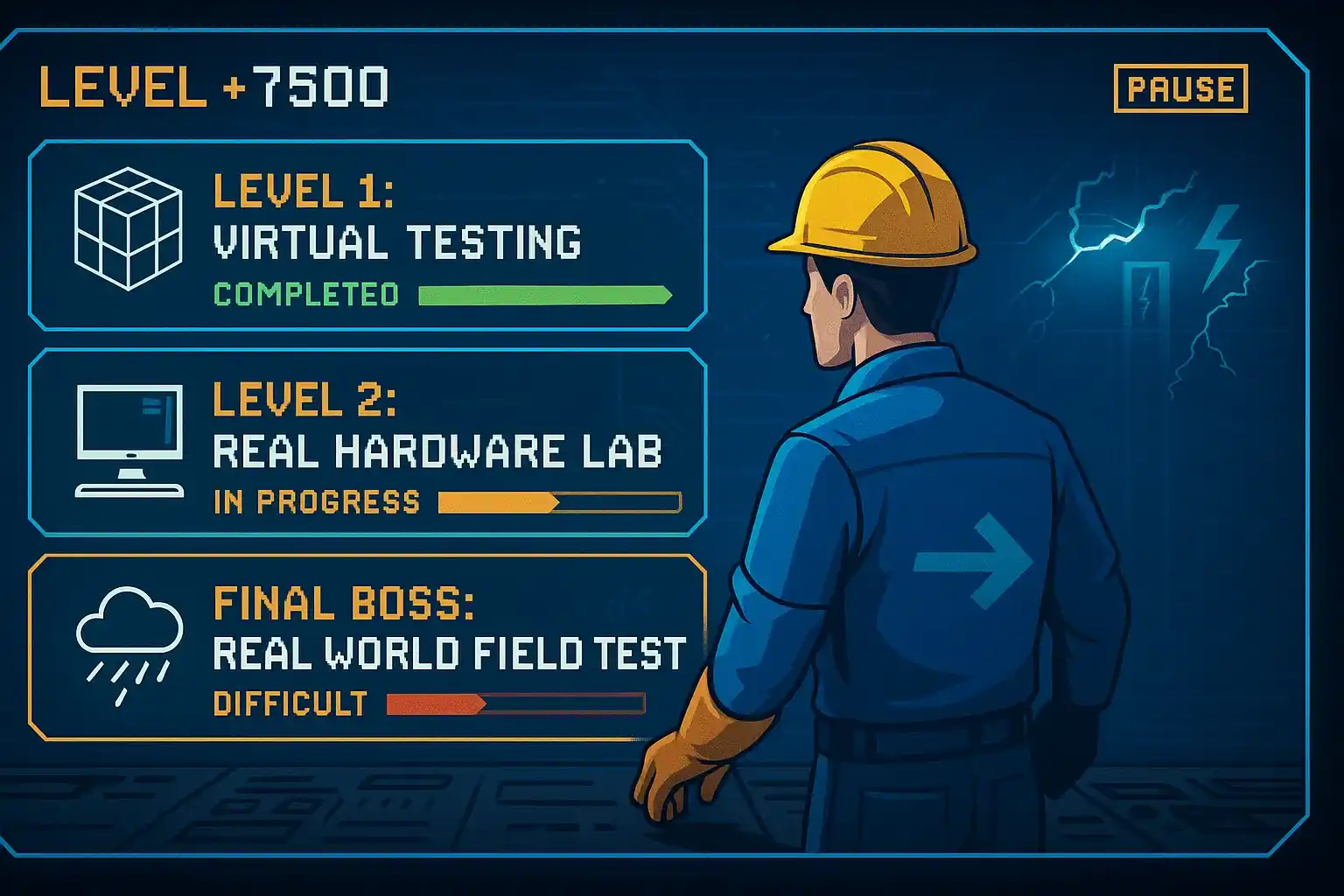
An effective testing strategy requires a structured approach which involves three distinct phases, each with specific objectives and appropriate methodologies:
- Strategy design: the design of this strategy it cannot be improvised but it must be planned considering the characteristics of the system and the risks associated with each component of the system.
- Simulation of control logics: constitutes the first level of verification, allowing you to test the behavior of the software under controlled but realistic conditions.During this phase it is possible to generate complex virtual scenarios, force anomalous conditions and observe the system's reactions without risk to the physical hardware.
- Laboratory tests: Lab testing introduces the complexity of real hardware, revealing aspects that the simulation cannot replicate such as physical delays, signal oscillations, electrical interference.This intermediate phase allows you to identify incompatibilities between software and physical components before reaching the installation site, where fixes become more complex.
- Final check in the field: the final verification in the field represents the definitive test, where the system must demonstrate its own reliability under actual operating conditions.
- Integration of the three phases: the three phases must be integrated into a coherent strategy, where each level of testing prepares the next and helps build overall trust in the system.
- Benefits of a methodical approach: those who face testing with this methodical approach arrive at the start-up moment with the awareness of having checked every aspect critical of operation.The well-structured testing strategy not only reduces technical risks, but demonstrates to the customer a level of professionalism that translates into trust and future opportunities.
Effective integration between the three phases requires careful planning and coordination between different teams, often geographically distributed and with complementary skills.
The simulation must be designed to replicate not only the nominal behaviors, but also stressful conditions that the system may encounter during its operational life.
Simulation models must be constantly updated to reflect hardware and software changes, maintaining consistency between the virtual world and physical reality.
The transition from the laboratory to the field often represents the most delicate moment, where environmental variables emerge that no simulation can replicate completely.
The experience gained through well-structured tests allows us to anticipate these variables, preparing effective countermeasures before problems appear.
With practical examples and replicable strategies, in PLC programming course you learn to plan simulations, laboratory tests and field checks in a coherent way, avoiding the logic of improvisation which often compromises everything in the end.
Functional checks and operational checklists
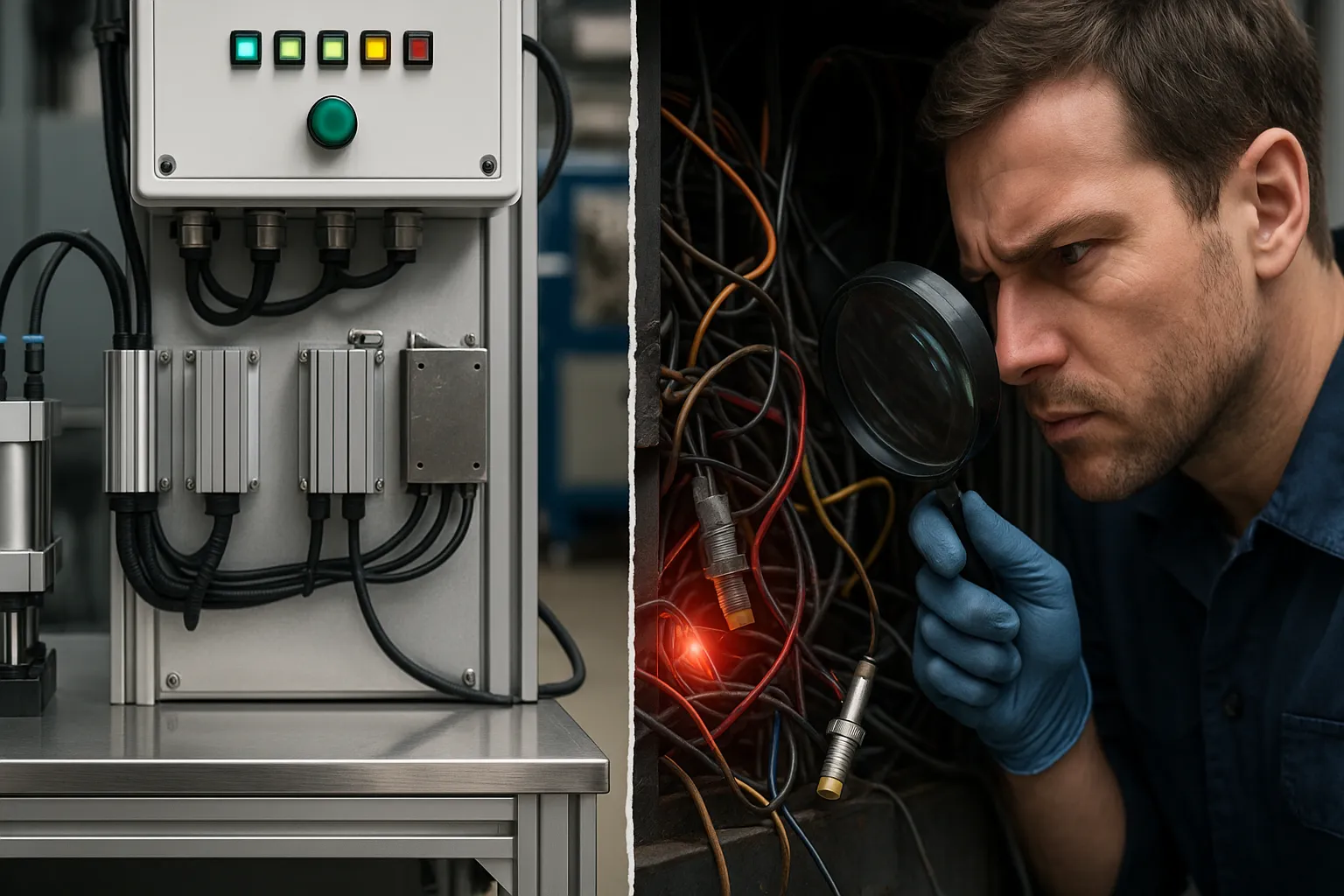
The most insidious moment of any test occurs when everything seems to be working correctly, creating a false feeling of security that can hide latent critical issues.
The true functional verification does not limit itself to verifying that the cycle is completed, but it must push the system beyond normal conditions to test its robustness and coherence.
Each implemented function deserves an in-depth analysis that considers not only the nominal behavior, but also reactions to boundary conditions and anomalous situations.
The systematic approach to testing requires the definition of a operational checklist that guides the process and guarantees the completeness of the tests performed.
This checklist does not represent a bureaucratic constraint but a working tool that protects against forgetting critical aspects during intense and stressful phases.
The checklist structure must be designed to cover all functional aspects of the system:
- Verification of machine states: control of transitions and residence times in each operating state
- Testing of safety functions: simulation of emergency conditions and verification of protection systems
- Interface control: verification of communication between components and consistency of the data exchanged
- Robustness test: Deliberate introduction of disturbances and anomalies to test the system's ability to recover
The depth of the checks must be calibrated based on the criticality of the process and the potential consequences of a malfunction, avoiding both excesses and insufficiencies.
A risk-based approach to checks allows you to concentrate resources and energy on the components that have the greatest potential for negative impact.
The traceability of the checks carried out becomes fundamental to demonstrate regulatory compliance and to facilitate any external audits.
Partial automation of checks can reduce execution times and improve repeatability, but should never completely replace human judgment.
Each item on the checklist must be precisely documented, recording not only the outcome of the test but also the specific conditions under which it was performed.
The quality of the documentation during this phase turns out to be fundamental for the traceability of the checks and for any subsequent analyses.
An experienced professional knows that the operational checklist also represents a tool for professional growth, allowing you to refine your working method through accumulated experience.
A well-designed checklist comes from method, context and attention to detail.
In ours PLC programming course, we explore how to build custom testing tools that not only prevent errors, but improve your professional reputation with each test.
But building a truly effective checklist isn't a matter of pre-filled forms or generic templates. It is a sartorial job, which requires knowledge of the context, technical intuition and an overall vision that only experience can develop.
If you want to create operational checklists that don't just “tick boxes” but actually protect you when it counts, we can help you custom-design them for your systems, your pace, your risks.
Book a free call with one of our experts and discover how to transform each check into a tool that increases quality, reduces errors and grows your professional reputation.
Input simulation to test all conditions
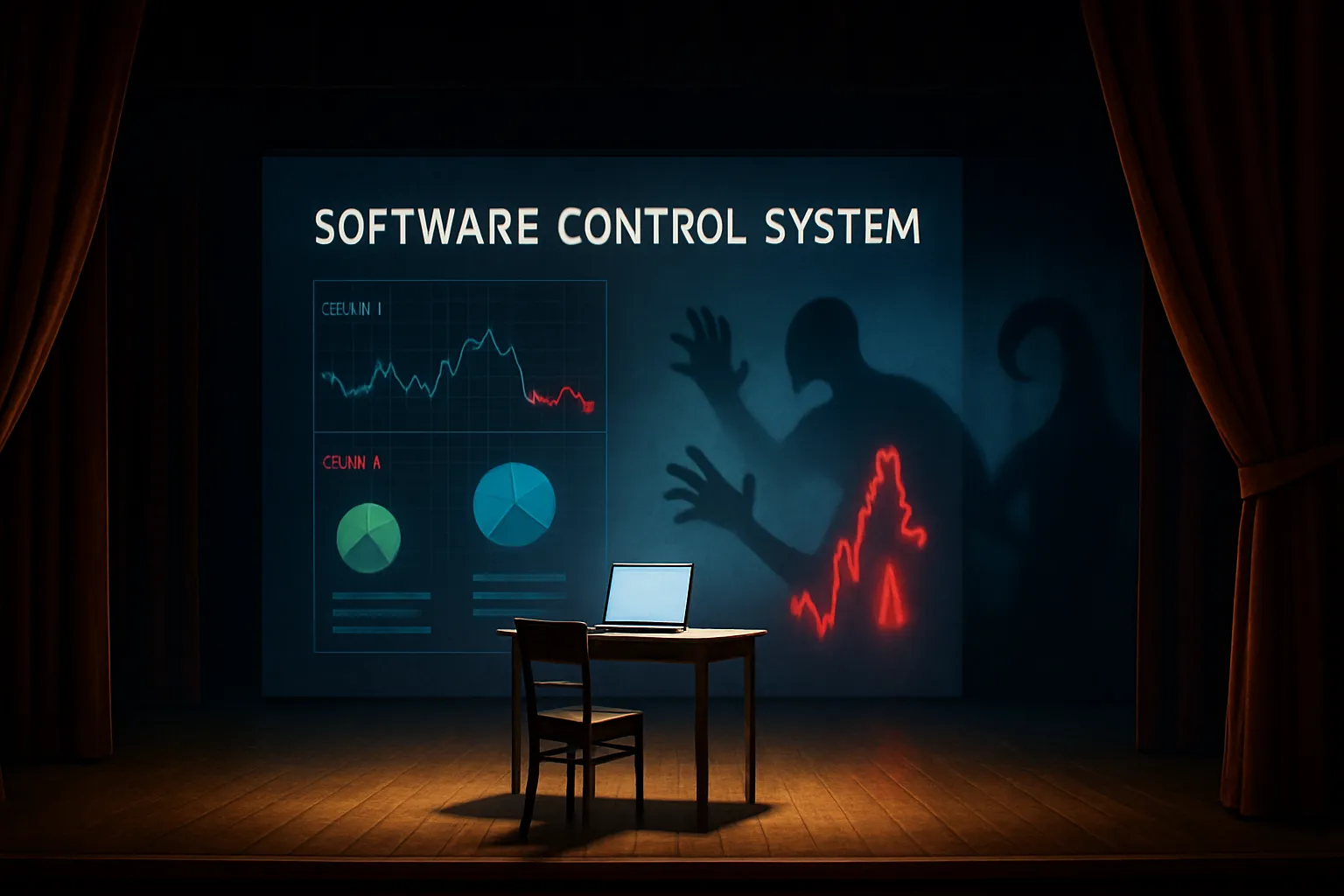
The simulation represents the art of questioning the system through scenarios that operational reality often does not present so clearly, but which could manifest themselves in the most critical moments.
The effectiveness of this phase depends on ability to imagine unlikely situations but possible, testing the resilience of the software against unexpected combinations of events.
Each simulated input constitutes a specific question posed to the system: "How do you react if this signal arrives late, if it is missing completely, if it presents with anomalous values?"
Creativity in designing test scenarios becomes a fundamental professional skill, allowing you to discover vulnerabilities which may remain hidden during normal operation.
It is not enough to verify that the system responds correctly to expected inputs; it is also necessary to test reactions to illogical sequences, contradictory signals, anomalous timing.
Systematic simulation allows you to build that in-depth knowledge of the system which proves invaluable during operational phases, when it is necessary to quickly diagnose complex anomalies.
Each combination tested in the simulation represents a potential problem solved before it can manifest itself in operational conditions, where the consequences would be much more severe.
The investment of time in in-depth simulation it pays for itself amply during start-up, when the system proves to be prepared even for situations that no one had explicitly foreseen.
Designing creative test scenarios requires an almost playful mentality, where the test driver enjoys imagining absurd situations that could occur.
This disciplined creativity develops with experience and becomes a distinctive skill that differentiates the expert professional from the general technician.
Collaboration with expert operators can provide valuable insights for test scenarios based on situations that actually occurred in similar plants.
Statistical analysis of historical failures it can guide the design of targeted tests towards the most probable failure modes for that type of system.
For those who really want to improve their ability to anticipate unexpected events, ours PLC programming course offers a section dedicated to advanced simulation, based on real cases and documented failures, to refine technical intuition with method and creativity.
Real-time monitoring and status logging

Effective monitoring during testing requires the ability to interpret the system language, reading signals that often remain invisible to superficial observation.
Systematic recording of internal events allows you to build a precise chronicle of the behavior of the system, fundamental for subsequent analyzes and accurate diagnoses.
Logging is not a luxury for perfectionists, but an indispensable professional tool for those he wants to maintain complete control of the testing process.
Every recorded transition, every documented state change contributes to creation that traceability that distinguishes professional work from improvisation.
The design of the monitoring system must focus on truly significant elements for the behavior of the system:
- Main operating states: Recording of transitions between different operating modes
- Critical process parameters: monitoring of values that directly influence the quality of the result
- System events: tracking of alarms, resets, manual interventions and detected anomalies
- Temporal performance: measurement of cycle times and identification of progressive slowdowns
The quality of monitoring is measured not in the quantity of data recorded, but in the ability to select truly useful information to understand the behavior of the system.
A well-designed logging system becomes a precious ally even in subsequent operational phases, providing elements for predictive maintenance and performance optimization.
The competence in designing effective monitoring systems represents a significant added value for the professional, demonstrating a methodical and far-sighted approach to their work.
And it is precisely in this approach that the real difference is made between those who record data and those who read the future of their system in advance.
If you want to learn how to design intelligent monitoring systems, capable of really telling you what's happening, ours PLC programming course guides you in building effective dashboards, logical filters and robust tracking tools right from the first test cycle.
Do you want to design a monitoring system that truly speaks the language of your system and anticipates problems before they become failures?
Together we can transform your data into operational decisions and every log into a concrete competitive advantage.
Book a free call now with one of our specialists and find out how to structure intelligent monitoring that works for you, even when you're not there.
Error correction and continuous improvement
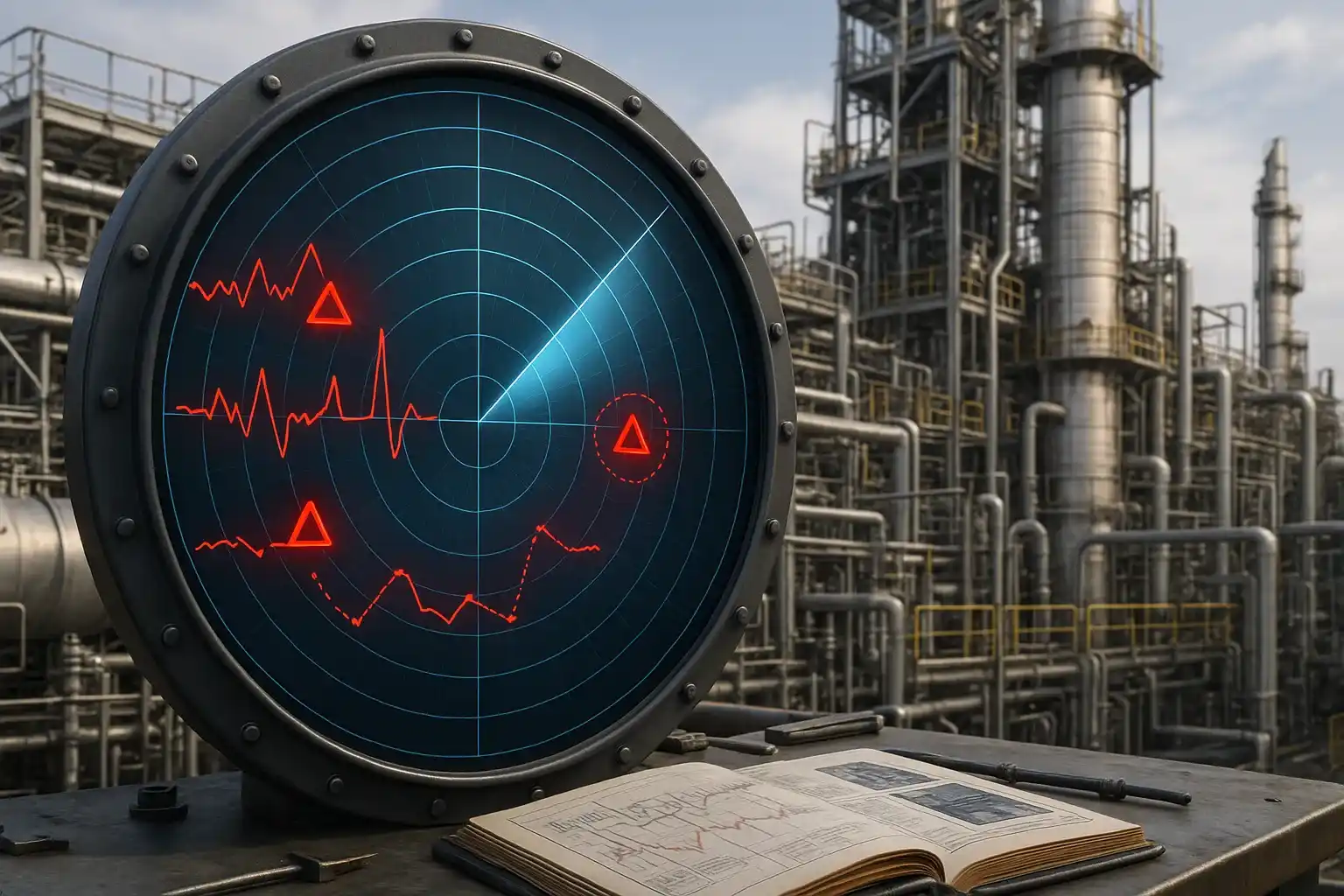
Testing always reveals unexpected aspects of the system, and this is not a weakness of the process but an intrinsic characteristic that must be acceptedand managed with professionalism.
Every anomaly discovered during testing represents an opportunity for improvement allows you to raise the overall quality of the system before commissioning.
The analysis of behavioral patterns through continuous monitoring allows us to identify gradual drifts that could escape episodic controls.
The correlation between seemingly unconnected events can reveal hidden connections which affect the overall performance of the system.
The implementation of intelligent alarm thresholds, which adapt to operating conditions, reduces false positives and improves monitoring effectiveness.
Effective visualization of monitored data requires data design skills that go beyond simple information gathering.
Modern testing requires effective coordination between different skills: electronics, mechanics, software, process.
The clear definition of roles and responsibilities avoids overlaps and guarantees adequate coverage of every critical aspect by competent personnel.
Effective communication during testing becomes crucial when problems are complex require integrated skills to be resolved quickly.
Managing technical conflicts between different disciplines requires leadership and mediation skills in addition to specific technical expertise.
The professional approach to error correction requires clarity in analysis, method in the intervention and attention to the possible consequences of every change made.
Continuous improvement during testing is not limited to solving technical problems, but also includes the refinement of test methodologies and the growth of personal skills.
Each error methodically addressed during this phase contributes to developing that professional maturity which manifests itself in the ability to manage critical situations with calm and determination.
The accurate documentation of each correction made becomes a wealth of knowledge for future projects, allowing you to avoid repeating the same mistakes.
Those who approach testing with a mentality of continuous improvement transform every critical issue into an opportunity for growth, consolidating skills that will prove invaluable in future situations.
The quality of the corrections made during testing directly reflects on the reliability of the final system and on the perception that the customer develops.
OursPLC programming course accompanies you in making every error a lever for improvement: from the initial diagnosis to the rewriting of the code, up to the documentation of the solutions.
Because it's not the mistake that counts, but how you transform it into value.
Documentation of the tests performed

Documentation represents the bridge between the work done during testing and the future memory of what was actually verified and how any problems were resolved.
Every documented proof becomes a element of guarantee for the client and protection for the professional, demonstrating the completeness and seriousness of the approach adopted.
The quality of the documentation is measured in the ability to transmit useful information to those who will have to interact with the system in the future.
Effective documentation must be structured for answer questions that will inevitably arise during the operational life of the plant: what was tested, how it was verified, what problems emerged.
The chronological recording of events during testing creates a trace that can prove invaluable for future diagnoses or for analysis of anomalies that appear over time.
Those who accurately document their work demonstrate a level of professionalism that goes beyond technical competence, highlighting attention to detail and responsibility towards the final result.
Well-structured documentation also facilitates knowledge transfer within the work team, allowing colleagues to quickly understand the technical choices adopted.
The investment of time in accurate documentation pays off through the reduction of the time required for maintenance or subsequent changes to the system.
But there's more. Well-designed documentation is not just technical memory, it is also strategic value: conveys competence, inspires trust, makes your work readable, replicable and recognized over time.
In PLC programming course you will also find examples of templates, versioning strategies and techniques to make documentation a true business asset.
Because what you leave written today will be what builds trust tomorrow, inside and outside your team.
If you want to develop documentation standards that truly enhance your work and make each system more manageable, understandable and safe even after years, we can help you create customized templates, replicable methodologies and practical tools that make the difference.
Book a free call with one of our experts and discover how to build documentation that does not remain on paper, but becomes a concrete resource for the entire life cycle of the system.
How to manage urgent changes during testing

Urgent changes during testing represent one of the most severe tests for professional maturity, requiring a balance between speed of intervention and certainty of the result.
The time pressure typical of these situations can push towards hasty solutions which risk creating more serious problems than those they intend to solve.
The effective management of emergencies requires a mental protocol that allows you to maintain clarity and method even when the context becomes chaotic and stressful.
The key to success lies in ability to balance speed of execution and completeness of the analysis, avoiding both decisional paralysis and rash interventions.
A structured approach to urgent changes involves specific steps:
- Rapid impact analysis: immediate evaluation of the functions that could be affected by the change
- Choice of reversible solutions: preference for interventions that can be easily reversed in case of unwanted effects
- Real-time documentation: Immediate recording of what is changed and why
- Immediate test: quick but accurate verification of the result obtained
The ability to manage urgent changes with professionalism becomes a distinctive element that the customer appreciates and which helps build reputation and trust.
Managing urgency requires cold blood, but also mental training.
Ours PLC programming course teaches you to react methodically even under pressure: analyze, decide, document and test clearly, without losing control of the situation.
Practical example: testing an automated packaging system

An automatic packaging plant represents an ideal example to illustrate the practical application of testing methodologies, combining technical complexity and real operational needs.
The system must coordinate multiple workstations, each with precise timing and critical interdependencies that require sophisticated control to ensure operational fluidity.
Testing begins with full simulation of each operational phase: product feeding, positioning control, device activation, material handling, final quality control.
During the simulation, not only the nominal cycles are tested, but also all possible anomalous combinations: products out of specification, sensors temporarily deactivated, sudden cycle interruptions.
The laboratory testing phase introduces the complexity of the real hardware, revealing aspects that the simulation cannot replicate completely: mechanical vibrations, thermal drifts, electromagnetic interference.
Every anomaly detected is documented, analyzed and resolved through targeted software changes, followed by new tests to verify the effectiveness of the fix.
Monitoring during testing records critical parameters such as cycle times, positioning precision, energy consumption, allowing performance drifts to be identified before they become problematic.
The final field test subjects the system to real operating conditions: product variability, sustained production rates, interactions with operators, variable environmental conditions.
Testing success is measured not only in correct functioning during testing, but in demonstrating that the system can maintain stable performance over time without continuous supervision.
You have read, you have reflected, perhaps you have even recognized yourself in those testing phases where everything can go wrong or everything can demonstrate who you really are.
If you feel that the time has come to take your skills to a higher level, with method, vision and the support of those who have already faced the challenges you experience every day, then this is the right time to act.
Don't wait for the next critical test to realize that something should have been done sooner.
Act now.
Book a free call with one of our specialists: together we will analyze your current approach, identify the most critical weak points and together we will build a practical plan to transform every test into an opportunity to truly stand out.
Transform tests into value, pressure into trust, your role into authority.
Take the first step.
We do the rest together.
Leave your details in the form below