

What are programming languages?
A question that, on the surface, might seem scholastic or even banal, yet hides a surprising depth.
A universe made of logic, intuition e mental architecture, where every instruction becomes a creative gesture.
A gesture capable of generating a silent dialogue between the human mind and the machine.
It's not just a sequence of mechanical instructions that prompts the computer to act.
A living, pulsating language, capable of transforming the abstract into something tangible, an idea into a system, a will into real functioning.
For this reason, a technical definition is not sufficient.
You need to grasp the deepest essence of what you are doing.
See the code not as a simple list of commands, but as a design act.
A concrete form of construction, capable of generating architecture that resists time.
Every line written with awareness becomes a structural decision.
Each function inserted with vision integrates into a coherent ecosystem.
Only those who begin to think like a designer, anticipating the consequences of each choice, can truly give value to what they write.
It is not enough for an application to work in the short term.
It must fit into a broader vision.
It must follow a precise direction.
It must adhere to an architectural coherence that makes it sustainable over time.
And capable of evolving without breaking.
This article was not created to explain what to write.
It was created to offer you a different perspective, an invitation to question yourself about why you're writing it.
To overcome executive logic.
To embrace the strategic one.
Looking at languages not as passive tools.
But how allies to handle with clarity and clear intention.
If you have the courage to stay until the end, something will change.
You will start to look at the code with different eyes.
You will understand that it's not the language to make a difference.
It is the mind that guides it, it is the vision that directs its meaning.
What programming languages really are

In a silent laboratory, immersed in raw material and instruments aligned as in a temple of mental order, a man works without haste.
He has a chisel between his fingers and an idea already clear in his mind. It moves with the precision of chi sees the final form even before touching the surface.
It's not copying lines from a manual.
He is not assembling fragments found online.
He is creating with the care of the craftsman and the precision of the engineer.
He sculpts every detail with awareness, because he knows that every gesture leaves a permanent imprint on the structure that is being born.
For him, programming languages are not passive tools.
I am direct extensions of one's mind, digital chisels capable of carving thoughts into the living stone of the code.
They transform insights into functions, concepts in systems, visions into concrete and measurable executions.
Each line becomes a smoothing, each condition a precise engraving.
Each function is one logical composition which comes to life only if orchestrated by a mind capable of seeing beyond the single command.
A mind capable of imagining the entire behavior of the system, before it even happens.
A programming language is not a list to be memorized.
It is a bridge between human logic and the world of machines.
A live channel, active, crossed by what you imagine.
And every imagination becomes action, logical sequence, real impact.
Yet, that bridge remains silent if it is crossed without vision.
Knowing how to write code is not enough.
We need to understand its nature, just like a musician who doesn't just play the notes.
But he feels them flowing inside him, as part of his own creative identity.
Write with awareness it means recognizing the hidden rhythm.
Intuit abstractions.
Respect limits.
And choose intelligently not what is simplest.
But what is more solid, more coherent and perfectly aligned with the structure you want to build.
Every language arises from a well-defined vision.
C# it is designed to make objects communicate in complex environments, where each element cooperates within complex structures.
Python favors elegance, synthesis, readability: communicates profound concepts with light words.
Java imposes rigor and structure to guarantee stability even in the most intricate and long-lasting contexts.
Understanding these differences is an act of strategic clarity.
It's not just about deciding what to write.
It's about choosing what kind of digital world do you want to build.
With what internal rules.
In what order.
And above all: with what impact over time.
Those who write without fully knowing the language they use lives on borrowed fragments.
Precarious solutions, improvised patches, structures that struggle to hold up.
But whoever understands its roots, abstraction dominates.
And he manages to transform confusing ideas into elegant, scalable, functional structures.
Really understand a language it's the beginning of everything.
It's the moment you abandon the "let's try to see if it works" logic.
And you start writing like who design with intention.
Build with consistency. Write to last.
How programming languages work: from code to execution

Write code it is not the end of a process.
It is the beginning of an invisible and precise transformation.
Every line you write triggers an ordered chain of digital events.
As if each symbol were an exact note.
A score to be performed with rigor.
The programming language it's the score.
You are the composer: you define times, logic, harmonies.
Conducting the orchestra, that is, the computer, enters the scene an impeccable interpreter.
It precisely translates your every choice into a real operating sequence.
The computer does not interpret, does not improvise, does not doubt: it executes. With absolute speed and total obedience, he acts only if he receives clear, coherent and formally correct instructions. It is a pure power, but it changes without a mind to command it.
When you write code, you are structuring a logical flow: branches, loops, conditions, functions. They're not just commands. They are operational declarations, sequences of will transformed into replicable behavior. It is a language that generates concrete consequences, in real time.
But as sophisticated as it is, your code alone is incomprehensible to the machine. The processor thinks only in binary terms. This is where the two supreme translators come into the picture: the interpreter e the compiler.
The interpreter examines each line the instant it encounters it, translating it into executable operations on the fly, useful in environments where immediate flexibility is needed. The compiler, on the other hand, reads everything, analyses, optimizes and generates an executable binary file, ready to be launched, shared and maintained.
Different roads, same destination: transform concepts into concrete action, giving substance to what was previously just abstract logic in your mind. This is the beating heart of programming: transforming thought into dynamic structure.
It is in this moment that what you have written comes alive. It opens windows, carries out calculations, communicates with a network, modifies a database, returns information. It becomes tangible. He acts. He reacts. Exists.
Understanding this passage, from the mind to the code, and from the code to the machine, is essential for those who want to write with strategic clarity. It allows you to anticipate what will happen before you even press “Run”, to predict the behavior of the system, to avoid hidden errors.
And it is precisely in this awareness that the transition occurs.
We move on from improvised code al designed code.
From impulse writing to architectural construction.
From the sum of commands to the systemic vision.
You're no longer just writing to make something work. You are building to bring an idea to life. In order. With logic. With power.
Fundamentals for building robust applications

Writing code isn't just about making something work today. It means building a structure capable of lasting over time. Must adapt to changes. Evolve without collapsing every time a new need arises.
A solid application is not born from isolated lines added randomly. It is the result of a coherent architecture. A living body. Each part is designed to integrate with the others according to a precise logic. As in a well-built machine. As in a building with foundations, columns, beams and a master plan.
To get to this level you need four fundamental pillars. Every developer should master them with discipline and awareness: logic, structure, syntax and architecture.
The logic it is the basis of algorithmic thinking. It allows you to recognize conditions, design decision paths, organize cycles, manage exceptions. Not to make something work once, but to make it work every time. In every foreseen scenario.
The structure it is the invisible backbone of the code. It's what makes a project readable, maintainable, scalable. Organize files, modules, folders. Give consistent names. Separate responsibilities. It's not just an aesthetic issue. It's real software engineering.
The syntax, often underestimated, is much more than grammar for the machine. It is the language with which you communicate your intentions. To the compiler. And to future developers who read that code. Each point, bracket or construct has weight. One mistake interrupts everything. Correct syntax generates clarity, fluidity and understandability.
Finally, there is the architecture. The pillar that encloses and governs all the others. It's the overall vision. It allows you to think before you write. To design stable relationships between components. To define predictable flows. Ensure consistency. Prepare each system for extension and growth.
Without architecture, every project risks becoming a maze of confusing code. With a solid architecture, even the most complex complexity can be addressed with order, control and safety.
For this reason, in C# course , we don't just teach language. We convey a planning mentality. We guide you in the concrete application of these pillars. Through real examples, authentic problems, structured solutions.
It's not just any course. It is a path of transformation. From executor to conscious builder. From those who write code that works to those who write code that supports a system. A system designed to last. And grow.
Because the real difference is measured every day. In the way you apply the fundamentals. In the coherence of your style. In the depth of your vision. And in the care with which you translate thought into structure.
LLM: strategic allies in software development
Artificial intelligence, for those who develop with a clear mind and clear vision, has never been a risk to be contained. It's a lever. A strategic amplifier capable of extending your thinking far beyond the limits of tiredness, time and habit.
Templates like ChatGPT are not tools to be feared or shortcuts for those in a hurry: they are silent interlocutors which can accelerate, deepen, stimulate. But only if you know how to question them with surgical precision, without expecting them to think for you.
Using an LLM to copy a function may seem smart. And sometimes it works. But it is an effectiveness that is deceiving, because if the mental architecture is missing, if you don't really understand what you are doing, every piece obtained remains a fragment that does not hold up.
A scalpel in the wrong hands can cut paper. But it doesn't save any lives.
And with artificial intelligence it works the same way.
What matters that's not the answer, but the quality of the application.
It is the clarity of intent, the project structure in which that response is inserted.
An LLM does not know your system, does not see the relationships between modules, does not perceive the balance between levels. He can only answer. It's up to you to filter, evaluate, decide whether what you receive integrates with your vision, or contradicts it.
When you learn to use AI not to replace thought, but to multiply it, a turning point occurs.
You begin to plan in tandem with an external mind that sends stimuli back to you.
It offers you new angles and frees up your cognitive energy to focus on what really matters.
In C# course we teach you exactly this.
Not to have an LLM write to you.
But to question him with strategic logic.
We use the Better Developer Method to integrate the power of AI into your design flow.
Without ever giving up direction.
You will find that each request is well formulated shorten time between idea and solution.
Every intelligent check reduces errors before they even emerge.
Every comparison with AI becomes a training field for your thoughts.
Superiority today lies not in those who write code faster, but in those who orchestrate vision, tools and AI in a coherent ecosystem. An ecosystem capable of growing, adapting, responding. Without falling apart.
Artificial intelligence will not replace those who can think clearly.
But it will enhance exponentially who already knows how to build with vision.
Transform from developer executor to strategist

In every team there is an invisible but decisive line. On the one hand those who execute instructions, on the other those who build systems. On one side the performer, on the other the strategic designer.
Executors write fast code, close tasks, follow specifications. But he often forgets the domino effect of each choice, ignores the context, loses the overall vision. It moves within the code. Not above.
The designer, on the other hand, has a gaze that crosses time. He stops before writing. Thinks. Analyze. Anticipate. Does not work to close a ticket. It builds to handle the load, today and tomorrow.
Becoming a strategist is not a career advancement. It is an internal revolution. It's about stopping asking "how to do it" and starting asking "what impact will it have". It is recognizing that every line written today generates consequences tomorrow.
It is the transition from code as a reaction to code as a structure. From temporary solutions to systems designed to last. From those who glue pieces together to those who orchestrate balance, logic and continuous growth.
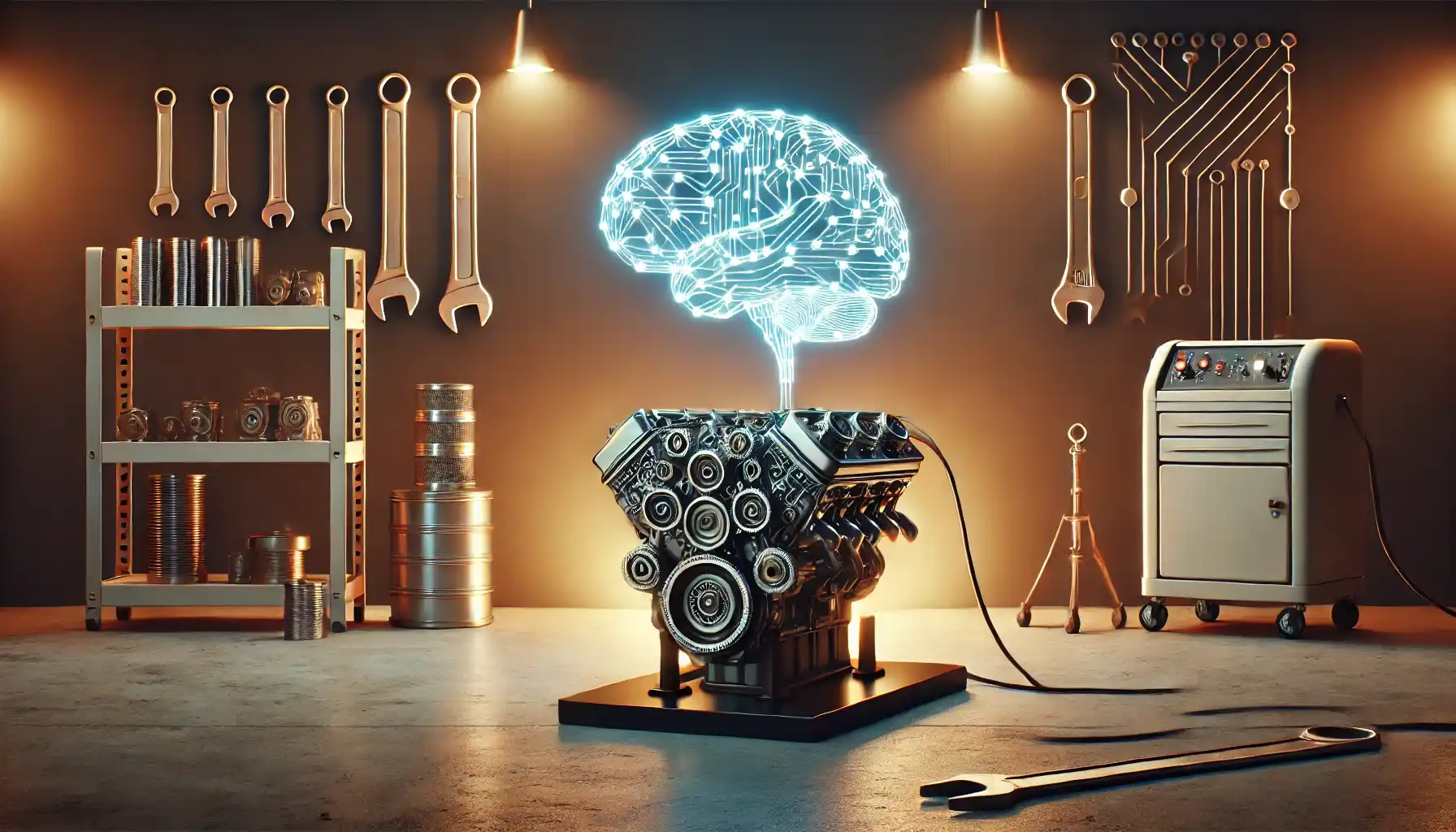
A racing engine is not assembled by copying tutorials. We design methodically, taking into account friction, resistance, interaction and synergy. And the same goes for software: each component must be part of a coherent architecture.
If you don't make this leap, you can remain in a comfort zone for even twenty years. But it will be an area where you execute, not decide. Where you produce, but don't design. Where you write, but you don't build.
In C# course, this transformation is the goal.
You don't just learn to write good code.
Absorb the mentality of those who lead: you structure before writing, choose methodically, plan to grow, not just to make it work.
Because the real difference between those who write code and those who lead projects manifests itself in a precise point: before the keyboard is even touched.
It lives in the thought that precedes the gesture, in the strategy that guides the hand, in the ability to understand the system before even writing the first line.
The art of software development

Whenever you write code with a clear mind, you're doing more than just instructing a machine.
You are transforming thought into structure, intuition into mechanism, vision into replicable behavior.
It's not technical. It's mental form. It's invisible design. It's subtle art that manifests itself in the choices you make, before the code even works.
Software that stands the test of time isn't born from luck or inspiration. They arise from a silent discipline, from an internal workshop in which logic, architecture and strategy are refined.
Just as a carpenter knows the resistance of each grain, so the conscious developer learns to listen to the language he uses.
He perceives its limits, senses its strength, recognizes its deep breath, as if it were alive under his fingers.
It is not enough to know “how it works”. It is necessary to master the philosophy that supports it. Understand its syntax and semantics, but also its character, rhythm, coherence.
It is in this sensitivity that the difference manifests itself. Between those who write to respond to a request and those who design to generate value.
Each line can be an automatic gesture or a chisel stroke. Every function, a shortcut or a structural choice. Every system, a tangle or a readable, solid, extensible work.
Those who chase frameworks and libraries without foundations remain fragile. Whoever masters the essential, logic, architecture, language, builds stability even in a fast-paced world.
The true art of development is not measured in the number of lines written. It is measured in the precision with which each block fits together. In the coherence of the project. In harmony between vision and result.
And today, this art can be enhanced. Artificial intelligence, if guided with awareness, becomes silent ally, trusted assistant, thought accelerator. Not to generate random code, but to strengthen every decision you make.
At a certain point, you understand: you're not just programming anymore.
You are signing every system with your way of thinking.
And if your identity begins to be reflected behind every line, if you feel that every function tells your way of building... then you are really ready to rewrite something deeper.
Not just the code. But also yourself.
Leave your details in the form below