
Every time an entrepreneur invests in artificial intelligence he does so for a simple reason: wants to gain an advantage that lasts over time.
He wants the technology becomes an amplifier of your company's capabilities, a strategic lever that frees people and processes.
He wants to build an engine that continues to learn and improve day after day, without depending on individuals or volatile memory.
Yet, what almost always happens is exactly the opposite: your AI remembers nothing.
Every project starts with enthusiasm, promises efficiency, seems capable of transforming the way you work.
But then, as the months pass, the magic fades.
Bots respond superficially, digital assistants seem to forget even what they “learned” the previous week.
Systems that were meant to grow become empty shells that repeat generic responses disconnected from business reality.
What you are experiencing is not a technological failure but it's a structural problem.
You built a brain, but you gave it no memory.
You have invested in a system that thinks only in the present and forgets every past experience, and that is why, despite your efforts, your AI never becomes truly “intelligent”.
Because it is not enough to be able to process information: you need to know how to preserve, contextualize and reuse it in a strategic way.
The good news is that the problem is not unsolvable.
You don't need a bigger model, more expensive infrastructure, or hire armies of experts.
You need something much simpler but infinitely more powerful: intelligent memory.
This is where Qdrant comes in.
It's not a simple vector database, but a completely different way of thinking about corporate knowledge.
It offers your AI what it has always lacked: the ability to transform the past into leverage to anticipate the future.
And this is precisely the point at which technology stops being an interesting experiment and becomes a strategic asset permanent.
What is a vector database and what is it for?

Try to imagine your company as a living being; every day he thinks, decides, learns.
Accumulate experiences, strategies, intuitions, failures and successes.
All this precious heritage, however, is found in most modern businesses remains trapped in archives separated: scattered documents, messy repositories, systems that don't communicate with each other.
Different people keep pieces of knowledge in their individual memories and, when they change roles or leave the company, they take away an invisible but fundamental heritage.
It's a constant flow of information that disperses instead of transform into cumulative wealth.
Forget everything you know about databases for a moment.
Traditional systems are like paper archives: they search alphabetically and find quickly, but they don't really understand what they're reading.
They are fast, yes, but blind.
They don't grasp meanings, they don't understand relationships.
A vector database was created to overturn this paradigm.
It doesn't just store data statically, but gives an organic form to memory.
Each piece of information becomes a living, relational fragment, immersed in a broader context.
He doesn't think in terms of rows and columns, but of meanings and connections.
If a classical database tells you where a document is located, a vector database tells you what that document means and how it relates to the rest of the knowledge corporate.
It's the difference between a warehouse full of closed boxes and an intelligent library where every book is part of a living network of ideas.
It's as if the database doesn't simply store words, but understands their semantics and deeper meaning.
This concept radically changes the perspective of an entrepreneur.
Knowledge it ceases to be a fragile and volatile asset and becomes a permanent strategic asset.
Instead of depending on the memory of individuals or the ability to find lost files, the company begins to remember in a structured, coherent and lasting way.
It's not a technical detail: it's a cultural revolution.
One is mechanical, the other understands.
And here's the point.
The way your customers ask questions is natural, chaotic, full of synonyms and nuances.
No one ever writes perfect queries, but your AIs still have to understand what they want.
And when they do, they don't just offer a better answer: they generate value.
Satisfied customers stay longer, buy more, tell others about your product.
It's the difference between a simply "acceptable" experience and an "extraordinary" one.
And today what matters is not what is extraordinary in an absolute sense, but what the market chooses to enhance.
Because intelligent memory is not an accessory tool: it is the foundation on which you build the future of your company.
Because Qdrant is a reference for vector databases

When the tech market falls in love with a new paradigm, it's usually for performance.
It chases ever-larger language models, ever-more expensive infrastructure, and chatbots that seem human for three minutes, before collapsing into banality.
But those who build solid companies know that power, without memory, is useless.
You can have the fastest car in the world, but if it starts from scratch every time it will never get far.
And this is precisely where Qdrant stands out: has become the standard “de facto” for those who really want to build, not just experiment.
It was not created to be yet another technical tool to add to an already congested technological pile, but to solve the problem that many pretend not to see: the absence of continuity.
Every conversation, every document, every decision becomes a useful fragment only if you can keep it in a structured way, connect it to the rest and make it available exactly when you need it.
Qdrant is like the engine of a super sports car: built for performance.
From the very beginning, the team that created it understood something that many others hadn't.
Vector databases don't have to be a compromise.
They don't have to choose between speed and accuracy, or sacrifice scalability for good performance.
Qdrant was born with a different philosophy: excel on all fronts at once.
The result is technology that is elegant, solid and surprisingly accessible.
It doesn't force you to revolutionize your processes, but integrates like intelligent memory, transforming your AI from an expensive toy to a strategic tool that can last.
Every time you invest in memoryless technology, you create a temporary asset, destined to lose value as soon as you stop feeding it.
With Qdrant, however, every fragment of knowledge becomes part of a heritage that grows over time.
It is the difference between a company that accumulates knowledge and one that lets it evaporate.
And this difference becomes even more significant when solidity comes into play.
Qdrant is built to be robust: all data are stored redundantly, and if something goes wrong, you lose nothing.
It's like having an automatic, constant backup of everything that really matters.
In an age where every minute of downtime costs money, this is not an optional feature: it is a vital element.
And this is why Qdrant, in the world of vector databases, has become an authoritative reference.
It doesn't promise miracles: it does much more.
It focuses on what makes everything else possible.
When a technology stops being an accessory and becomes the backbone of a company, it is no longer just about "doing AI", but about building strategic foundations that remain.
If you are reading this point, it means that you have already understood that Qdrant is not another tool: it is the living memory that gives continuity to everything you create.
In Programming course with AI we teach just how to use tools like this to transform your software into solid, scalable and strategic architectures.
The real question now is not "if", but "when" you will decide to stop starting from scratch every time.
How to save and search embeddings
Now we get to the practical point: how do you really use Qdrant?
How do you enter your data?
How do you question it to get concrete results?
The beauty of Qdrant lies here: behind the scenes it is complex, but for those who use it it's surprisingly simple and linear.
Think of flow as three essential steps that follow each other naturally.
- First step: get your data, documents, product descriptions, web pages, conversations, whatever information you want to keep.
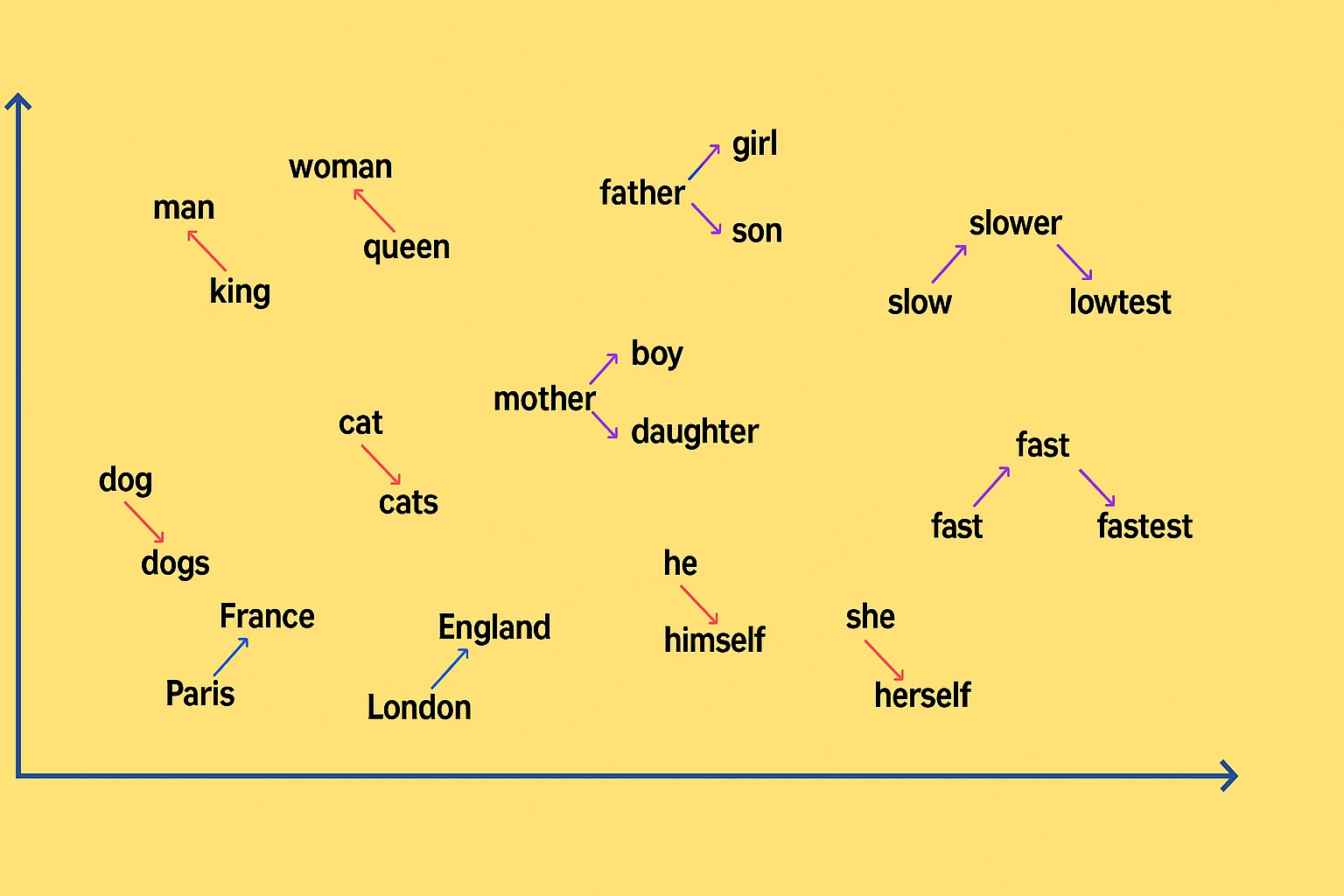
- Second step: you turn them into vectors through an embedding model, that is, an artificial intelligence model that takes the text and translates it into numbers that represent the meaning.
- Third step: insert those vectors into Qdrant and start doing research.
You might think that embedding is a technical term for professionals, but in reality it is a concept of almost poetic simplicity.
Every time information enters your business, whether it's a decision, an important document or a meaningful conversation, it can be lost in an instant or become the basis on which build smarter, more sensible decisions.
Embedding is precisely that part of that foundation: it is the way artificial intelligence represents concepts, not words.
It's like a mind map of your business knowledge.
When you save an embedding in Qdrant, you're not simply storing information: you're teaching your AI to recognize the meaning of what you have produced.
When you then query Qdrant, you are not asking it to “search for a file”.
You are asking him to recognize a pattern, an intention, a meaning, even if expressed with different words.
The search does not need to match perfectly.
The customer doesn't need to use the right formula; Qdrant understands the intention behind the question.
It's like having an invisible, silent and infallible collaborator, who listens, memorizes and gives you back exactly what you need when you ask for it, even if you don't remember exactly how you expressed it.
For you, an entrepreneur, this means only one thing: knowledge no longer dies as soon as it is produced, but it becomes part of a living, accessible, questionable collective memory that grows with the company.
It doesn't matter if people, systems or processes change: what matters remains.
And that solid foundation becomes the fertile ground for faster, smarter and more consistent decisions.
Enhanced semantic search

One of the great problems of modern companies is not the lack of information, but the practical impossibility of finding it at the right time.
The data is there, but it is buried under mountains of folders, company drives, internal repositories, forgotten chats and systems that do not communicate with each other.
And so, when someone needs information, he finds himself asking questions that fall on deaf ears or to rewrite something that already exists from scratch.
This is due to the absence of a structured memory.
Semantic search reverses this dynamic.
It doesn't force you to remember what a file is called or where it was saved.
Understands the meaning of your question and finds what you need even if it is expressed differently.
Qdrant brings this capability at a higher level, because it works directly with meaning representations and not with text strings.
This means that your team, instead of wasting time chasing data, can simply talk to corporate knowledge as if it were a person who knows where to look and what to remember.
For you entrepreneur, this means more speed and fewer bottlenecks.
Knowledge becomes accessible to everyone, when and how it is needed.
It's a very powerful way to free up time and increase decision-making agility.
Imagine a company where no one has to waste time looking for what they know they have already produced.
Where every answer is at your fingertips and every information is alive, contextual and immediately accessible. Qdrant makes this vision concrete.
It's not a brochure promise, that's what happens when the search stops being textual and becomes semantic.
In Programming course with AI we show how to transform this power into real, everyday infrastructure.
The difference is not just technical, it is strategic.
RAG and vector database a direct link
There is a big misunderstanding in the world of artificial intelligence: the idea that a linguistic model is enough to obtain concrete results.
In reality, an LLM without memory is like a brilliant actor who improvises lines from scratch every time, without remembering the previous scene.
It may surprise for a few minutes, but it doesn't build anything solid.
And it is precisely here that a new chapter opens: we are about to talk about something that is transforming the way companies build AI systems.
It's called RAG.
From this point we enter the heart of a profound transformation.
RAG (Retrieval Augmented Generation) is a technology that is redefining the way companies design intelligent solutions.
You probably haven't heard enough about it yet.
But you should.
Because it represents the thin line that separates an AI that speaks nonsense from an AI that speaks based on real facts.
The RAG was created to fill a structural void: the absence of memory.
And this is where the connection with Qdrant becomes direct, profound and strategic.
When you combine a generative model with a vector memory base, you no longer get a machine that produces convincing but empty sentences.
Get an intelligent assistant that knows your company's history, remembers decisions made, retrieves the most relevant documents and draws on time-tested best practices.
Each answer becomes more precise because it arises from a real context.
It's no longer a game of linguistic probability: it's knowledge rooted in your reality.
He knows about your customers, your history, your processes.
This for you it means stability and consistency.
It means having systems that do not improvise, but are rooted in solid and shared foundations.
It means creating an infrastructure that grows with your company year after year, instead of dissolving as soon as the technological winds change.
It's the difference between an ephemeral technology and one that it becomes an integral part of your advantage competitive.
Concrete benefits of Qdrant in software development

Many entrepreneurs believe that the costs of software projects arise from technical complexity, but in reality most expenses do not arise from the code, but rather from the fragmentation of knowledge.
Each team accumulates valuable information that remains dispersed in partial documentation, forgotten emails, chat conversations and personal memories.
When a new project arrives, we start from scratch.
When a team member changes, months of experience are lost.
When a project evolves, lessons learned are buried instead of becoming structural heritage.
Qdrant changes this scenario at its roots.
Each fragment of knowledge becomes part of a central semantic archive, reusable in a transversal way.
A problem solved in one project becomes a ready solution for the next.
A documented decision does not remain a dead letter but it turns into a memory trace questionable.
This means fewer repeated errors, fewer unnecessary learning cycles and less time wasted on activities that do not generate value.
E the concrete benefits are not just technical, but profoundly strategic:
- Speed of implementation: Launching an app with semantic search took weeks. With Qdrant it takes days. You enter your data, connect an embedding template and start searching right away - it's simple. And time to market becomes a competitive advantage: the sooner you get to market, the sooner you start earning.
- Economic scalability: growing does not mean suffering. Qdrant is designed for smoothly manage growth from a few vectors to billions, with computational costs that grow linearly and do not explode. It means sleeping soundly even when the business grows.
- Search accuracy: searches become semantically correct: users find what they are looking for. This is not a detail: it is what determines the ability to retain users or customers over time. If the user finds it, it stays. Otherwise he leaves.
- Lower computational cost: Qdrant uses intelligent engineering to do more with less. A query that would require 5 seconds of CPU elsewhere requires half that here. This means significantly lower cloud costs and save every single day.
- Reliability: Stability is not optional. Redundancy is built in and the database does not crash. When every minute of downtime costs customers and credibility, reliability becomes a precious asset.
- Simple integration: Qdrant doesn't live in a silo. It was built for integrate with what you already use; you don't have to rewrite your stack; you simply add it.
But the real effect is not only measured in operational efficiency, it is measured in the culture of the organization.
When a team works knowing that every intuition can become shared memory, clarity grows, precision increases and a sense of responsibility develops.
And when a company builds on what it has already learned, instead of starting from scratch every time, it becomes exponentially more competitive.
True efficiency doesn't come from writing more code, but from freeing up the knowledge you already have.
Qdrant is not a cost, it is a multiplier.
It shortens development times, reduces errors and above all transforms every project into a lasting asset.
In Nel Programming course with AI you learn how to build this intelligent memory and integrate it into the heart of real processes.
It's not a question of “having good AI”.
It's a matter of having an intelligent memory.
And whoever builds it today will no longer chase the market tomorrow: he will anticipate it.
Real cases of daily use in the company
When it comes to artificial intelligence applied to business, the difference is not made by promises, but by concrete results.
And Qdrant is becoming for many companies the turning point between systems that simply respond and systems that remember, understand and act coherently.
Real cases tell of a silent but powerful transformation, in which memory becomes a strategic lever to generate value, speed and competitive advantage.
A pillar of online tourism at an international level (born as a review site) is one of the most emblematic examples.
The company had to manage over a billion pieces of content including reviews, photos and all the actions that users perform on the platform.
An immense heritage, but stuck inside rigid search mechanisms, capable only of returning static results.
The user was looking for a hotel, but his tastes were never really understood.
With Qdrant at the heart of the new AI Trip Planner, this mass of data it has transformed into a living ecosystem.
Every review, every interaction and every personal preference have become signals that fuel a natural and personalized conversation.
The effect was seen immediately.
Users interacting with the GenAI-based assistant generate between two and three times more revenue compared to those who use the classic interface.
This is not an additional technological feature, but a paradigm shift in the way in which a company can enhance its data.
A similar transformation, albeit with very different objectives, has gone through one of the largest telecommunications companies in Europe and the world, based in Bonn.
Here the challenge was not so much the quantity of data, but the complexity of it bring together hundreds of intelligent agents in ten countries, with extremely varied operational and safety needs.
The first architecture, made up of too many disconnected components, slowed everything down.
Every change, every update, became an obstacle.
With Qdrant as the foundation of the new LMOS platform, memory has become shared, stable and always accessible.
This made it possible to manage millions of conversations continuously and, above all, to reduce from fifteen to two days the time it takes to create and release a new agent.
When memory is reliable, speed stops being a dream and becomes daily practice.
These are not isolated cases.
The same pattern is repeated in different contexts and with different purposes.
Some of the leading global players in CRM, omnichannel customer management, and AI agent building are leveraging Qdrant to give your search systems real memory, transforming scattered data into precise and personalized answers.
A French online video sharing and distribution platform has revolutionized video recommendations by achieving near-instant response times.
A well-known German company specializing in visual search and object recognition using artificial intelligence has improved its technology in the industrial sector.
This allowed her to identify the components immediately, without having to resort to imprecise textual descriptions.
And two other realities, very different from each other, have found the same strategic leverage in Qdrant.
One was focused on operational speed in tests, the other on the stability of agent systems, but both aimed at the same goal: transforming memory into a solid infrastructure, capable of guaranteeing reactivity, coherence and control.
They are building intelligent agent platforms based on shared memory that allows you to scale in a solid and coherent way.
In all these examples, Qdrant is never the flashy protagonist, but the invisible structure that holds up the entire building.
It's the glue that holds conversations, data, preferences and actions together.
Where before there were scattered fragments, today there is a living memory, which makes every interaction more precise and every decision more informed.
And when memory stops being a limit and becomes a solid foundation, the rest is no longer just possible: it becomes natural.
The most common mistakes to avoid

Every powerful tool it can become useless if used incorrectly, and Qdrant is no exception.
I want to show you the mistakes that I often see companies repeating.
I want to teach you to avoid them, so that you build something solid the first time, instead of wasting precious months fixing it.
Here are the technical and strategic errors that compromise many projects even before they have the chance to actually work:
- Mistake 1: Treating it as a simple technical element. The most frequent short-sighted view is to consider Qdrant something to be delegated to an IT department without inserting it into a broader strategy. A vector database It's not a box to tick, is a strategic lever. If you don't place it within a clear corporate vision, it will remain an empty container, like a library without books.
- Mistake 2: Not cleaning the data before inserting it. If the input data is garbage, the outputs will be garbage too. Qdrant it cannot transform mediocre data into quality results. Deduplicating, validating, and cleaning data may seem tedious, but it is one of the most important foundations for solid, consistent results.
- Mistake 3: accumulating information without criteria. Intelligent memory is not chaotic, it is selective. Define what is worth remembering and structuring that data consistently is what turns knowledge into value. Filling the system without logic does not generate results, it suffocates them.
- Mistake 4: Choosing the wrong embedding template. Not all templates are the same: some work better for long texts, others for short texts, and still others are designed for specific domains. If you use a generic model in a specialized context, embeddings will not reflect true semantics. Choose carefully, test and optimize.
- Mistake 5: Neglecting knowledge base maintenance. Memory is not something you install and forget, it is a living organism that grows with everyone's contribution. If the data ages, the answers become obsolete. Update documentation, add new documents and keep the ecosystem alive; every change in the business must be reflected in Qdrant.
- Error 6: Wrong parameterization. Distance metrics, dimensionality, and similarity thresholds are critical. If you set them wrong, the results will never be those expected. Study your use case and configure carefully before going into production.
- Mistake 7: Lack of tracking. Once in production, Qdrant cannot be left to itself. Latencies, search quality, memory consumption: if something deteriorates and you don't notice it in time, the problem will explode later.
- Mistake 8: Neglecting privacy. If you handle sensitive data, protection is not optional. Encryption in transit and at rest, access controls, regulatory compliance: trust is a strategic asset, not a technical detail.
- Mistake 9: Not grasping its strategic power. This is perhaps the most serious mistake. Who sees Qdrant only as a database misses the opportunity to transform one's AI into a structured and permanent corporate memory, capable of multiplying value over time.
These errors are not abstract theories: they are real problems that I see repeated every day.
Companies that learn to avoid them build solid, scalable and competitive systems, those that ignore them they end up wasting months of work and precious budget.
Those who choose to integrate Qdrant as a founding pillar do not just build a technological infrastructure: they build an advantage that it amplifies year after year.
If you take an honest look at your company's trajectory, you'll likely find that there's no shortage of information: in fact, there's too much of it.
The problem is not systemic forgetfulness, but the frustration of having to start from scratch every time, even when you know the answers are already somewhere.
It is the cost of projects that vanish, of experiences that leave no trace, of artificial intelligences that talk a lot but remember nothing.
Qdrant was born for change this dynamic at its root.
It is not an accessory, it is not a technical addition; it is the backbone of corporate intelligence that lives and grows over time.
If so far you have built systems that think but don't remember, the time has come to take the next step: create an intelligent memory that becomes an asset, not a waste.
The real transformation doesn't happen when you add a new AI model, happens when you build a system that remembers what you have learned.
And when you start doing that, you discover that growth is no longer linear but cumulative.
Each piece of information becomes a brick that supports the next, each decision fuels the next, each mistake turns into a lesson and each success becomes structure.
You don't need a bigger car, but you need a smarter memory.
And if you choose to build it, your company will stop living only in the present and it will start to grow over time.
We have reached the final point of the journey.
And here the question becomes inevitable: what will you do now?
Now you know:
- the problem: Memory is the bottleneck of your AI.
- the solution: Qdrant is like boosting your AI brain.
- the benefits: speed, accuracy, economic growth.
- real cases of companies who have transformed their trajectory.
- mistakes to avoid.
The choice is simple.
You can continue to invest in AI that doesn't remember and wonder why results aren't arriving, or you can put the right memory in the right place and start building something that actually works.
In the Programming with AI Course you learn exactly how to take this step in a solid, strategic and replicable way.
Qdrant is not an option; it's a necessity, it's the missing piece of the puzzle, it's why some companies win while others simply hope.
Your next step?
Stop waiting.
Start today.
Leave your details in the form below