

Everything works, tests pass and users are happy.
Then, one day, you discover that the model invented an answer.
Completely.
With such high security that no one had any doubts, not even your team.
No obvious bugs, no crashes in console.
It was an elegant truth built on nothing.
And in the meantime it had already crept into your system, into the cache, into the logs, into the decisions that had modified the database.
This moment separates developers who truly control their work from those who simply hope everything goes well.
The generative model doesn't warn you when it's wrong, it doesn't throw exceptions, it doesn't tell you "hey, I'm not sure".
It gives you a trusted and consistent response.
But wrong.
E you use it, unaware.
This is the gap that RAG is going to fill.
It's not one technological feature among many, it's the difference between writing solid software or building houses of cards that the first user will surely collapse.
The RAG explained for software developers
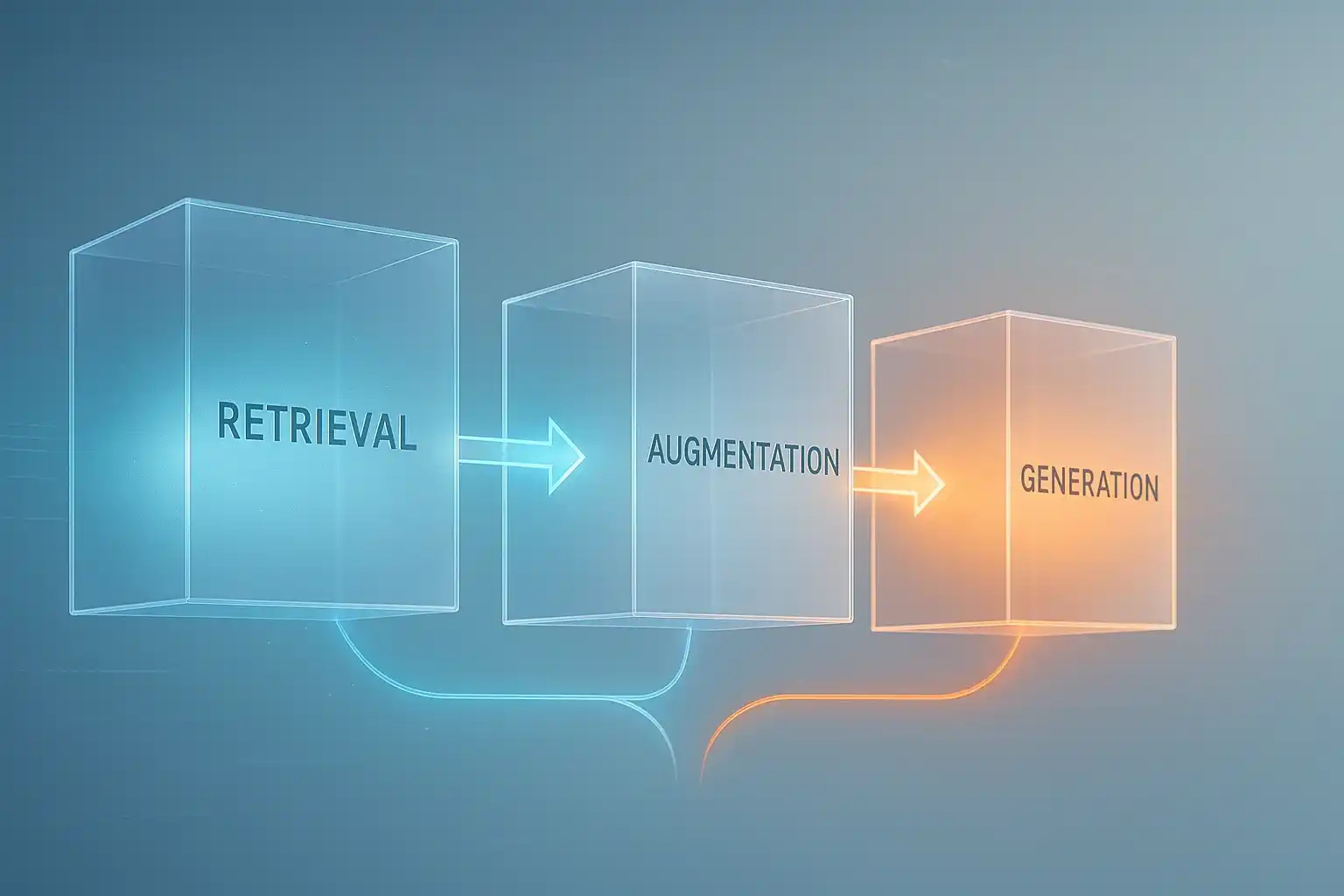
The RAG is an architectural choice.
It means that before you ask the model to answer, you give it the documents that contain the answer.
You don't ask him to remember something.
In fact, you give him the answer, and ask him to read and summarize it.
It's so simple, but it changes everything.
When the model works without supporting documents, he is hypothesizing, guessing.
It is constructing answers that seem coherent because the model is trained to look for textual continuity, not to tell the truth.
It's like asking someone to write a story: they know how to construct beautiful sentences, they know how to create narrative, but the story isn't true.
It's invented.
When the model reads a document that says "this is our policy", the answer is no longer a hypothesis.
It is a summary of what he reads.
If the document says "25 days vacation", the template will say "25 days", not "about 30, maybe".
The difference is monumental.
Go from “the model says” to “the model knows”.
The first is a hope, the second is control.
And control is what transforms AI from an experiment that can prove expensive, for example a solid business infrastructure.
For your team, it means that instead of waiting for the senior developer to remember how the system works, you can question them directly and receive a verifiable answer.
Instead of searching through files from three years ago, you can request and receive the right document in ten seconds.
You no longer have to hope that the new developer “guesses” the right answer.
The system offers it to him immediately, avoiding the mistake.
It is not the automation of intelligence, it is the automation of access to correct information.
Different thing, and much more useful.
And that's the difference between a team that feels in control and a team that lives in fear of making mistakes.
Because intelligence emerges on its own when the right data is before your eyes, and is, however, useless when the data is wrong.
How it works step by step
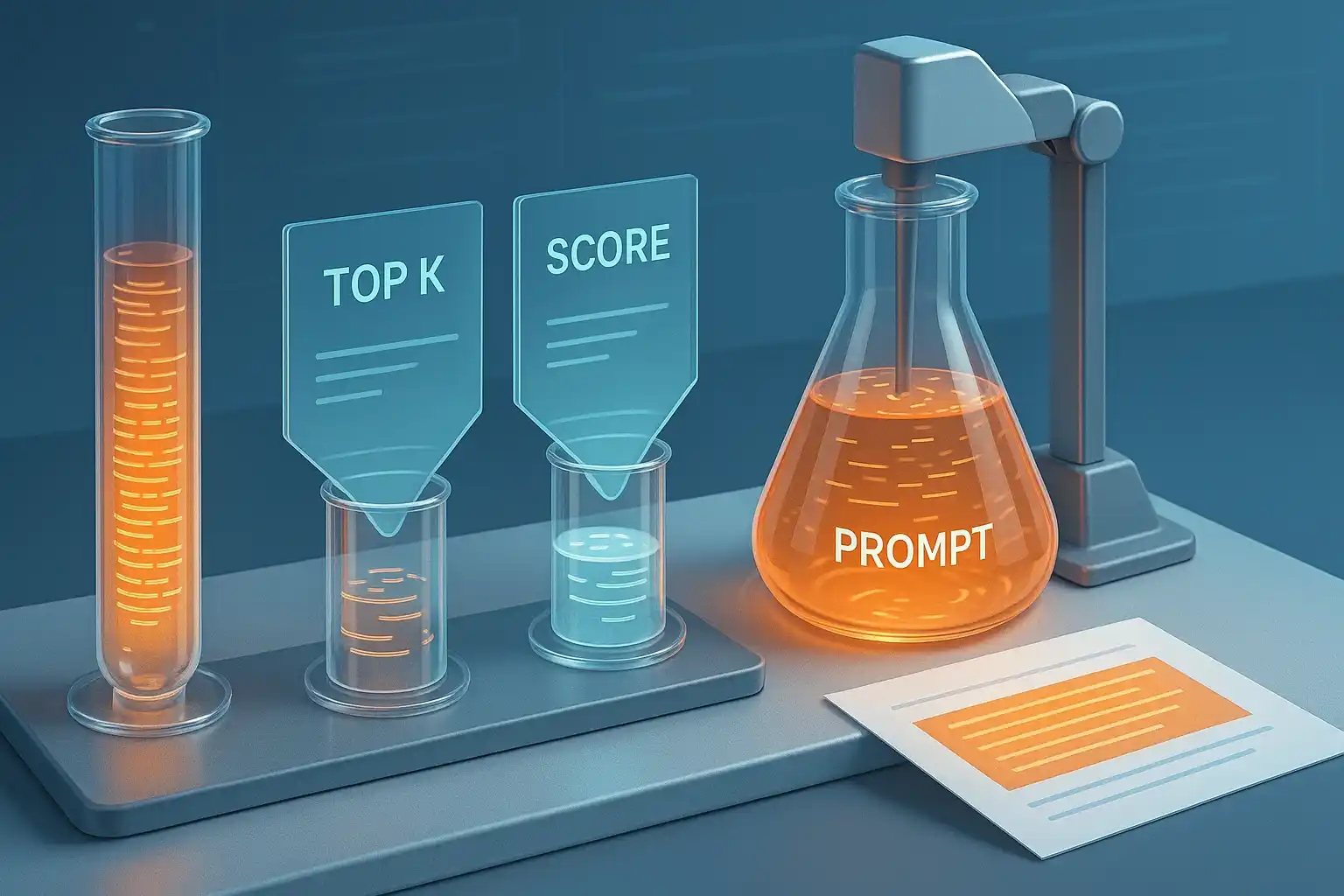
RAG is not something magical, but it is a linear process that has a simple logic:
- First: get your documents.All the important information you have, such as manuals, code, policies, decision logs and technical specifications, everything that represents the "true" of your business, the knowledge that constitutes your value.
- Second: the system transforms these documents into a form that can search quickly.It's like creating a giant index: it knows where to find something when you ask it.The system knows the map of your corporate knowledge.
- Third: when a request arrives, the system does a search and asks itself: "which documents answer this question?".Retrieve the most relevant documents with precision, not with approximation or by inventing.
- Fourth: Pass these documents to the model along with the original application. "Here is the question. Here are the official documents that contain the answer. Read, understand, answer based on what you see."
- Fifth: The model reads, understands, and responds based on what is in front of them.He doesn't invent, he doesn't speculate, he doesn't hypothesize, but simply summarizes.
That's all.
It's not complicated, it's elegant and above all it's controllable.
The effect?
The model can no longer invent about issues specific to your business; he can only process what you give him.
It's like giving him a way to build the answer on solid foundations, instead of asking him to build the house on nothing.
But there's more.
Because, when the process is structured like this, you can improve it, you can control which documents enter, you can verify that the system searches for the right ones, you can update them and the system automatically reflects the change.
It's not a black box, it's a referred mechanism understand every part and that you can manage.
This is the breaking point: either you understand the RAG, or you remain one of the many who chase.
In Programming course with AI you learn to dictate the rules.
Because it reduces model errors
The RAG does not eliminate errors, it reduces them and above all changes their nature.
Without the RAG the model decides on its own.
He has a 50% chance of giving the right answer, and a 50% chance of making something up and you don't know until it's too late.
It's a lottery, and when you lose, the cost is high.
An employee takes undue vacation days, a customer receives the wrong answer about his integration.
A developer builds a solution based on a requirement that the model invented from scratch.
With RAG, however, the model has verified data.
If he makes a mistake, it's not because he hallucinated but it's because the data was wrong, or the system retrieved the wrong document.
And these are problems you can address.
It's the difference between "I have a problem I can't control" and "I have a problem I can address systematically."
A company asks the internal chatbot: "How many days of vacation is employee Xy entitled to?".
Without RAG, the model is guessing.
He probably says a plausible figure.
28 days.
30 days.
It seems reasonable and the user believes it to be true.
Months later, when the employee tries to ask for days, the HR system says "no, you're entitled to 25 days."
This gives rise to conflict, frustration and distrust in the system and in the team that built it.
The employee cannot take the days he thought he deserved, or needed.
It's chaos.
With the RAG, the system retrieves the official HR policy document.
Reads "25 days", tells employee "25 days".
It is the official, verifiable data and indisputable.
The employee knows the exact number, the HR system is consistent and there is no conflict.
It's not a small step forward, it's the difference between a system that creates problems and a system that solves them.
Your team stops saying "the chatbot said this, but I don't know if it's true" and starts saying "the system found this document which is the official source and is verifiable".
This, on the contrary, generates trust, and is built on rock.
It's why strong teams insist on RAG before putting anything into production.
Why they learned the hard way what it means to put an inventing system into production.
Using Qdrant to implement a robust RAG
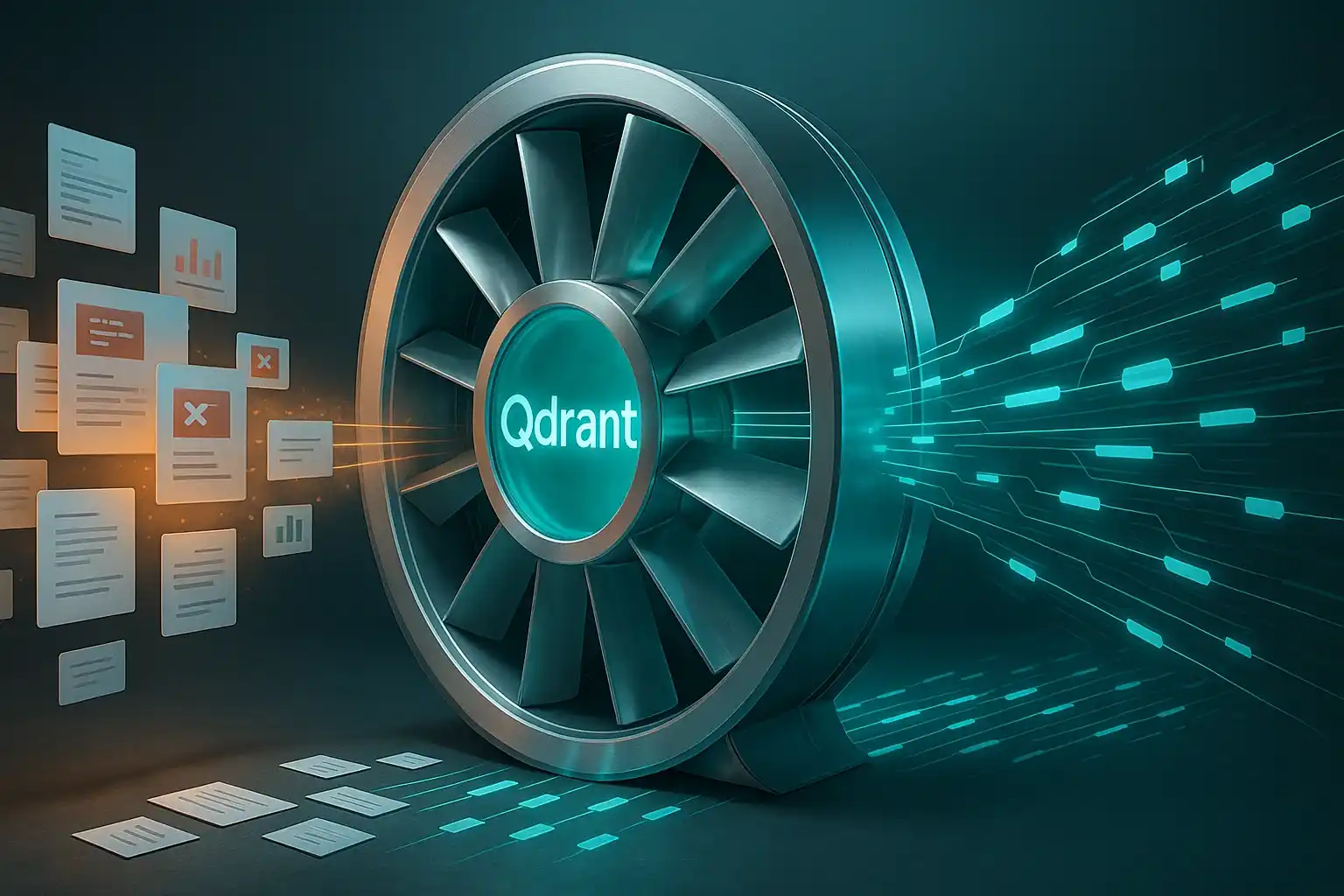
Qdrant is the tool that makes all this possible.
It is the platform where you store your documents so that the system can find them in a short time.
Think you have thousands of documents? Qdrant manages them.
Hundreds of thousands? Qdrant scale.
Millions? Qdrant does not suffer.
The beauty of Qdrant is that it works in the literal sense: you set it up, put your data in it, and it does its job.
It is used in production by teams that need results, because when the stakes are high it's not enough to go fast, you need above all to be reliable.
You can build a system that always answers questions the same way, always retrieving the right documents, without variability.
It's mechanical, it's predictable and it's what you need in production.
But be careful: Qdrant is only one piece of the puzzle.
Many teams they get the way they prepare the data wrong before inserting them.
It's like having a luxury car but putting cheap gas in it.
When you configure it well, everything else about RAG works fine; Qdrant in the right hands is a sharp blade.
In the wrong hands it is simply useless.
In Programming course with AI you learn to use it to cut the chaos in half.
Concrete advantages of RAG for application development
Let's stop the theoretical discussion for a second and see what changes in reality.
Your team gets faster.
A new developer joins today, what happens?
He goes on the 3 hour tour with the senior developer, reads the scattered documentation, asks questions and receives vague answers.
The first week passes just to understand how the system works.
This is inefficiency, and it is expensive.
And, what's more, the senior developer is taken away from his job.
With the RAG?
The new developer questions the system: "How does the login work?", "What are the available endpoints?", "Where is the code that handles payments?", "What is the error handling policy?", and has all the precise answers in 10 seconds, with links to the real files.
Start working in autonomy practically immediately.
And so the senior developer is no longer the bottleneck of progress.
Think about it: a week of "traditional" onboarding costs 40 hours of productivity, if it's enough.
A week with RAG costs 2-3 days.
With this model, each developer you add to a small to medium team generates fewer problems than usual.
When all answers come from a single verified source, teams don't contradict each other and errors decrease.
You don't have one developer implementing the feature one way, and another implementing them differently, because no one was sure of the design.
You don't have endless discussions in meetings about "but how do we usually do it?".
Everyone gets the same answer from the official documentation.
There is only one versioning system, consistency increases, unlike errors or corrections.
- The speed of development increases: looking for a solution to a problem consumes time.But how long? An average developer wastes 2-3 hours a week just looking for where a code is, understanding how something works or what the precedent is that was already solved.Multiply that by a team of 10 developers: that's 20-30 hours a week wasted on fruitless research.With the RAG, searching for an answer consumes seconds.The time saved is transformed into features completed earlier, into more frequent releases, into earlier deliveries to the customer.Small improvements in productivity snowball and, over time, become huge benefits.
- You are no longer dependent on specific people – how many companies have the “key person” problem? There is always that developer who "knows how the system really works"; that person who, when he leaves, he leaves a giant void.The project continues, but it is no longer the same.Times are expandingWhen knowledge is concentrated in a few heads, one absence is enough to bring everything to a standstill. This is the risk of the bus factor.With RAG, knowledge is documented and accessible, no one is indispensable.If the senior developer leaves, the knowledge remains in the system: the new team member reads and understands it. The system is robust, organizational risk collapses.
- Morale rises: frustrated developers they are developers who leave.And what is one of the main sources of frustration for a developer?Wasting hours looking for answers which should be simple, reading old documentation that doesn't say where to find the code, having "synchronization" meetings on things that should already be clear.With RAG, the developer it has the tools to be effective; he has the answers when he asks for them,can focus on the actual problem, not about "where the solution lies".It's different psychologically.
These are not abstract benefits, they are recovered hours.
They are improvements in productivity, they are developers who are less frustrated, more productive, more satisfied with their work.
It's why teams that have built RAG are solid they don't go back.
It's like having a tool that improves your work every single day.
Once you use it, you can never be without it.
Corporate data management
There is a time when every company discovers that the available amount of important data is inaccessible.
Data remains hidden in old text files, unfindable PDFs, forgotten emails, invisible code comments, and confusing policies that no one knows which version is right anymore.
The information exists, but it is, in fact, unattainable.
And do you know what the actual cost is?
Productivity falling, decisions postponed because information is missing, developers facing problems that have already been resolved years ago, customers confused by different answers and internal conflicts due to lack of clarity.
It's like having a fortune buried in your backyard and not remembering where you put it.
It's not lost, it's simply useless.
RAG converts this inconvenience into a competitive advantage.
It doesn't forcibly centralize data, it doesn't ask you to reorganize everything.
The data stays where it is.
The system knows where to look and knows how to bring you the right answer, right away.
It doesn't send you digging through thrice-renamed folders, or chasing someone who "maybe" knows where they are.
The time to access information becomes measurable, precise, reliable and this has a concrete impact on the business: it's not theory, it's real profitability.
Margins grow because you no longer waste time on useless research, development accelerates because it is not slowed down and customer satisfaction also increases because they receive consistent and reliable answers.
Who doesn't have RAG pays the price every day of fragmented information.
He doesn't see it in an invoice, but in team delays, frustrated developers wasting precious time, and customers confused by different answers.
Already in the first month you can see the change: the team accelerates, the answers become coherent, information chaos collapses.
And it is here that they learn to measure its value: not in abstract metrics, but in recovered hours and growing turnover.
Information chaos does not tame itself: either you govern it, or it devours you.
In Programming course with AI you learn to manage it.
Real use cases of RAG in development

RAG is not an abstract theory, it is a technology already used by teams that have to solve concrete problems and reduce operational complexity.
A very significant example comes from the division of a very popular Korean company, a global electronic device manufacturer, which applied Retrieval-Augmented Generation to improve its support and development system in Kubernetes environments.
The challenge was clear.
Developers and technicians had to deal with complex and repetitive errors in containerized environments, with information scattered across guides, historical tickets, logs and fragmented documentation.
Every ticket became a hunt for a solution.
Not because the information was missing, but because it was scattered and difficult to reach quickly.
The company has developed a system based on RAG capable of connecting the developer's request with the most relevant technical documentation in real time.
The model doesn't just generate a response.
Retrieves the right data, interprets it and returns precise solutions, linked to the real context of the problem.
This approach dramatically reduced the average ticket resolution time.
Technicians stopped digging into logs and histories for every single error; today they can query the system directly and get reliable answers in a few seconds.
The quality of the solutions is improved because each answer is anchored in official and updated documentation.
There is no longer the risk of relying on vague memories or old internal notes.
Knowledge becomes a living asset, always available and verifiable.
The organization also benefited; seniors can focus on new or critical problems, while juniors find answers to recurring cases on their own.
The support becomes lighter and more responsive.
Escalations decrease.
This case demonstrates how the RAG can solve daily challenges in development: speed up debugging, reduce bottlenecks, eliminate knowledge fragmentation and ensure consistency in responses.
It is a technology that acts at the most fragile point of development teams: rapid access to reliable information when it is really needed.
Mistakes to avoid when implementing RAG
Read this part carefully: it's not a question of "if" someone makes a mistake in the implementation, it's a question of "what mistake he makes".
And some mistakes are more costly than others.
- The biggest mistake: believing that once set, it's over: many teams implement RAG with enthusiasm, configure it, get the first results and they delude themselves that the work is finished.This is where one of the most frequent errors arises.Meanwhile, data changes, policies update, code evolves and information flows move elsewhere.But the system continues to always serve the same answers, based on information that is now old and partially outdated.The problem emerges only when someone on the other side notices the discrepancy and utters the phrase that everyone fears: “The system gave me the wrong information.”It is at that moment that trust breaks down and technology, instead of simplifying, becomes a source of confusion.The point is not the RAG itself, but the maintenance that supports it.An outdated system it ages like any other business asset.If you don't feed the data, if you don't update the sources and don't keep the information ecosystem alive, the quality of the answers deteriorates.Not because the technology doesn't work, but because you stop giving it a chance to work.
- Second mistake: building the RAG without thinking about how the data enters: some teams, driven by the rush to "set something up", they pour any type of information into the system.They upload duplicate documents, data taken from unreliable sources, and conflicting versions of the same truth.Without a clear strategy, the foundation on which the RAG stands becomes fragile, confusing and unreliable.The result is a system incapable of providing coherent responses because it was poorly built from the start.It is not the technology that fails, but the preparation that supports it.When the source data is dirty, contradictory or disorganized, the quality of the answers can only reflect that disorder.
- Third mistake: not testing with real data: a system can work perfectly in the laboratory, where everything is clean, controlled and predictable.Every test returns the expected result, every query produces consistent answers, and everything appears rock solid.But when the time comes to take it into production and connect it to real business data, something changes.There are no explosions or glaring errors on the screen.The system continues to respond, but the answers no longer have the same precision than before.They are slightly imprecise, incomplete, nuanced.No alarm goes off.Just small deviations that accumulate, day after day.And this is precisely the most insidious danger.Not a sudden and visible failure, but constant mediocrity which infiltrates silently, lowers the bar and wears away trust over time.
- Fourth mistake: using a generic solution and hoping it works for your specific case: RAG is not simply installing a vector database and hoping everything works.It's not a magic button or an elegant shortcut.It's a much deeper process, which arises from a real understanding of the business, the nature of the data and the needs that drive every decision.Building an effective RAG means tailoring it, adapt it to the structure and culture of the organization like a tailored suit, not like a standard solution dropped from above.It means understanding what is really needed and transforming it into a solid, precise and reliable system, capable of holding up over time.And this is where many teams stumble.They set up something that works from a technical point of view, but does not produce the desired results because there is a lack of alignment with the operational reality it should support.
It's not the instrument's fault, it's the construction's fault.
You are here and reading these words because you feel that there's something not right.
Your team uses AI, but you're not sure how.
Or it's not really as productive as it should be.
Or you feel like you're building on a foundation that's slowly moving beneath your feet.
Or are you simply aware that AI is the future, and you want to master this technology instead of suffering it.
The RAG is the missing piece, it's not the whole solution.
But it is the piece that transforms AI from an "interesting tool" to a "real competitive lever".
It's the piece that separates teams that control their work from those that hope.
Now, here is the real choice in front of you.
There are two ways to actually learn how to build a RAG.
The first is to do it yourself.
You watch online tutorials, read the official documentation and try to put together a little project to understand how it works.
You do the first tests, you make mistakes, you stop, you understand where you went wrong and you start again from scratch.
It is a possible path, but it is slow and exhausting.
Maybe, after a few months, if all goes well, you get to a system that works decently.
But at what price?
The cost is wasted time, burned energy and days spent chasing trivial errors.
These are weeks taken away from strategic activities, while the system remains fragile, inefficient and far from being truly useful to the business.
And when you get stuck, you discover that there is no one to ask, no support, no guide, just you and an error that doesn't want to disappear.
Now multiply this scenario by ten developers.
That wasted time is no longer a few weeks: it becomes an enormity.
A high cost, made of frustration, delays that accumulate and opportunities that slip away.
And when the system finally starts working, you realize you're behind compared to where you could have been.
You've lost competitiveness, you've wasted time that won't come back.
The second way is to follow a structured path.
You don't learn by chance, but from those who have already faced the same challenges and knows the pitfalls that slow down most teams.
This means shortening the learning curve, reducing avoidable errors and getting to a stable, business-friendly system faster.
Time spent “figuring it out” comes at a cost: missed opportunities, slow go-to-market and processes that do not align with the company's strategic objectives.
A structured path eliminates all this.
It allows you to focus on real value.
You don't just learn how to operate a system, but how to build one that generates value concrete, sustainable over time and independent from external consultancy.
The team grows, acquires skills and becomes capable of maintaining and improving the solution in the long term.
You have access to pre-tested models, real cases and proven procedures that turn uncertain experimentation into effective execution.
Instead of chasing temporary solutions, build solid foundations that stand the test of time and support the growth of the organization.
And if you choose to do it with us, you're not starting from scratch.
You have a guide who knows every step, who shows you the most efficient trajectory and who helps you avoid the most common mistakes before they even arise.
It's not just about learning how to use a technology.
It's about building a system that supports your business, accelerates results and becomes an advantage real competitive.
It is the course designed for those who don't want to waste time, for teams who have real projects to deliver or not days to burn in useless attempts, for companies that have already understood that the cost of learning badly is immensely higher than the cost of learning well.
And here comes the paradox: the right option, in the end, it is also the one that costs the least.
Yes, a course requires an investment of time and money.
But this investment pays off immediately, in a concrete and measurable way.
In the first month of using a well-built RAG, the savings are already greater than the cost of the course.
Because the team works faster, because errors are drastically reduced.
Because productivity rises and decisions are no longer slowed down by invisible inefficiencies.
The hidden cost lies in the other choice: that of learning on your own, of building fragile systems and letting it go.
When RAG is poorly implemented, the price is paid every week, in every sprint.
You can see it in the eyes of frustrated developers, in the features that arrive late, in the inefficient reviews, in the customers who receive inconsistent responses.
Just do the math.
Imagine a developer who costs fifty euros an hour.
If in a team of ten people five hours a week are lost due to a system that doesn't work as it should, you're burning 2500 euros every week.
Ten thousand euros a month, one hundred and twenty thousand euros a year.
If the course costs only a fraction of this amount, return on investment is not an opinion.
It's math.
And then there is the most dangerous cost of all: doing nothing.
Remain stuck in the status quo.
Continue using the AI without RAG or try to build it poorly.
While you wait, the competition advances.
Other teams implement solid solutions, improve their processes, deliver more value, attract better talent because they work in fluid, well-designed environments.
And you get left behind.
And it's not a race in which those who don't win remain tied.
It's a race where he who does not advance slides backwards, sprint after sprint, customer after customer.
Today the real competition is no longer between those who write the most elegant code.
It is among those who know how to use the tools best, among those who orchestrate AI intelligently, among those who build systems that produce value.
This is not a distant future.
It's now, and it's already underway.
The real question, therefore, is not "can I learn RAG on my own?".
Of course you can; anyone can, technically.
The right question is another: how much time do you want to waste learning by trial and error?
How much will it cost you, in real terms, to have a poorly built RAG while your team loses motivation and productivity?
How much value will you leave on the table as the competition advances?
Do you want to keep up or fall behind?
If the answer is “I want to advance, I want my team to be productive and motivated, I want to build solid and maintainable systems”, then the next move is clear.
This is where you understand that control is possible, that quality is not an illusion, that value is measurable and tangible.
It is not an act of courage to choose to learn well.
It just is the only logical move for those who want to remain protagonists, and not spectators, in the new era of software development.
Leave your details in the form below