

Do you really believe that knowing how to "write code" is enough to build a solid career in software? That just following a few online tutorials is enough to define yourself as a professional developer?
Wake up from the dream. The market is saturated with people who simply know how to "write code". Clones applying recipes learned by heart, copying and pasting from Stack Overflow without really understanding what they are doing. People who struggle, who don't grow, who get stuck doing repetitive tasks for a mediocre salary.
If you want to stop being one of many small fish in a huge ocean and become one better developer, one of those that companies actively seek out, pay handsomely for, and hold onto like a treasure, you have to look far, far beyond the keyboard. You have to master the fundamental skills that REALLY make a difference.
We're not talking about the latest shiny JavaScript framework that everyone idolizes today and in six months no one will remember anymore. We are talking about the 5+ supporting columns, the indestructible reinforced concrete foundations on which a true software professional stands. One who is not afraid of passing fads because he has such solid foundations that he can adapt to any change.
Are you ready to stop playing the sorcerer's apprentice and start getting serious? Are you ready to discover what you REALLY need to stop being a simple "coder" and become a respected and sought-after software engineer? Are you ready to invest in yourself, your growth, your future?
Then sit back and read carefully. Here you will not find magic formulas, but the concrete map of the 10 essential areas of competence that you must devour, understand deeply and master without excuses. Now.
Solid Programming
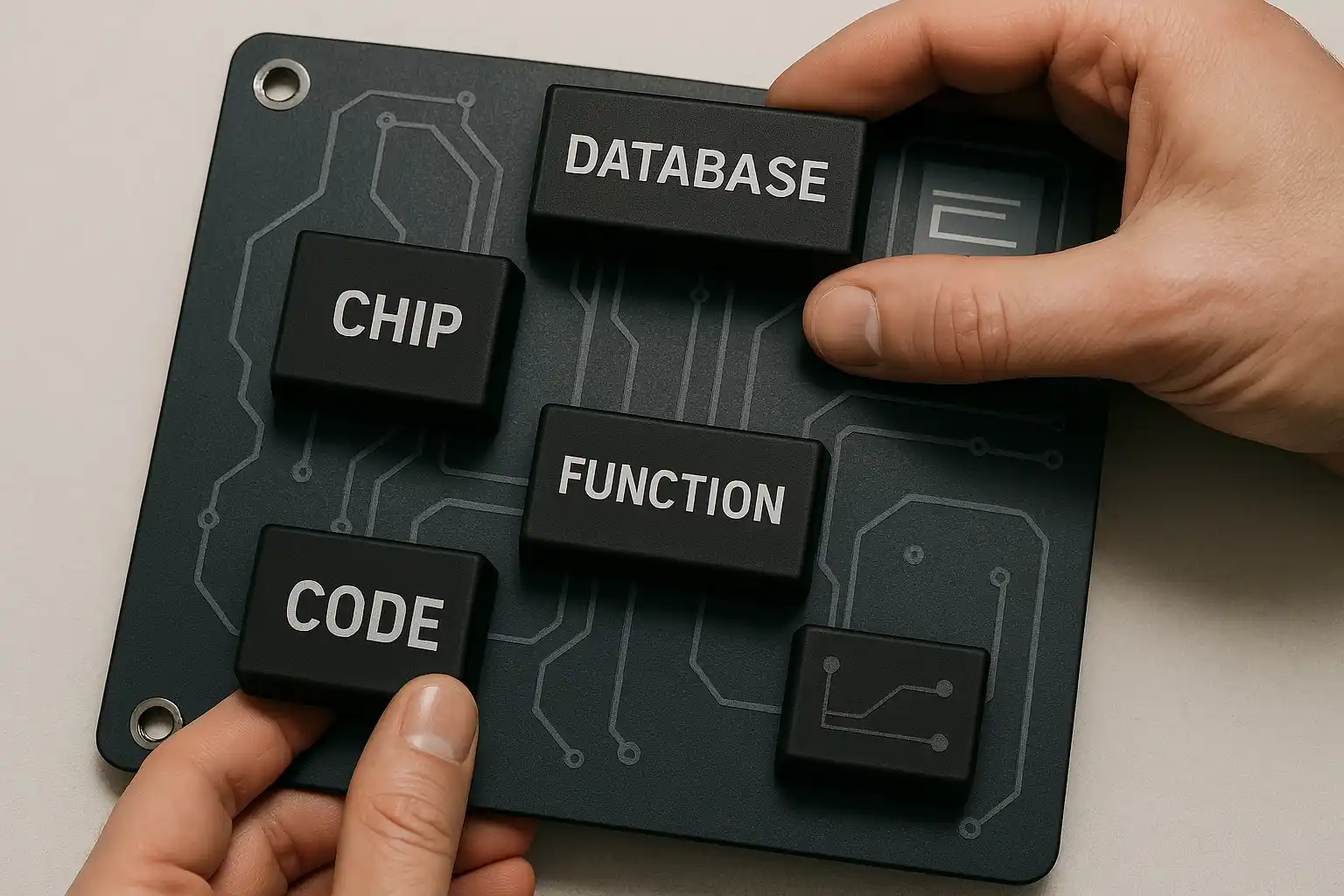
Let's start with the apparent obvious: you have to know how to program. But stop for a moment. There is an abyss, a chasm, between "writing code that accidentally runs" and "writing professional-quality code."
Learning the syntax of Python, Java, C#, JavaScript, or any other language is the easy part. It's like learning the alphabet and basic grammar rules. But that doesn't make you a novelist. Likewise, knowing the syntax doesn't make you a competent developer.
The leap in quality, the one that distinguishes you from the crowd, happens when You REALLY understand the basics that govern writing good software, regardless of the specific language. We're talking about mastering key concepts.
For the Object-oriented programming (OOP) Used intelligently, it is not enough to know how to write `class Person { ... }`. You need to master pillars like Encapsulation (hiding internal details), understand when to use Inheritance and when to prefer Inheritance. Composition (often more flexible), exploit Polymorphism for flexible code, distinguish Interfaces and Abstract Classes, and know the SOLID principles (Single Responsibility, Open/Closed, Liskov Substitution, Interface Segregation, Dependency Inversion). These are not theoretical concepts, but practical guides to maintainable code.
You have to carry out Conscious Choices on Data Structures. Only ever using `List` (or `Array`) is for beginners. You need to understand the trade-offs: when is an `ArrayList` better/worse than a `LinkedList`? Why do `HashMap`/`Dictionary` offer fast searches? What is a `HashSet` for? Knowing at least the basic concepts of trees, graphs, queues and stacks is essential, because the wrong choice can massacre performance.
Finally, you need to understand the Essential Algorithms and Complexity Analysis (Big O). Understanding the difference between O(n), O(n^2), O(log n) efficiency is critical to writing code that scales. If you have nested loops on large data sets (O(n^2)), you have to ask yourself if there is a smarter approach.
Without this solid foundation, your code will inevitably be "legacy code" from day one: fragile, difficult to test, impossible to evolve, a nightmare to maintain.
You will be the root cause of the technical debt of the project.
Do you want to build software you can be proud of? Robust, scalable, high-performance software that your colleagues don't curse every time they have to work with it? Then you need to invest time and energy to master these fundamental principles. They are the reinforced concrete of your career. There are no good shortcuts.
Strategic Problem Solving
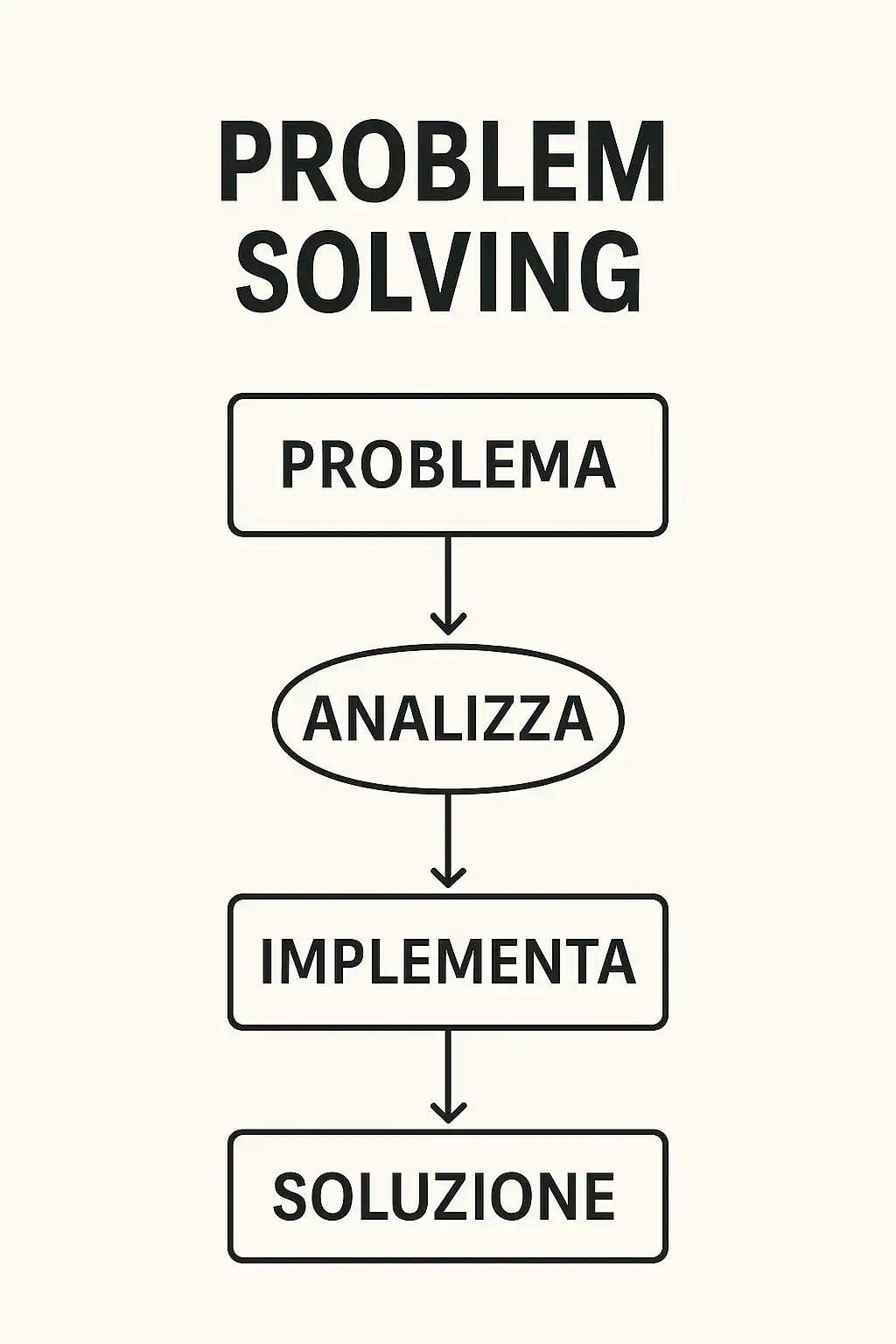
Get this straight: companies don't (or shouldn't) hire you simply because you can write `if/else` and `for` loops. Many people can do that. They hire you because they have gods complex business problems and they expect you, with your technical skills, to be able to find effective and efficient solutions.
Imagine the typical scenario: you get a vague and contradictory requirement from the Product Manager. Or they give you a sneaky bug that only shows up in production, every now and then, and no one understands why. Or again, the application has become slow as a snail and needs to be optimized. What are you doing? Do you put your hands in your hair? Do you start writing random code hoping for luck?
This is the approach of the mediocre developer, the one who suffers problems instead of mastering them. Change a line, try again. Change another, try again. An endless loop of random attempts that wastes precious time, introduces new bugs, and most importantly, doesn't lead to a true understanding of the problem. It's the equivalent of a doctor trying random medicines on a patient without making a diagnosis.
Lo better developer, the software engineer, instead adopts a strategic and methodical approach. Don't panic, but apply a clear process.
First: Define and Understand the REAL Problem. This is the most critical phase. Ask questions, clarify requirements, reproduce the bug. Without deep understanding, every solution is a blind shot.
Second: Break down the Problem (Divide et Impera). Divide the complex monster into smaller, more manageable sub-problems. Isolate the parties involved.
Third: Analyze the Root Causes (Root Cause Analysis). Don't stop at the symptoms. What is the real cause of the slowness or error? Formulate testable hypotheses. Use diagnostic tools like the Systematic Debugging (not surprisingly!), the Strategic Logging, theData/Metric Analysis and even the Rubber Duck Debugging (explain the problem aloud).
Fourth: Design the Solution. Once you understand the cause, think about the options. Which is the simplest and most effective? What are the pros and cons? What is the impact on the system? Which data structures/algorithms to use? Draw, write pseudocode if necessary.
Fifth: Implement with Care. Only now write the code. Clean, following best practices, thinking about borderline cases.
Sixth: Test Rigorously. Does the solution work? Didn't he break anything else? Write unit tests, integration tests, do manual tests. Don't just trust the compiler.
Seventh: Reflect and Iterate (Refactoring). Is the solution elegant? Efficient? Understandable? Can it be improved without changing its behavior? This feedback loop is critical.
This ability to approach problems in an analytical, logical, structured and evidence-based way is what distinguishes a craftsman from an engineer. It's a skill that develops with deliberate practice, tackling increasingly complex problems and forcing the brain to find optimal, not just working, solutions. If you want to stop feeling overwhelmed by problems and start feeling like a master of complexity, you need to train this mental muscle every single day.
Version Control (Git) Working in 2026 Without GIT is Irresponsible and Amateur Crazy
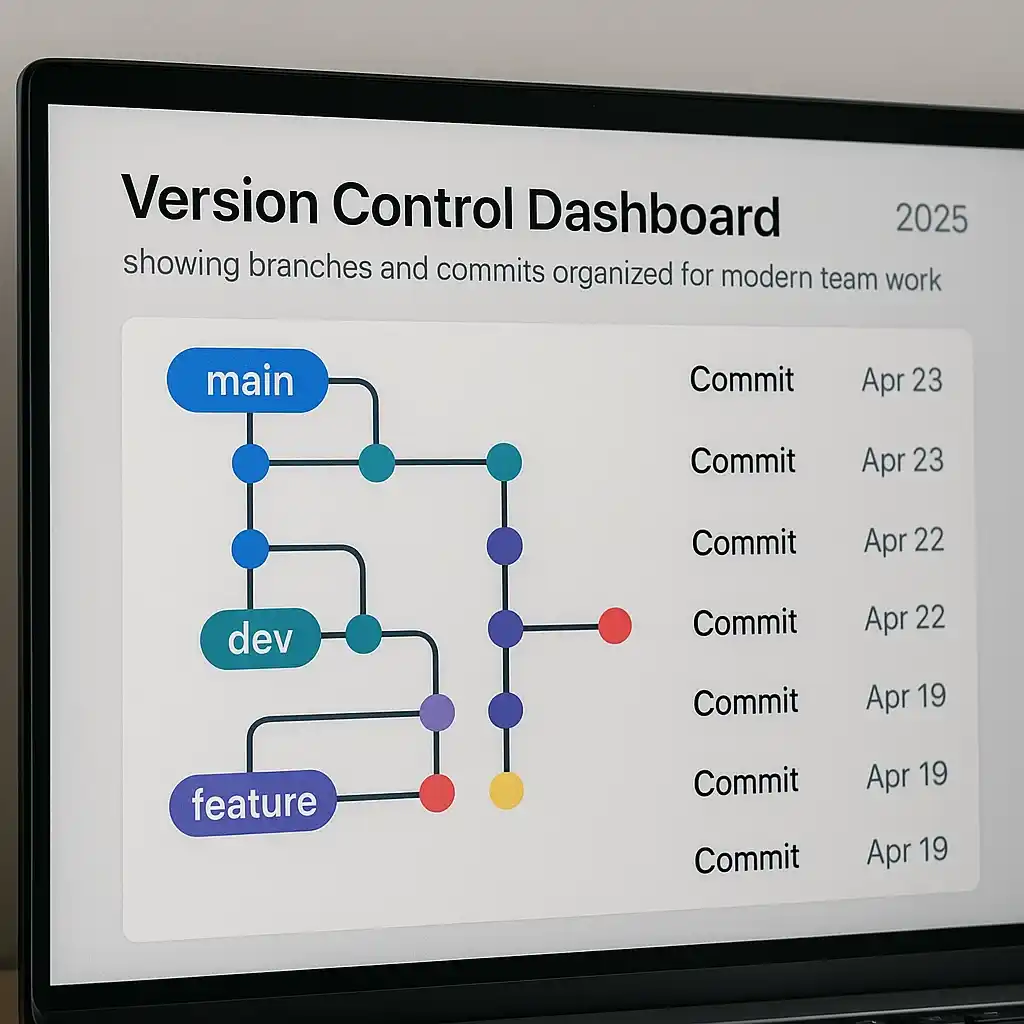
Ok, let's put it bluntly: if in 2024 you are still working on software projects (even personal ones!) without using a distributed version control system like Git, you're not just obsolete, you are professionally irresponsible. It's like a surgeon operating without sterile gloves. It is simply unacceptable in the world of modern development.
No more files called `main_v2_finalissima.py`, `backup_old_code.zip`, or even worse, shared folders on Google Drive or Dropbox where people overwrite each other's work creating indescribable chaos. This isn't code management, it's digital anarchy.
The Version Control it's not an optional, it's not an extra, it's not even just a best practice. It's the central nervous system of any collaborative software project (and even individual ones, if you want to be serious). And among the various systems, Git won by a landslide: it's the de facto standard that you need to know like the back of your hand.
Why is this so damn crucial? It solves huge problems. Allows Collaboration Without Nightmares, allowing multiple people to work in parallel and integrate changes in a controlled manner. It offers Complete History and Traceability: every change is recorded (who, when, why), vital to understand the evolution and find the origin of bugs. It makes it possible Safe Experimentation with Branches, creating parallel development lines for new features or fixes without affecting the stable code. Provides mechanisms forControlled Integration (Merging and Rebase), essential for merging the work done on the branches, even if they require knowing how to manage conflicts. It is The Ultimate Safety Net (Rollback), allowing you to revert to any previous version if you mess up. Finally, it is theEnabler of Modern Practices such as CI/CD and Code Review, which rely heavily on Git and Pull/Merge Requests.
But be careful, it's not enough to know how to use the basic commands (`add`, `commit`, `push`). You have to understand the Git object model (blob, tree, commit, DAG). You have to write significant commit messages that explain the why of the modification. You must know how to use commands like `log`, `diff`, `blame` to investigate the story. You need to understand `rebase` (and its risks), `stash`, and how `remotes` work.
If you still think that Git is just a complicated way to save files to GitHub, you're completely missing the picture. It is a tool that radically changes the way we work. Mastering it doesn't just make you more efficient, it makes you a serious professional in the 21st century. Ignoring it is amateurish.
Data Management (Database): If You Don't Know Where to Put Your Data (and How to Find It Quickly), You're Lost

Think about any software application you use on a daily basis: social networks, e-commerce, banking apps, business management, even this website. What do they have in common? They live thanks to data. Without data (users, posts, products, orders, articles, comments...) they would be empty, useless shells.
And where is this data persistently and reliably stored, organized, retrieved and maintained? In the vast majority of cases, in databases. This is why knowing how to work WITH and ON databases is not an accessory skill for a developer, but one absolutely central and fundamental competence. Ignoring databases or treating them like a "magic black box" is a very serious mistake that will sooner or later come to you.
What do you absolutely need to know? You have to master SQL and the Relational World (RDBMS), still the heart of many systems. This includes advanced SQL (JOIN, GROUP BY, subqueries, CTEs, Window Functions), DDL (CREATE/ALTER TABLE, keys, constraints), DML (INSERT, UPDATE, DELETE) and TCL (ACID, COMMIT, ROLLBACK transactions). Being familiar with PostgreSQL, MySQL or SQL Server is almost a must.
The Design of the Relational Schema it is crucial. You need to understand Normalization (at least 1NF, 2NF, 3NF) to reduce redundancy and improve integrity, but also know when strategic Denormalization can improve read performance. The correct choice of Data Types is equally important.
ThePerformance Optimization (Query Tuning & Indexing) it is vital. You must know how to read an Execution Plan (`EXPLAIN`) to understand where a query wastes time and you must know how and when to use Indexing (B-Tree, etc.) to speed up searches without penalizing writes too much.
You have to have one Understanding the NoSQL World. Understanding the main categories (Document Store like MongoDB, Key-Value Store like Redis, Column-Family like Cassandra, Graph DB like Neo4j) and their use cases allows you to choose the right tool for the right problem, breaking away from the rigidity of the relational model only when needed.
Finally, you have to manage theInteraction via Code (ORM and Beyond). Knowing how to use ORMs like Entity Framework or Hibernate is common, but you need to know their limitations (e.g. N+1 queries) and know when it's best to write native SQL or use micro-ORMs (like Dapper) for optimal performance.
An application with a poorly managed data backend is like a sports car with a blown subcompact engine: nice on the outside, but going nowhere. If you want to build serious applications, you need to become friends with databases. Become the person who knows how to design, query, and optimize the pulsating “brain” of applications. It's a skill that will make you indispensable.
If you still think that the database is just "that place where you save things" and your interaction is limited to using basic ORM functions, you have a huge gap to fill to be considered a competent backend developer.
Effective Collaboration

Get that distorted and harmful image out of your head, often fueled by movies or TV series, of the brilliant but socially inept developer, locked in his basement revolutionizing the world alone, communicating only via cryptic code. That character, if he ever really existed, is now professionally extinct.
The reality is that complex and valuable software, the one we use every day and which runs companies and services, is almost invariably the result of a intense collaborative effort. Teams of developers, designers, product managers, testers, DevOps engineers, systems engineers... everyone must work together towards a common goal.
This means that your technical skills, no matter how great they may be, are worth much less if they are not accompanied by solid ones communication and collaborative skills. You can be a C++ god, but if no one can work with you, if you create constant friction, if you can't explain your ideas or understand those of others, you become a burden on the team, not an asset.
What do we mean by "effective collaboration"? It is a set of concrete skills. You have to have one Clear, Concise and Adapted Communication, both in explaining technical concepts to different interlocutors, and in written communication (messages, emails, documentation, commits). You need to know how to ask the right questions to gain clarity.
It is fundamental theActive Listening and Empathy: really listen to understand other people's points of view, putting yourself in the shoes of colleagues with different roles and perspectives.
Crucial is the Constructive Feedback Management: knowing how to give useful feedback during code reviews (to improve the code and help your colleague, not to demonstrate that you are superior) and knowing how to receive criticism with maturity, seeing it as an opportunity for growth without becoming defensive.
They are needed Reliability, Responsibility and Proactivity: meet commitments, take responsibility for errors, proactively report problems or delays.
Finally, you need a good one Integration into the Team and Agile Methodologies: be willing to help, share knowledge, contribute to a positive climate and actively participate in team processes (Scrum, Kanban).
These are not “soft” or secondary skills. I am HARD professional skills as much as knowing how to write code. Indeed, they are often the ones that make the difference between a career that takes off and one that remains stagnant. Modern companies are desperately looking for people who are technically good BUT ALSO great teammates.
If you fit the "technically good but impossible to work with" developer profile, know that this is a HUGE red flag for your career. Work on these skills as seriously as you work on code. It's an investment that will pay off a thousand times over.
The Hidden Foundations
Are you obsessed with the latest frontend frameworks like React or Vue? Do you spend your nights studying what's new in .NET or Spring Boot for the backend? Great, staying up to date on application technologies is important. But stop for a second and ask yourself: What's underneath all this? On what foundation do these wonderful cathedrals of code that you build rest?
There is a whole world of basic computer skills, those related to the infrastructure, the operating system, the network, which too many modern developers (especially those coming from intensive bootcamps or paths very focused on web development) tend to ignore, consider "systems stuff" or take dangerously for granted. This is a huge mistake. Because the moment something breaks at a lower level – and it will! – if you don't have these foundations, you will be in total darkness, unable to diagnose and solve the problem.
What are these hidden but crucial foundations?
- Operating Systems (with Focus on Linux): You need to understand the fundamental concepts: process and thread management, memory management (virtual, heap/stack, GC), file system and permissions. And you have to be comfortable with Linux, since it powers most servers: shell navigation, directory structure, basic monitoring commands (top, free, df).
- Command Line (CLI / Shell): Don't be afraid of it! It is essential for managing remote servers (SSH), using essential tools (Git, Docker, K8s), automating tasks with scripts (Bash/PowerShell) and manipulating text/data in a powerful way (grep, sed, awk, piping). Being efficient on the CLI gives you superior control.
- Basic Networking: Your software communicates over the network. You need to understand TCP/IP, IP addresses (v4/v6), subnets, DNS, TCP/UDP ports. You have to know it by heart HTTP/S (methods, status code, headers, cookies, TLS). And you need to know how to use basic diagnostic tools like ping, traceroute, nslookup, curl, netstat. Without it, you're blind to connectivity issues.
- Mastering Your Tools: The IDE, the debugger, the build tool... Take full advantage of its advanced potential (debugging, refactoring, shortcuts, configuration) to exponentially increase your productivity. Don't use them as simple text editors.
These basic IT skills are like the invisible foundation of a skyscraper. You don't see them every day, but without them, the whole structure is unstable. Ignoring them is building your career on a foundation of sand. Invest time in strengthening them: it will pay off handsomely when you face real problems.
Being a Digital Professional Is Not Just Source Code, But Optimized Workflow
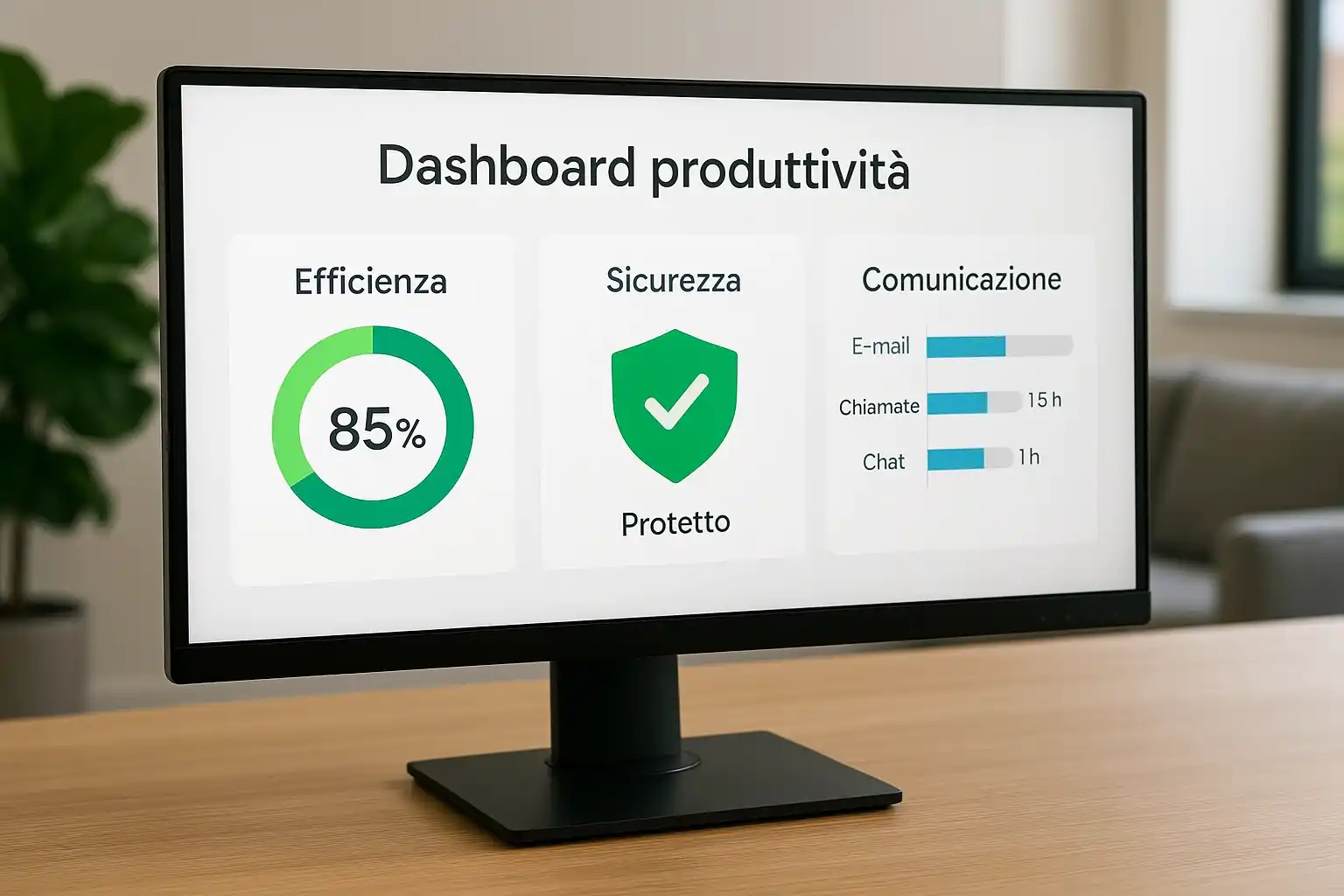
The job of the software developer in 2024 goes far beyond simply writing source code in an editor. We operate within a complex digital ecosystem of communication tools, project management platforms, code repositories, deployment systems, and myriad online information. Your ability to navigate this ecosystem in a way efficient, safe and professional it defines your maturity and value as much as the quality of the code you produce.
We're talking about yours general digital skills applied to the working context. They are the oil that keeps the gears of your daily workflow turning. If these skills are lacking, you become a bottleneck for yourself and the team, waste valuable time and can even become a security risk.
What does it mean to be an effective digital professional? You must have Strategic Mastery of Collaboration and PM Tools: use Slack/Teams/Jira/Asana effectively to communicate, manage tasks, share knowledge (Wiki). It's not enough to "be there", you have to use them well.
You have to own Cyber Security Awareness and Hygiene: recognize threats such as phishing, manage credentials securely (password manager, 2FA), NEVER commit secrets in Git code, keep the software updated. You are the first line of defense.
The ability to Effective Research, Evaluation and Online Learning: knowing how to search beyond Google/Stack Overflow, critically evaluate sources (official documentation!), build independent learning paths.
Finally, take care of theEtiquette and Professionalism in Digital Communication: clear and professional emails, appropriate behavior in chats, effective participation in virtual meetings. Your professional image depends a lot on it.
Mastering these digital skills makes you a most complete, mature and reliable professional. Demonstrate that you can operate effectively in the complex world of modern work. It is often these skills that make the difference between those who get promoted and those who stay put.
Which Skills Are Tempting for Companies NOW
Ok, you've built your solid foundation: you know how to program well, solve problems, use Git, manage data, collaborate, you master IT basics and digital tools. Congratulations, you are already above average and have what it takes to be a good developer and have a stable job.
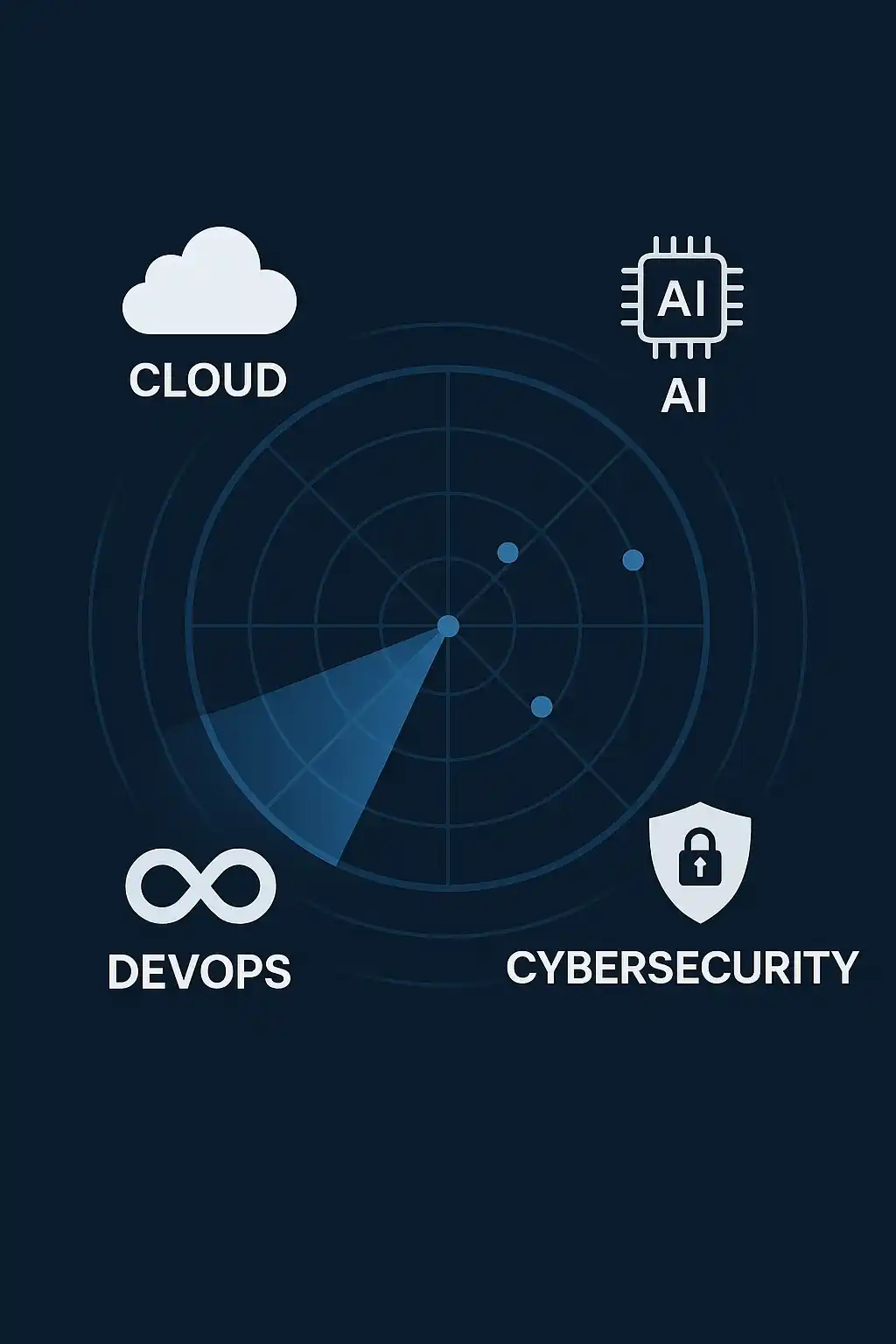
But if you want to do the definitive leap in quality, if you want access to the most challenging positions, the most innovative projects and, let's face it, the highest salaries, you need to look up and understand where the market is going NOW. There are areas of technology and specific skills that are red hot, that companies desperately seek because they are key to their competitiveness and future growth. Strategically specializing in one or more of these areas can give your career a huge boost.
What are these “hot” skills you should seriously consider investing in? Here are some of the most important today:
- Cloud Computing (AWS, Azure, GCP): It is the absolute present. You need to understand the models (IaaS, PaaS, FaaS), know the core services of the main provider in your industry (e.g. AWS: EC2, S3, RDS, Lambda; Azure: VM, Blob, SQL DB, Functions) and basic cloud networking/security concepts. A basic certification is a good place to start.
- DevOps and Automation: Fundamental to releasing software quickly and reliably. You need to know CI/CD (Jenkins, GitLab CI, GitHub Actions), Infrastructure as Code (Terraform, Pulumi), and Advanced Monitoring/Logging (Prometheus, Grafana, ELK). Automation is king.
- Application Cybersecurity (AppSec): Safety is everyone's responsibility. You need to know common vulnerabilities (OWASP Top 10), know how to prevent them in your code (input validation, output encoding, parameterized queries), handle dependencies securely (scans), and apply Secure Coding principles.
- Artificial Intelligence (AI) and Machine Learning (ML) - Integration: Understanding basic ML concepts and knowing how to integrate pre-trained AI APIs (OpenAI, Google AI, AWS AI) to add intelligent functionality to your applications is a huge advantage. (Optional: Know libraries like TensorFlow/PyTorch/Scikit-learn).
- Containerization (Docker) and Orchestration (Kubernetes - K8s): Docker to package apps consistently, Kubernetes to manage them at scale. You must know how to write a Dockerfile and understand the basic concepts of K8s (Pod, Service, Deployment). Almost indispensable for the modern backend.
You don't have to become a super-expert in all these areas tomorrow. But you have to be strategic. Look at job adverts, understand what is required in your domain, choose one or two areas and start investing in it seriously with study and practice. Market data confirms the enormous demand and high salaries for these skills. Do you want to stay and watch?
How People Who Know What They Really Work (Putting It All Together in the Workflow)
We have dissected many important skills. But the real difference, the real leap from "code assembler" to "effective software engineer", lies in the ability to do not see them as separate subjects, but as an integrated set of tools and mentalities to be applied smoothly in daily work.
A really good developer doesn't think, "Okay, now I'll do 10 minutes of problem solving, then 20 minutes of programming, then 5 minutes of Git." No! These skills intertwine and support each other at every stage. Let's see how this integrated workflow manifests itself.
Scenario: Critical and vague bug ("The site is slow!"). The effective developer uses: Collaboration (asks for details), IT Basics & Monitoring (check server/app metrics, logs), Networking & Cloud (check cloud services, latency), Data Management (analyze slow queries, execution plan), Problem Solving (formulates hypotheses based on data), Version Control (check recent commits, `git bisect`), Tooling & Debugging (plays locally, targeted debugging), Solid Programming (design clean fix), DevOps (deploy fix with CI/CD), and more Collaboration (communicates status and resolution).
Scenario: New complex feature (e.g. recommendations). The effective developer uses: Collaboration (clarifies requirements), Problem Solving & Solid Programming (designs architecture, chooses patterns/technologies), Data Management (draw DB schema), Market Skills (AI/ML) (API currency vs custom), Version Control (feature branches, atomic commits), TDD (writes tests), Containerization (Dockerfile), Digital Professional (document, update Jira), Code Review (opens detailed PR), DevOps (deploy with CI/CD).
You see? It's not about knowing many isolated things, but about knowing them masterfully orchestrate to navigate the complexity. It is this integrated mix that makes the huge difference between those who "know how to program" and those who "know how to build quality software".
Always Learn or Die (Professionally Speaking) The Ultimate Meta-Skill to Not Become a Dinosaur

Congratulations, you have reached the last section. We have explored 9 key areas of expertise. But now the most inconvenient truth: everything you've learned so far has an expiration date.
The world of technology is in constant, inexorable, brutal evolution. Languages, frameworks, architectures, paradigms change at breakneck speed.
This means that the most critical and lasting skill is not technical: it is one meta-skill, the skills and the mental discipline of continuous learning. It's embracing a growth mindset.
You have to cultivate one insatiable curiosity and one constant hunger for knowledge. You have to see change as aopportunities to grow. You have to be willing to question what you know.
How is it grown? Plan Your Learning: Block dedicated time each week. Choose Reliable and Diverse Sources: official documentation, expert blogs, books, quality courses (like ours 😉). Learn by Doing: personal projects, open source contributions, experimentation. Compare and Teach Others: participate in communities, meetups, conferences; explains concepts to consolidate them. Get Out of Your Comfort Zone and Be Humble: Approach difficult topics, admit “I don’t know,” ask questions. Manage Impostor Syndrome: It's normal to feel inadequate, don't let it stop you.
Anyone who stops, anyone who sits on their laurels, is destined to become a professional fossil. A dinosaur waiting for extinction.
Those who actively cultivate curiosity, learning discipline, and adaptability will not only survive, but thrive. Your long-term professional future depends not so much on WHICH language you know today, but on your ABILITY to learn what you will need tomorrow.
This is the ultimate meta-skill. Cultivate it. Which side of history do you want to be on?
Stop Making Excuses, Start Building Seriously
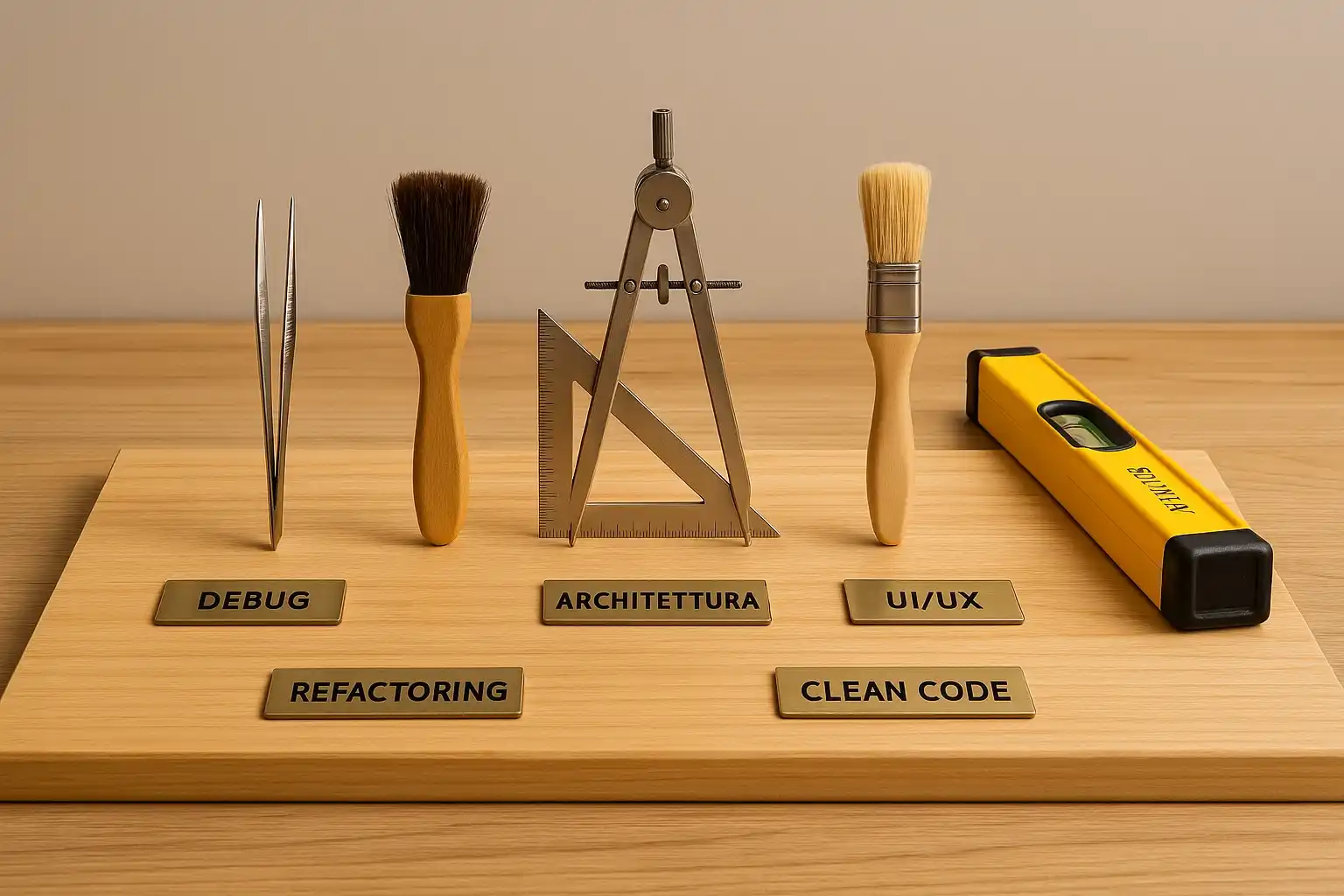
Ok, we've reached the end. I've given you the detailed map of the 10 core skill areas that distinguish a mediocre developer from a bad one better developer, a solid, sought-after and well-paid professional.
We have seen that knowing how to write code is not enough. You need a deep understanding of principles, strategic problem solving, mastery of Git and databases, collaborative skills, solid IT foundations, efficient digital workflow, awareness of market skills, the ability to integrate everything and, above all, a continuous learning mentality.
Now the ball is in your court. Be brutally honest with yourself: where are you strong? Where are you lacking? What are the 2-3 areas you NEED to work on first?
Stop looking for the magic shortcut, the 5 minute tutorial, the miracle framework. They don't exist. There is only hard work, constant commitment, discipline.
Get started TODAY. Not tomorrow. Not Monday. NOW. Choose ONE weak skill and define a concrete plan: what will you study? What project will you do? How much time will you dedicate?
It's an investment in yourself. It will take effort, but the results will be enormous.
Do you want to continue to be one of many, or do you want to become the best developer that companies can't wait to hire, who colleagues respect, who builds software you're proud of, and who is in control of your career?
The future doesn't wait. The market doesn't wait. Stop making excuses. Start building. Your skills. Your career. Now.
Leave your details in the form below