
Are you ready to dominate the future or risk being overtaken by AI?
Every technological revolution has pushed humanity towards new horizons, but today the challenge is yours.
As a software developer, you are at a crossroads: adapt and grow or get left behind.
From the steam engine that powered the Industrial Revolution with the advent of electricity and computers, those who embraced change prospered.
Now, develop with artificial intelligence (AI) generative represents the new frontier of this evolution, opening up scenarios that only a few years ago seemed like science fiction.
But what does this revolution really mean for you, a software developer and architect of our digital future?
I know you may feel worried about the future of your career in software development.
Some fear that theAI can make you obsolete, turning your work into a simple automated repetition and depriving you of your creative value.
According to recent industry analysis, AI is rapidly evolving transforming the world of software development, and those who don't adapt risk being left behind.
Here's the good news: theAI It's an extraordinary opportunity to expand your skills, increase your relevance and become an even more indispensable figure in an ever-evolving job market.
To truly understand how to turn this challenge into a springboard for success, we must look to the past and analyze how other professions have faced and overcome similar technological challenges.
Do you want to be a simple spectator or the protagonist of the technological future?
The historical evolution of software development
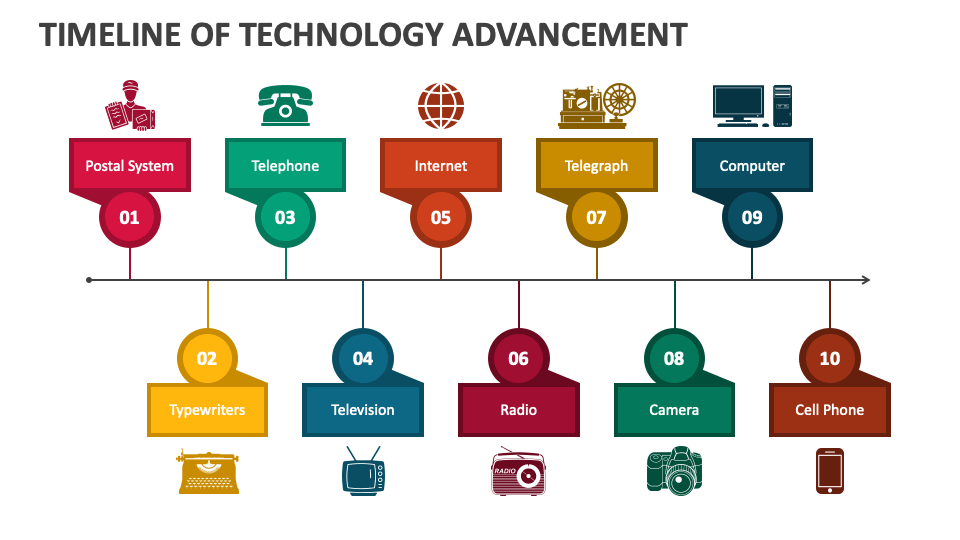
Have you ever thought about how amazing your journey in software development is?
It is a story of continuous transformation, just like technology itself.
Each radical change and innovation has redefined the way you work, bringing you one step closer to an increasingly interconnected and automated future.
The roots of programming and your evolution
Imagine the first mathematicians of the late nineteenth century, armed with notebooks and mechanical calculators.
With the advent of the first computers, those tools quickly became obsolete.
But those mathematicians were not replaced; they used the new technology to expand the scope of their findings.
Likewise, you have experienced an extraordinary evolution.
From early programming languages like Fortran e COBOL, we moved to object-oriented languages like C# and Java.
Programming has adapted to the needs of the moment, and you with it.
With the arrival of personal computers and the spread of the Internet, you have seen your profession become accessible to an ever-larger audience.
But this has also increased the challenges and the need to stand out.
Today, you don't just write code; you are a creator of innovative solutions and a solver of complex problems.
But with the advent of generative AI, you may be wondering, “How can I figure this out how AI programming works and stay relevant in a world where AI can write code?”
Your role through the decades
Your role as a developer has transformed dramatically over the years.
In the 1970s and 1980s, developers were often seen as isolated technicians.
Today, you are at the center of innovation and business growth, responsible for driving projects and creating value.
With the advent of the Internet and increasing digitalization, you have become a key element in organizations.
You are called to understand not only technologies, but also market dynamics and user needs.
You are not simply a "coder"; you are a problem solver, an innovator and often a project leader.
But with AI advancing by leaps and bounds, knowing how to use the LLM as copilot it has become essential to avoid being left behind.
The introduction of AI: the first step towards automating coding
Artificial intelligence is nothing new in the field of computing.
�^ a dream pursued since the 1950s, when scientists began developing algorithms that could simulate human thinking.
Only in the last two decades has AI seen a significant acceleration, thanks to the availability of enormous amounts of data and the computing power needed to process it.
In your work as a developer, you've already seen AI used to automate repetitive or complex tasks, such as bug detection, code optimization, and test generation.
But generative AI represents a breakthrough, taking coding automation to the next level.
It's no longer just about assistance or suggestions, but about the ability to generate functional code from natural language descriptions or high-level specifications.
This development raises essential questions:
- To what extent can AI replace your work in programming?
- What are the limits and potential of these technologies?
- And, above all, how can you prepare to face this new reality?
You can't afford to wait.
Taking action now is critical to your future success.
Understanding generative artificial intelligence
Have you ever wondered how generative AI could revolutionize your career?
Technology advances by leaps and bounds, and today you are faced with an unprecedented revolution.
Generative AI isn't just a trend; it's the future of programming, your future.
But what makes this technology so great for you?
Discover how large language models are transforming the way you create content and code, opening up possibilities throughadvanced use of AI which a few years ago seemed like science fiction.
What are large language models (LLMs) like ChatGPT
Imagine having a personal assistant that can generate code, answer complex questions, and help you solve problems in real time.
This is what i offer Large Language Models, LLM, like ChatGPT.
These revolutionary tools don't just reproduce what's already been done; they create new content that can improve your work and save you valuable time.
Maybe you're asking yourself, “How can generative AI help me concretely in my daily work?"
Here's the answer: It can take a simple natural language description, like "create a function that calculates the sum of a list of numbers," and translate it into working code, allowing you to focus on more strategic and creative aspects.
You can't afford to be left behind as the world of AI advances by leaps and bounds.
Do you want to be a simple spectator or the protagonist of the technological future?
Models like ChatGPT have been trained on massive amounts of data, understanding the syntactic and semantic structures of human language and programming languages.
This means they can help you write more efficient code, fix bugs, and even suggest new solutions to problems you face.
According to a report by GitHub of 2022, the use of generative AI tools such as GitHub Copilot can increase developer productivity by up to 55%.
Think about how much you could achieve with this competitive advantage.
Deep learning and neural networks: the mechanisms behind generative AI
I know terms like "deep learning" and "neural networks" may sound complicated.
But let me explain them to you in a simple way.
Generative AI works a bit like your brain: it learns from experiences and improves over time.
A key innovation is theTransformer architecture, which allows AI to understand context better than ever.
This means that when you interact with AI, you get more accurate and relevant answers, just as if you were talking to an expert colleague.
Imagine how much easier having access to this technology could make your professional life.
You may fear that AI will replace your role.
In fact, it's an opportunity to broaden your skills and become even more indispensable.
If you continue reading, you will discover how to integrate these technologies into your work, drive innovative projects and stand out in the market.
Don't let fear paralyze you.
Act now and prepare to dominate the future.
The impact of generative AI on your role as a developer

Are you wondering how generative AI is revolutionizing the world of software development?
Your future as a developer is set to change dramatically.
But how does this revolution translate into your daily practice?
Let's see together how generative AI is transforming your role, freeing you from repetitive tasks and opening the way to new opportunities.
Automate repetitive tasks: Free up time for what really matters
Imagine being able to finally free yourself from the repetitive tasks that take up so much of your time.
One of the main promises ofAI generative is precisely this: automating those routine tasks that often prevent you from focusing on what you really love doing.
According to a report by McKinsey & Company By 2023, approximately 45% of current work tasks could be automated using existing technologies, including generative AI.
This includes:
- Writing boilerplate code: automatic code generation standardized that follows common patterns.
- Generating unit tests: Automatic creation of tests to verify the code works.
- Formatting and standardization: Automatically apply consistent coding styles and formatting.
- Code conversion between languages: translation of code from one programming language to another.
By automating these tasks, theAI allows you to focus on more creative and strategic aspects of your work, such as:
- Software architecture design
- Performance optimization
- Product innovation
This can increase your job satisfaction, reducing monotony and allowing you to make full use of your skills and creativity.
The evolution of required skills: focus on problem solving and planning
With theAI as it takes an increasingly active role in coding activities, the skills required may change significantly.
You may be wondering, “What will be the most in-demand skills in the near future?”
A report of Gartner of 2021 predicts that by 2025, 30% of new software codes will be generated by AI, shifting the emphasis from traditional technical skills to problem solving and strategic planning skills.
This means your skills will have to evolve to keep up.
Some of the skills that will likely become more important to you include:
- Advanced problem solving: the ability to tackle complex problems that require critical thinking and innovative approaches.
- Software architecture design: Define high-level structures that satisfy functional and non-functional requirements.
- Project and team management: Coordinate collaborative efforts, often in multidisciplinary teams.
- Deep understanding of application domains: know specifically the sectors in which the software is applied, to better translate user needs into technological solutions.
- Skills in AI and data science: ability to understand and use tools AI, not only as a user but also as an integrator or developer of such systems.
This evolution highlights the importance of "soft skills", such as communication, leadership, collaboration and empathy, which are difficult to automate and remain typically human domains.
You may be thinking, “How can I develop these skills? Follow a artificial intelligence course targeted is the most concrete way to stay relevant in the market."
Read on, and you'll discover how to prepare for this new era of software development.
Risks and challenges: technological unemployment vs. creation of new professional roles
I know you could feeling worried about the future of your job.
Advanced automation raises legitimate concerns about job losses, but it is essential to consider that it is not just a question of reduction.
The World Economic Forum predicts that automation and new technologies will reduce the overall number of jobs by 14 million globally by 2027.
This number may seem alarming, but it is only part of the story.
However, this change represents more than just a loss: the adoption of new technologies will lead to the creation of 69 million new roles, oriented towards a digital and sustainable era, while 83 million obsolete positions will be eliminated.
This means that, if on the one hand the working landscape will undergo significant transformations, on the other, there will be unprecedented opportunities for those who know how to evolve.
The real change is in skills: This transformation requires you to embrace the evolution of your skills.
People who develop skills in line with emerging demands will not only survive, but thrive in this new work environment (World Economic Forum, Future of Jobs Report 2023).
History teaches us that every technological revolution can initially cause dislocations in the labor market, but it also often leads to the creation of new roles and opportunities.
This is the time for you, the developer and technology professional, to prepare for the challenges ahead.
Le challenges you may face include:
- Reduced demand for basic skills
As automation takes hold, repetitive coding tasks may require fewer developers, highlighting the need for you to specialize in more advanced areas.
- Need for redevelopment
To stay competitive, you'll need to learn new skills in emerging fields like artificial intelligence and machine learning.
This requires a continuous commitment to learning and training.
- The risk of being overcome
The gap between highly skilled developers and those with less advanced skills could widen, creating an increasingly competitive job market.
Only those who invest in advanced skills will be able to maintain a relevant role.
New professional roles that you might catch:
- Specialist in AI and machine learning
With the growing importance of artificial intelligence, the demand for professionals capable of developing, training and optimizing AI models is expected to increase exponentially.
- Ethical AI officer
As AI becomes an integral part of business decisions, the need to ensure ethical and responsible use of AI will grow.
These professionals will be key to ensuring that emerging technologies comply with ethical and regulatory principles.
- Expert in advanced user experience
With the ever deeper integration between man and machine, professionals capable of designing more natural and intuitive interactions will be required, thus improving the overall user experience.
Do you want to be a simple spectator or the protagonist of the technological future?
If you read on, you'll discover how to prepare yourself to seize these opportunities and become a leader in the age of AI.
The future of programming

Have you ever wondered what your role in the world of programming will be like in the coming years?
The future is rapidly approaching, bringing with it radical transformations.
Traditional coding is giving way to a new era, where artificial intelligence plays a central role.
But how will this evolution affect your work as a developer?
And what skills will you need to acquire to stay relevant in this new scenario?
Let's find out together.
Traditional programming vs. assisted by AI: what changes for you
As a developer, you're used to writing code by hand, using programming languages to communicate precise instructions to computers.
This requires a thorough understanding of the language's syntax, data structures, and algorithms.
But with AI-assisted programming, everything is changing.
Now you can interact with tools that automatically generate code or suggest solutions based on natural language input.
According to a report by Accenture of 2022, the use of AI in programming can reduce the time needed to complete software projects by up to 50%, while improving the quality of product code.
This means you can't afford to be left behind as the world of AI advances by leaps and bounds.
Do you want to be a simple spectator or the protagonist of this revolution?
Here are some of the main differences you may experience:
- Level of abstraction
AI allows you to work at a higher level of abstraction, allowing you to focus on functional goals rather than implementation details.
- Development speed
Automatic code generation can significantly speed up your development process, freeing up time for more creative tasks.
- Evolution of your role
Your role shifts from a simple coder to a supervisor and validator of AI-generated code.
However, there are also fundamental similarities that remain unchanged:
- Need for deep understanding
You still need to understand how the code works to ensure its correctness and efficiency.
- Debugging and testing
AI can generate code, but the responsibility for testing it and ensuring it meets the requirements remains with you.
- Creativity and innovation
The ability to devise new solutions and innovate is still a human domain that AI cannot replace.
New development paradigms: How you can leverage high-level languages and AI-driven tools
The evolution of AI is not only transforming the way you write code, but also opening the door to a whole new era of programming.
Imagine being able to create powerful, complex software using simple natural language commands.
This is no longer a dream of the future, but an imminent reality.
Second GartnerBy 2030, more than 70% of enterprise applications will include integrated AI, making new tools and languages that facilitate this integration essential.
Those who do not adapt to these changes risk being left irremediably behind.
Some trends you should keep an eye on include:
- Natural language-based programming languages
Systems that allow you to write code using natural language sentences, translated into executable code by AI.
- Intelligent development environments
IDEs that use AI to assist you at every stage of the development cycle, from design to deployment.
Tools that simplify and revolutionize your work.
- Advanced declarative programming
Approaches that allow you to specify "what" the program should do, leaving the burden on the system to determine "how" to do it.
You'll be able to focus more on the vision, letting AI take care of the details.
With these new paradigms, programming could become more accessible than ever, allowing even people without advanced technical training to create software.
But this means that competition will increase.
Want to be ready for the future of programming?
Creativity and human intuition: your irreplaceable value
Despite the advances of AI, there are aspects of programming and software development that remain inherently human.
Here's where you make the difference:
- Creativity
Devising innovative new features, products, or solutions requires your creativity and divergent thinking.
- Empathy and human understanding
The ability to understand user needs, social and cultural dynamics is fundamental to creating software that has a positive impact.
- Ethics and moral judgment
Deciding what is appropriate or ethical to implement requires your human values and principles.
- Uncertainty management
You are able to navigate ambiguous situations and make decisions with incomplete information.
- Leadership
The ability to lead and inspire a team, make strategic decisions and manage group dynamics is a skill that AI cannot replicate.
AI can support and amplify these capabilities, but it cannot replace them.
Developing advanced human skills, therefore, will remain essential to your success.
Predictions for the future: how your job will change in the next 5, 10, 20 years

Are you wondering what the future holds for you?
Here are some predictions based on concrete trends:
In the next 5 years:
- Widespread adoption of AI tools
AI-powered coding assistants will become the standard in development teams.
Whoever masters these technologies will have a huge competitive advantage.
Do you want to be among the first to lead this revolution?
- Constant training and updating
Educational programs will begin to include modules on AI and human-machine collaboration.
Stay ahead and make sure you have the skills the market demands.
- First regulations on AI
Governments will introduce regulations for the use of AI in software development.
Be up to date on laws and regulations will be critical to avoiding costly mistakes and to ensure your solutions are compliant.
Over the next 10 years:
- Evolution of professional roles
New specializations will emerge such asAI Code Architect.
Imagine being the leader of this new generation of developers.
- Deep integration of AI into systems
AI will be integrated into every aspect of the software lifecycle, from design to maintenance.
- Changes in the labor market
The job market will evolve, with a growing demand for advanced skills.
Only those who have invested in their training will be able to seize these opportunities.
Over the next 20 years:
- Complete democratization of development
Highly intuitive tools will allow anyone to create complex software.
But the real leaders will be those who know how to design and guide these processes.
- Human-AI symbiosis
Collaboration between humans and AI will fundamentally change programming.
Prepare for this transformation and become an architect of the future.
- New technological paradigms
Technologies such as quantum computing and AI could create possibilities that are unimaginable today. The future belongs to those who are ready to innovate.
These forecasts are not just hypotheses, but scenarios built on concrete trends and emerging technological developments.
Preparing yourself today means being ready to dominate tomorrow's market.
Don't wait, the future is now.
Flexibility and adaptability will be essential qualities for you in this industry.
Strategies for dealing with and adapting to change

Are you feeling overwhelmed by the speed at which technology is advancing?
I know how difficult it can be to keep up in a world that never stops. But if you don't adapt, you will be passed over, and you don't want that to happen.
The difference between those who will thrive and those who will be left behind is investing in themselves.
It will no longer be enough to master a single programming language or set of tools.
You must be ready to evolve with technology, otherwise you will be destined to be left behind.
The good news?
If you are willing to invest time and resources in your professional development, the opportunities are limitless.
That's why learning new AI and machine learning skills is essential to preparing you for the future.
You may be wondering, “How can I do all this?”
The answer is simple.
I present to you the Software Architect Course, the first in Italy.
It will be the solid and concrete solution for a prosperous future and an immortal career in the AI era.
The Software Architect Course: your key to success
I created this course to transform your talent into a successful career by revolutionizing the way you think and create software through a practical, results-oriented approach.
I know you may feel worried about the future of your software development career.
But imagine waking up one day and finding that your skills will be more in demand than ever.
By becoming a Software Architect, you will be the leader everyone is looking for in a world dominated by AI.
The Software Architect Course is not a simple programming course; but an exclusive path to become a leader in the AI era, the first in Italy.
Not only will you learn the latest technologies based on .NET and C#, but you will discover how to master AI tools, machine learning, and advanced automation practices that will be essential in your professional journey.
Through a structured and practice-oriented program, you will be involved in real cases that will allow you to immediately apply what you learn.
This will prepare you not only to face the present, but to shape the future of software.
Each module is designed to give you a solid foundation and allow you to explore and master the technologies that will make a difference in the modern world.
I will share with you techniques honed over decades of experience, inspired by the greatest creative geniuses, who they will be fundamental to guaranteeing you a competitive advantage in the sector.
If you are ready to invest in your future and turn your ambitions into reality, the Software Architect Course will be the key to opening the doors to a successful career, teaching you to think, design and lead like a true industry leader.
Upgrade your skills and become indispensable
I know you may be thinking, “But will AI replace my job?”
In fact, it will be an opportunity to broaden your skills and become even more indispensable.
Here are some strategies for upgrading your skills:
- Training in AI and machine learning
Online platforms offer generic courses, but only with our course will you get the necessary strategic skills that will be fundamental to emerge as a leader.
- Recognized certifications
Obtaining certifications can increase your professional credibility, but it will only be with solid and complete training that you can truly differentiate yourself in the competitive market of today and the future.
- Transversal skills
Developing the ability to analyze complex problems and innovate in problem solving will be increasingly important.
Creativity, originality and the ability to adapt quickly are the winning weapons for dominating the future.
- Learning new languages and tools
To build an immortal career in the world of software development, it will be essential to master the most advanced technologies, but with solid foundations.
In our "Software Architect" course, you will learn to master .NET and C#, the foundation on which modern development is built.
We will teach you to master the technologies that will make the difference, training professionals who will be able to lead complex projects and scale heights that others can only imagine.
Connect and grow with the power of networking
You don't grow alone.
Sharing and collaboration will be fundamental for individual and collective progress.
Participating in conferences, meetups and online communities can help you stay up to date on the latest industry trends and establish contacts with other professionals.
But above all, it will be a way to remain at the forefront of technological evolution.
- Participation in conferences and meetups
Staying informed on the latest industry news and establishing contacts with other professionals and potential collaborators will make the difference for you who want to remain competitive in a rapidly evolving market.
The relationships you build today will be your social capital tomorrow.
- Online and open source communities
Contribute to open source projects, participate in forums and discussion groups such as Stack Overflow, Reddit e GitHub, and engaging in mentorship relationships can offer you opportunities for learning and professional growth.
You won't be alone: there will be thousands of professionals ready to share their knowledge with you.
Do you want to be the leader who will drive this transformation?
Choose your future by becoming a leader in the age of AI

You are experiencing a historic moment in the world of software development: the era of generative AI is revolutionizing everything.
I know you may feel overwhelmed by the speed at which technology advances, but this is the time to turn challenges into extraordinary opportunities for your career.
Imagine being able to innovate, increase your efficiency and grow professionally like never before.
Advanced automation is not a threat, but a stepping stone to new horizons.
As a developer, you know how difficult it is to stay current in an ever-changing industry.
You are called to evolve: acquiring new skills and taking a proactive approach to learning is essential to stay ahead.
Keep in mind: AI does not replace your human ingenuity, but amplifies its potential if you use it with strategy and intelligence.
You may fear that AI will take over, but it's actually an opportunity to stand out and become even more indispensable.
It is also important to consider the ethical and social implications: by using AI responsibly, you can help promote fairness, inclusiveness and respect for privacy.
Collaboration between you, other developers, educators, companies and regulators will be key to driving this change in a positive way.
In a world where AI becomes increasingly integral to our lives, your role not only remains relevant, but becomes central to ensuring that technology serves humanity in the best possible way.
Now is the time to act.
You can't afford to be left behind as the world transforms at unprecedented speed.
If this article has inspired you, don't let these opportunities pass you by!
Do you want to be the protagonist of the technological future?
Find out how to become a Software Architect, a leader who can master AI and lead complex projects with confidence and determination.
Don't waste time: leave your details now and you will receive all the information you need to embark on a path that will transform your future.
The Software Architect course is not a simple programming course; it is the first exclusive path in Italy to become a leader in the AI era.
The future is in your hands, and with the right support, you can shape it according to your vision.
Don't wait any longer: act now and start building the career you've always wanted.
Get all the information now and become the leader the world is waiting for!
Leave your details in the form below