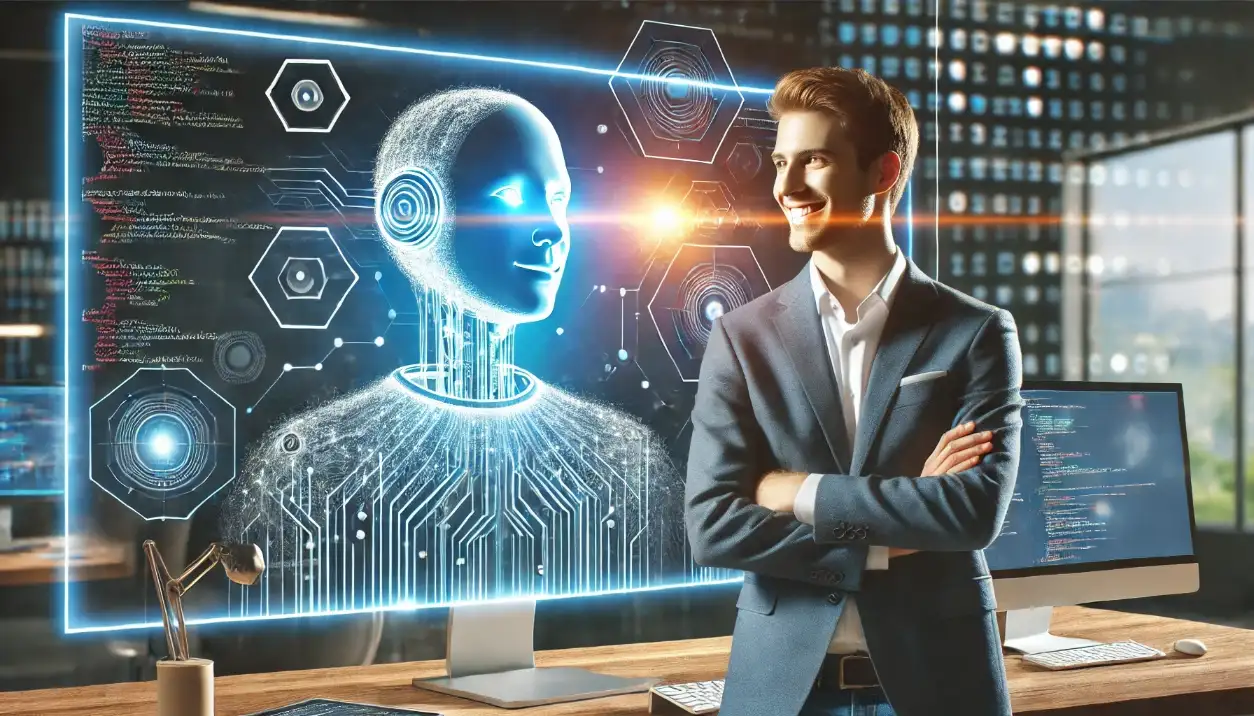

Have you heard the voices? They say the programming is over. That AI writes code better than any human. That learning to program today is useless. Lie.
The truth is another. AI is only destroying those who do not evolve. The average programmer, the one who copies and pastes code from Stack Overflow without understanding, the one who follows tutorials without ever delving deeper… that's already finished.
But you're not here to be average. You are here to know how to turn this revolution into an advantage. To understand why, while some see a threat, others are building software empires leveraging AI.
Stop for a moment. Are you sure you are irreplaceable? If you think programming just means writing code, AI has already won.
But who gets one programmer analyst salary high? Who can think beyond the simple "it works or it doesn't work"?
That is the programmer that AI will never replace.
Today whoever wants become a computer programmer it faces two roads:
- The ones that are about to be replaced.
- Those who use AI to dominate the market.
Which side do you want to be on?
If you want to build a solid programming career, by continuing to read you will discover what is really changing, which skills will be essential and how exploit artificial intelligence for earn more and work less.
If, however, you think that your job is just to write code and you hope that things don't change... close this page. Soon you won't need it anymore.
Does programming still have a future? Here's what you need to know
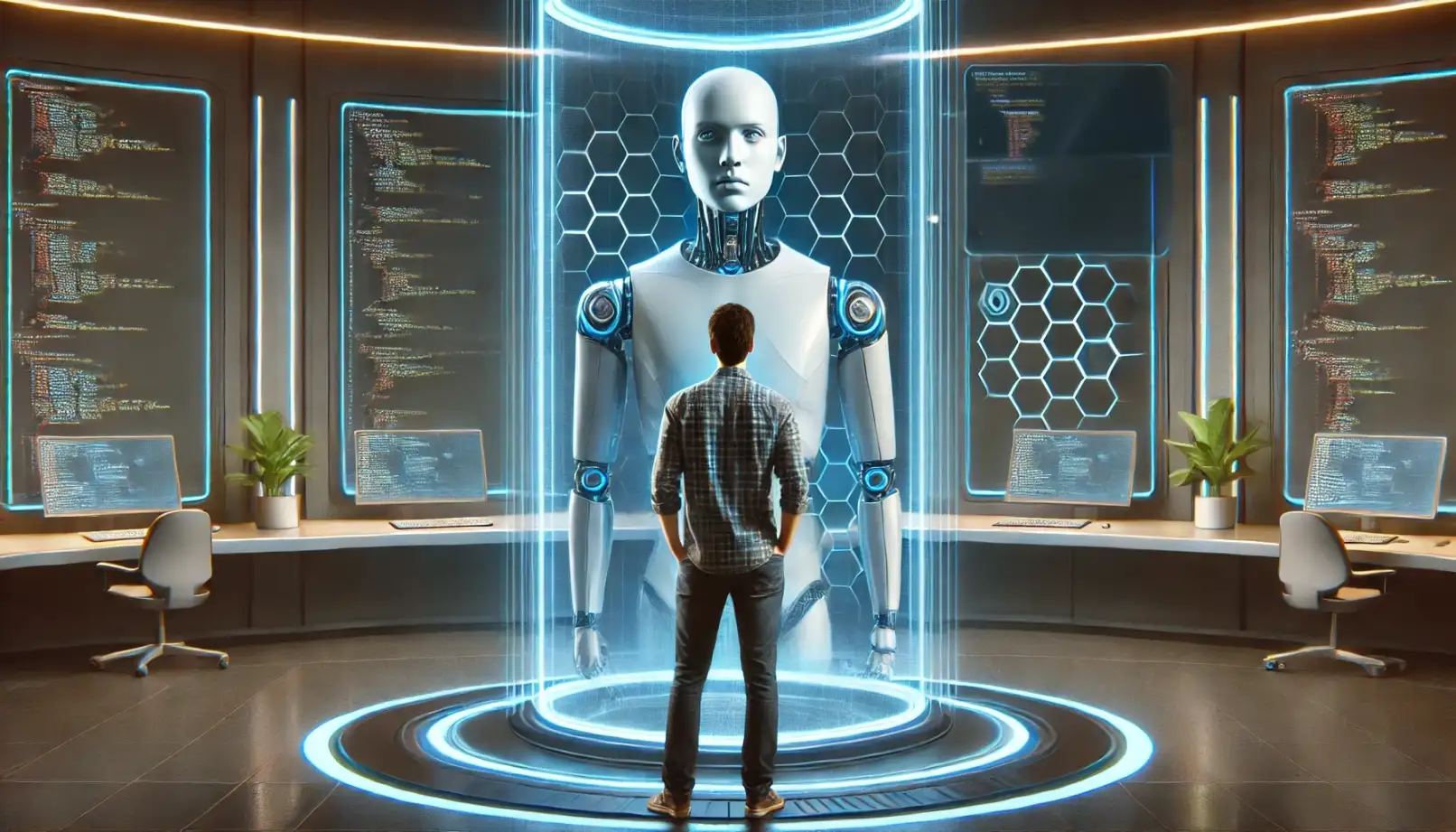
In recent years, artificial intelligence has made great strides. Tools like ChatGPT, Copilot, and AutoML are already changing the way you write code.
But does this mean programming is dying?
The answer is simple: no, programming will not disappear.
In fact, it is evolving faster than ever. The point is not whether it is still worth learning to program, but what skills will be needed in the coming years.
Because this is the real question: what makes a programmer irreplaceable? Once upon a time it was enough to know a programming language to be considered experts. Today?
Code is only part of the equation. AI can generate lines of code in a few seconds, but it cannot make strategic decisions or fully understand the problems to be solved.
Programming is becoming more powerful than ever, but only for those who know how to evolve. If you just write code like a machine, you will inevitably be replaced.
If instead you learn to think like a software architect, you will become indispensable.
And here comes the critical point: the market no longer rewards those who know how to write code. Reward those who get the highest paying IT jobs. Companies aren't just looking for developers, they're looking for problem solvers, innovators, minds capable of transforming code into real solutions.
So, the question isn't whether the future of programming is in danger.
The real question is: are you ready to discover the software career secrets to dominate this new era?
Will artificial intelligence change the role of the developer?

Once upon a time, the value of a programmer was measured in lines of code. The more you wrote, the more you were considered an expert. Today this mentality is a one-way ticket to obsolescence. The code is no longer the weapon, it is the battlefield.
And anyone who doesn't understand the new rules of the game is destined to be overwhelmed.
AI isn't just accelerating software development. It's redefining what it means to be a developer. If you were previously valued for your ability to write code, now the real value is in your ability to orchestrate artificial intelligences, to transform raw algorithms into extraordinary solutions.
Some roles are evaporating. Others are being born with impressive speed. The question is not whether AI will replace developers. The question is: Are you evolving fast enough to not be left behind?
Here are the main changes that are rewriting the rules:
- More automation, less effort → AI is eating up repetitive tasks. The programmer who simply writes standardized code is already a ghost of the past.
- Less debugging, more intelligence → AIs analyze, predict and fix bugs faster than any human. Manual debugging will be a relic.
- From code to architecture → The value is no longer in "how" you write code, but in "why" you write it. Real developers are becoming software architects, not just performers.
- New dominant figures → Prompt Engineer, AI Developer, Software Strategist: these are the roles that will guide the future, while those who do not evolve will remain a forgotten name in the change log.
Change is not a threat. It is a gateway. Whoever passes through it will guide the future. Whoever ignores it will become irrelevant.
The future of programming: what will be the new skills required?

The code is just the starting point. The future of programming belongs to those who can think, not just write. AI is redefining the rules of the game and those who limit themselves to programming like yesterday will be left out.
But there is a way out: acquire skills that no machine can replicate.
If you want to dominate, you need to master new skills. And we are not talking about simple technical updates, but about a paradigm shift.
The programmer of the future is not a mere executor. It's one strategist, a digital orchestra conductor, an architect of computational thinking.
Companies are no longer looking for people who can only write code. They look for those who know think beyond the code. Who knows create solutions instead of just implementing them.
Here are the skills that divide those who write the rules from those who will suffer them.
- AI integration in software → It's no longer enough to write code, you need to know how to merge artificial intelligence with your applications. AI APIs allow you to automate processes, analyze data in real time and create user experiences that were previously impossible. Those who know how to do it will be in demand everywhere.
- Prompt Engineering → Generative AI is powerful, but only in the hands of those who know how to guide it. Writing an effective prompt is not a matter of luck, but of method. Those who master this skill can achieve incredible output, while others will only see generic and useless responses. It's the new art of programming.
- Advanced software architecture → The future does not belong to those who write isolated functions, but to those who know how to design scalable, modular systems, perfectly integrated with AI. Software will no longer be a simple sequence of instructions, but a constantly evolving intelligent ecosystem. Whoever knows how to build it will lead the market.
- What are LLMs → You don't need to be an expert, but ignoring the functioning of an AI model means being left out. Understanding concepts like model training, regression, neural networks, and data pipelines will allow you to create solutions rather than suffer them. You don't have to become a data scientist, but you have to think like one of them.
But it's not just a question of technical skills. Mindset is the key. The programmer of the future is a Computational thought leader, an expert at orchestrating machines and humans into a perfect symphony. It's not who knows how to do everything, but who knows what to make technology do.
The difference between those who survive and those who dominate is all here: adapt before it's too late. The opportunities are enormous, but only for those who know how to seize them. The question isn't whether AI will change your job. The question is: Will you lead the change or will you be crushed by it?
If you want to be part of those driving change and master the most in-demand skills in the world of artificial intelligence, then now is the right time to act. Find out how with the artificial intelligence programming course. The future waits for no one.
The secret is not to avoid AI, but to know how to use it

Many developers look at artificial intelligence with fear, as if it were a wave destined to sweep them away. But the truth is another: AI does not replace developers. It replaces those who don't know how to use it.
The programmer of the future will not be someone who writes code quickly, but someone who knows how to orchestrate artificial intelligence to multiply their efficiency.
The point is not how much code you write, but how much value you can generate with the technology.
Here are the three fundamental skills that distinguish those who will lead this new era from those who will be left behind:
- Use AI to increase your productivity → Who uses i LLM as copilot can write better code in less time. AI is not an enemy, but an accelerator for those who know how to exploit it.
- Automate the tedious parts of programming → Manual debugging, repetitive refactoring that accumulates technical debt, writing boilerplate code:
- Creating innovative solutions thanks to AI → AI is not only used to write code faster, but to enhance the creativity of the developer. Who masters the programming with AI creates solutions that were previously unthinkable.
Whoever adapts, wins. Those who resist change remain behind. The future belongs to those who know how to evolve, to those who use AI not as a substitute, but as an enhancer.
If you want to become an indispensable programmer and master the new era of AI, it's time to take the leap. Find out how with the artificial intelligence programming course. The change has already begun: are you ready to exploit it or will you suffer it?
Do you want to become a programmer who exploits AI instead of being subjected to it?

There is a crossroads in front of you. Two roads. Two destinies. On the one hand, the programmer who rejects AI, who clings to the past, who hopes that everything will remain the same. On the other, the one that uses AI as an accelerator, as a lever to multiply one's value, as a weapon to conquer the future.
And you, which side do you want to be on?
Programming is not dying. It's evolving. And with it, programmers too. Some ride the wave and get far. Others remain firm, fixed in their beliefs, until the wave overwhelms them.
Artificial intelligence is not the enemy. He is the definitive ally. But only for those who know how to use it. It can save you time. It can free you from the boring parts of the code. It can open doors for you that were previously closed. But if you ignore her, she won't be the one to lose. It will be you.
The market is transforming. Today, companies are no longer looking for mere developers. They search problem solver. They search visionaries. They are looking for people who know how to use AI to create better, faster, smarter software.
Whoever adapts, wins. Whoever resists disappears. This is the rule. We didn't write it. The AI didn't write it. Time wrote it. And time waits for no one.
Look around. Look at the world of programming. Developers who were considered indispensable yesterday are today being replaced by AI tools who write code in seconds. The old ways are falling apart. New opportunities are exploding.
And here comes the most important question. Do you want to be one of those watching the change from afar? Or Do you want to be among those who lead it?
This choice isn't just about work. This choice concerns the your value, the your future, the your career. Those who master AI are not afraid of tomorrow. Whoever ignores it will be the first to be forgotten.
But here comes the good news. You don't have to face this change alone. There is a clear path, a strategy, a tested method to transform yourself into a indispensable programmer.
If you want to stop chasing opportunities and start creating them, this is the right time to upgrade your skills.
Don't wait until it's too late. The change has already begun. Programmers who master AI are becoming unattainable. The others are becoming invisible.
If you want to be among the first, this is your time.
Leave your details in the form below