

Have you ever wondered where your journey into the world of programming can begin?
Open a browser and search for 'how to become a programmer'.
In an instant, you will be overwhelmed by an avalanche of advertising of courses that promise to turn you into a professional developer in record time.
'From zero to developer in 30 days,' 'Learn to code in a weekend', 'Earn like an expert in three months.
And maybe there's even Santa Claus waiting for you around the corner with a contract to sign.
Sounds too good to be true?
Indeed, it is.
When you're just starting out, It's easy to feel overwhelmed and be dazzled by these promises.
The desire to learn is great, and the idea of a shortcut to success is tremendously attractive.
But there is a fundamental problem: programming is not a set of formulas to memorize or code to copy and paste.
The market is saturated with self-proclaimed "experts" selling pre-packaged programming courses as if they are the answer to all your problems.
But do you know what the funniest thing is? Seeing these supposed web gurus selling programming courses while their only success is... selling programming courses.
It's like a snake chasing its own tail, but they're building an empire of mediocrity on top of it.
The sad reality of the market

And the market?
The market is exploding.
Every day new "experts" sprout like mushrooms that promise to turn you into a coding ninja in 30 days.
It makes me laugh and cry at the same time.
The truth?
The online course industry it has become a giant slot machine that thrives on the desperation of those seeking a shortcut to success.
These smoke sellers have understood that it is more profitable to sell the dream than to teach the reality.
They bombard you with advanced terminology, overwhelm you with complex concepts, make you feel like you're learning when in reality you're just accumulating disconnected notions.
But in the end, when you have to face a real problem, you will find yourself with a handful of flies in your hand and the feeling of having been made fun of.
And do you know what the most tragic part is?
These courses are actually doing harm.
They are creating a generation of programmers who think copy-pasting from online platforms is a professional skill.
People who know the syntax but don't understand the semantics, who can recite patterns but don't know when to use them, who confuse memorization with understanding.
Do you know what most of these courses really are?
Digital junk.
Recycled content, basic notions disguised as "secrets of the trade", antiquated teaching methodologies proposed as innovative.
Many continue to fall into the trap, course after course, hoping that the next one is the right one.
It makes my blood boil to see young developers, or aspiring ones, wasting time and money in this media circus of online training.
The Illusion of the "Self-Taught Programmer" and the "Universal Programmer"

Do you really think you can become a professional programmer just by watching some videos or reading some online tutorials?
Have they ever told you how the great masters of art learned their craft?
They didn't study alone, but they worked side by side with experienced artists in the Renaissance workshops, absorbing not only the techniques, but also that invisible wisdom that no book can convey.
Software development is no different.
The foundation you build today is the same foundation you will build your entire career on.
One mistake here, one bad habit there, and in a few years you'll find yourself having to tear down and rebuild everything from scratch.
Here's why you need a mentor that doesn't just show you the way, but that walks with you, that shows you those subtle nuances that make the difference between code that survives and code that thrives.
Someone who doesn't just tell you what to do, but who explains it to you why behind every decision, which helps you develop that intuition that distinguishes a mediocre developer from an exceptional one.
Programming is a complex discipline, it's not something you learn in a weekend.
Also, do you think you can learn all the existing programming languages? That you can switch between them in the blink of an eye?
Open your eyes! To become a true expert, you must specialize in a specific area.
You need to have a thorough understanding of the technologies and tools you use on a daily basis.
| Corso | Topics | |
|---|---|---|
| Corso C# Smetti di scrivere codice che funziona per miracolo. Impara a progettare software solido, elegante e che fa guadagnare le aziende — con il mentoring diretto di un architetto con 25 anni di esperienza. | OOP avanzata, Pattern architetturali, Performance, LINQ, Async/Await |  |
| Corso ASP.NET Smetti di costruire siti web fragili. Impara a creare applicazioni web aziendali veloci, sicure e che scalano con il tuo business con il mentoring diretto di un architetto con 25 anni di esperienza. | API RESTful, Sicurezza, Middleware, Architettura MVC, Deployment |  |
| Corso Visual Basic Visual Basic è ovunque nelle aziende italiane. Chi lo padroneggia davvero è raro e richiesto. Diventa quel professionista, con il mentoring di un architetto con 25 anni di esperienza. | Windows Forms, Integrazione database, Interop COM, Manutenzione legacy |  |
| Corso WPF Da applicazioni desktop fragili e lente a software industriale veloce, affidabile e che i tuoi utenti vogliono usare, con il mentoring diretto di un architetto con 25 anni di esperienza. | MVVM, XAML avanzato, Data Binding, Custom Controls, UI/UX enterprise |  |
| Corso Blazor Smetti di dipendere da JavaScript. Costruisci applicazioni web potenti, veloci e affidabili con il linguaggio che conosci già con il mentoring di un architetto che usa Blazor in produzione ogni giorno. | Blazor Server, WebAssembly, Component Architecture, Auth, SignalR |  |
| Corso Entity Framework Smetti di combattere con database lenti e codice di accesso dati caotico. Impara a far volare le tue applicazioni con il mentoring diretto di un architetto specializzato. | LINQ avanzato, Migrazioni, Performance tuning, Concurrency, Raw SQL | 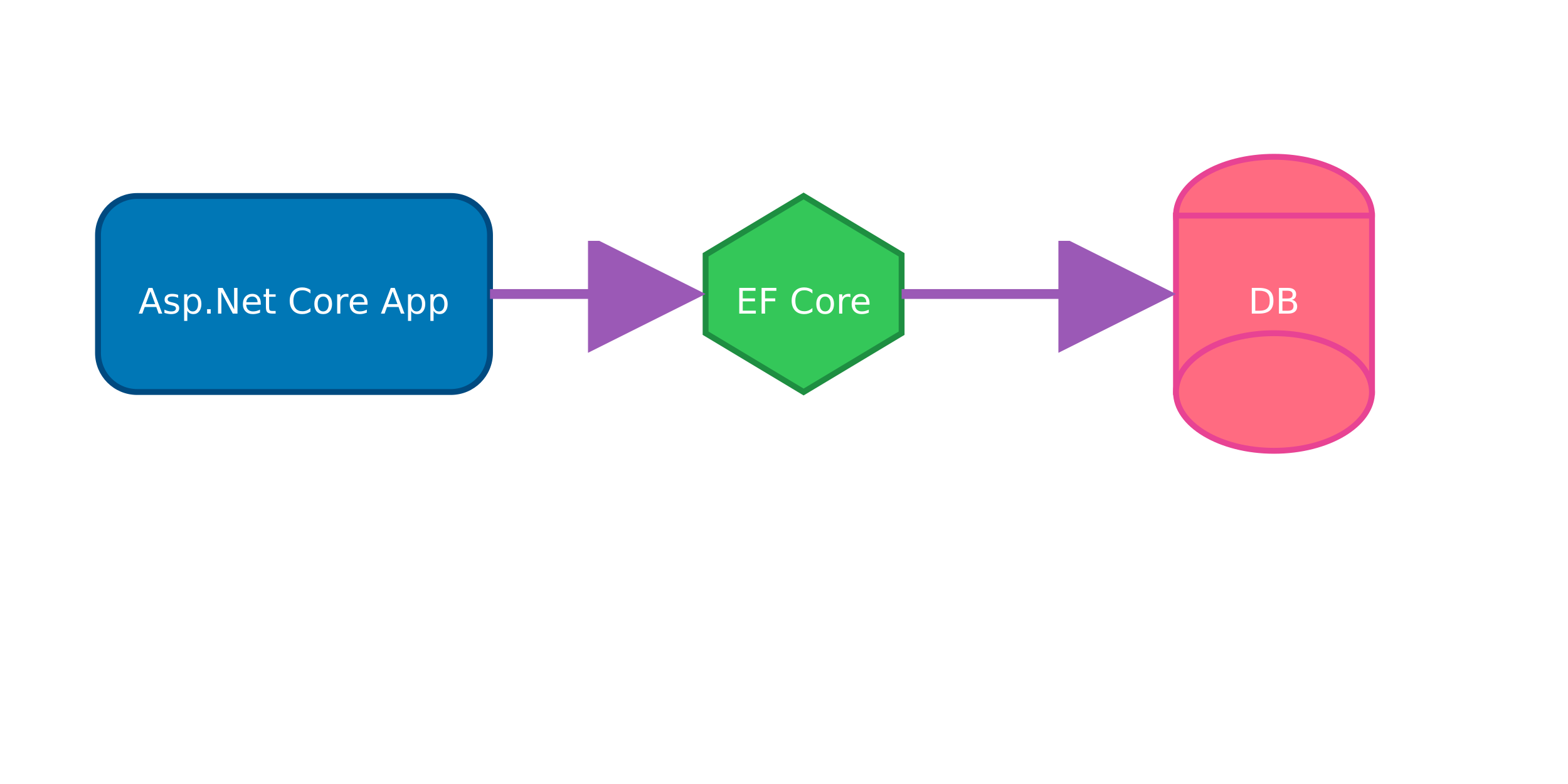 |
| Corso MAUI Smetti di mantenere codice separato per ogni piattaforma. Con un solo team e un solo linguaggio costruisci app native per tutti i dispositivi — con il mentoring di un architetto specializzato. | Cross-platform, .NET MAUI, Blazor Hybrid, UI nativa, MVVM |  |
| Corso Azure Adozione cloud pragmatica per aziende che vogliono risultati concreti. Non teoria su servizi che non userai mai, solo ciò che serve davvero al tuo business. | Cloud Architecture, DevOps, Container, CI/CD, Cost Management |  |
| Corso Migrazione da VB6 a .NET Il tuo software VB6 funziona e genera fatturato. Ma ogni giorno che passa diventa più fragile e più difficile da mantenere. Qui impari a migrarlo senza traumi. | Analisi codice legacy, Strategia migrazione, .NET, Validazione, Testing |  |
| Corso VB.NET Se il tuo team conosce Visual Basic, VB.NET è il percorso naturale verso il software moderno. Stesse competenze, stessa produttività, tecnologia aggiornata — con il mentoring di un architetto senior. | Windows Forms, ADO.NET, OOP, Pattern enterprise |  |
| Corso .NET Dalla configurazione alla produzione: impara a sfruttare .NET al 100% per costruire software veloce, sicuro e che dura nel tempo — con il mentoring di un architetto con 25 anni di esperienza. | ASP.NET Core, Blazor, Entity Framework, Clean Architecture, Testing |  |
| Corso Sviluppo frontend Non scegliere una sola tecnologia. Padroneggia Blazor, WPF e ASP.NET per diventare lo sviluppatore di interfacce più completo del mondo .NET — con il mentoring di un architetto con 25 anni di esperienza. | Blazor, WebAssembly, Component Library, State Management, UI Architecture |  |
| Corso Programmazione Intelligenza Artificiale L'AI non è solo per Google e OpenAI. Integra intelligenza artificiale reale nelle tue applicazioni aziendali — chatbot, previsioni, analisi automatica — con il mentoring di un architetto che lo fa in produzione. | LLM, AI Generativa, Machine Learning, Semantic Kernel, Blazor + AI |  |
| Corso Programmazione PLC Le fabbriche moderne hanno bisogno di software che parla con le macchine. Impara a collegare PLC, sensori e attuatori al tuo software .NET — con il mentoring di un architetto che lo fa in produzione. | Ladder Logic, Structured Text, C# per PLC, IEC 61131-3, HMI | 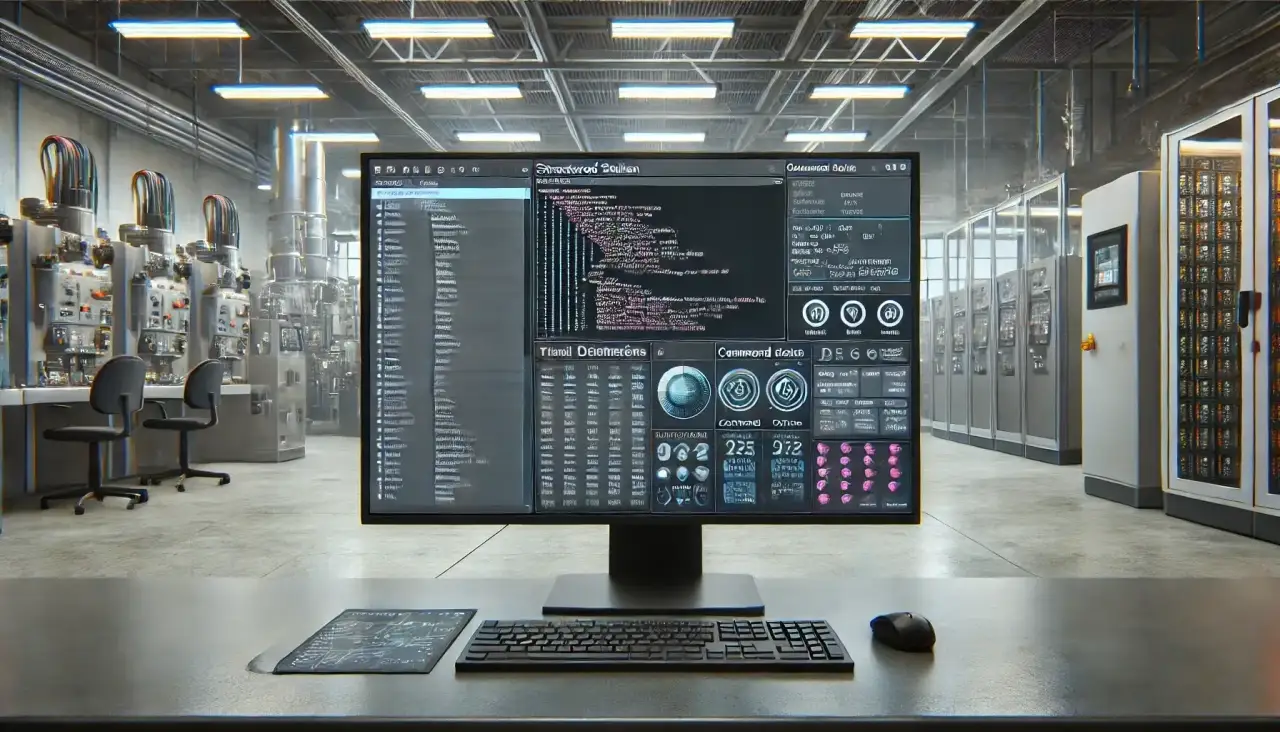 |
| Corso Architetto Software AI Smetti di incollare l'AI sopra la tua architettura. Impara a progettare sistemi intelligenti, affidabili e scalabili — con il mentoring diretto di un architetto con 25 anni di esperienza. | Semantic Kernel, RAG, Agenti AI, Vector Search, Azure OpenAI, AI Governance |  |
The myths of online programming courses

Advertisements for programming courses paint an idyllic picture of you: study lightly, for a limited time, and you'll become an expert developer.
They show you shining smiles of "former students" who now earn astronomical sums working from a tropical beach.
A seductive mirage, right?
The truth is very different from this glossy fairy tale.
There are no miracle shortcuts or magic formulas.
Learning programming is a challenging, complex and not short journey.
These accelerated programs, which promise to turn you into a coding ninja in record time, are like knowledge fast food: they fill you up momentarily but don't really nourish you.
They leave you with an indigestible mixture of disjointed concepts, code snippets memorized without understanding, and that annoying feeling of always being one step behind compared to where you should be.
But do you know what their true masterpiece is?
Convince yourself that it's your fault if you can't become an expert in 30 days.
The reality is that these sellers of illusions have only one goal: to empty your wallet as quickly as possible, leaving you wandering in a labyrinth of incomplete notions, confused and demoralized, ready for the next "miracle" course that will promise you, once again, the moon.
Let me reveal the anatomy of this well-orchestrated scam.
I dissected hundreds of these courses, and beneath the shiny marketing veneer I discovered a disturbing pattern that repeats with mathematical precision.
Here's the x-ray of what they're really selling:
- Courses for beginners: perfect for those who are completely new to programming, they offer the fundamental basics, but be careful of the "everything now" promises.
- Intermediate and advanced courses: Suitable for those who already have experience and want to perfect their skills. However, it is important to find paths that facilitate the transition between the various difficulty levels.
- Free courses: The free courses represent an excellent starting point: accessible to all, but often limited to an introductory overview or designed to lead you to a more structured commercial offer.
- Bootcamps and intensive courses: bootcamps promise full immersion to quickly learn and face the job market. However, it is good to know that they do not always guarantee mastery of the skills required in the professional field. Ideal for those who want a strong initial push, but need further study to be truly competitive.
Programming spans many areas: web development, mobile development, data science, artificial intelligence, video game programming, and more.
Each specialization requires specific skills, therefore choose carefully based on your interests and objectives.
The vicious cycle of incompetence

Let me tell you a story that probably sounds familiar to you.
A story I've seen repeated so many times it makes me feel nauseous.
You know what I'm talking about: everything starts with so much enthusiasm when you sign up for that basic programming course.
The bright eyes, the mind full of dreams of glory and millionaire startups.
You spend your evenings glued to the screen, diligently following every single tutorial like a good student.
You feel so proud as you meticulously copy the instructor's every line of code, nodding with conviction at his every explanation.
"But yes, everything is clear!", you say to yourself with satisfaction. "It's easier than I thought!"
Then comes the moment of truth.
That terrible moment when you close the video tutorial and try to write something of your own.
And that's where everything collapses miserably.
The cursor blinks on the blank screen as your mind panics.
Where have all those certainties gone?
But why can't you write even one damn line of working code?
Frustration mounts, self-esteem plummets, and you know what you do? You go back to where you started.
You sign up for another path, convinced that this time it will be different.
Spoiler: it won't be.
This hellish cycle of false hope and bitter disappointment is why 95% of aspiring programmers remain eternally mediocre.
It's like watching someone swim perfectly on TV and then convincing yourself that you can swim.
The hard truth?
You're just fooling yourself, wasting precious time in an endless loop of pseudo-learning that will get you nowhere.
It's frustrating, right?
You feel inadequate, incompetent, always one step behind others.
And meanwhile time passes, technology evolves, and you get stuck in this limbo.
The path to programming for true professionals

Imagine you want to learn to play the piano.
Do you think you can start playing Beethoven without knowing the notes?
Programming requires a solid foundation.
There are no shortcuts, only constant practice and deep understanding.
Yet, many courses try to teach you to run before you know how to walk.
Want honest advice?
Stop looking for the magic pill.
It doesn't exist.
Serious programming is difficult, takes time, requires dedication.
If anyone tells you otherwise, they're trying to scam you.
He's probably not even good at programming.
Let's sit down for a moment and talk about this clearly.
To become a real developer, you need a solid foundation.
Not of shortcuts, not of miraculous promises, but of a structured path that starts from fundamental principles.
An approach that teaches you not only the 'how' but also the 'why' of each concept.
Only in this way will you be able to build a lasting career in the world of programming.
Remember: in the world of software development, solid foundations they are your insurance for the future.
Every hour invested in truly understanding the fundamentals will pay off a hundredfold when you face more complex challenges.
Why regular programming courses don't work

Do you know what the real crime is here?
It's not just that these courses are useless; is that they are actively damaging your professional growth.
It's like they're teaching you how to drive by having you memorize the car manual without ever letting you touch the steering wheel.
Absurd, right?
Yet, that's exactly what's happening in the world of IT training.
These courses are programming you (ironic, right?) to become a code-monkey, one of those who only know how to repeat pre-packaged patterns without understanding why.
They fill your head with "best practices" that you apply blindly, like a religious fundamentalist who follows dogmas without ever questioning them.
And the result?
A generation of developers who panic when faced with a problem that doesn't have a solution on Google.
But the most subtle sabotage is another: they're teaching you to think that programming is a matter of syntax and frameworks.
As if knowing how to write in perfect Italian automatically made you a great writer.
It's a lie so big it would make Pinocchio blush.
You need to know that programming is, first of all, a way of thinking, an approach to problem solving.
But you won't find this detail in their elegant information materials.
And then there is the question of certifications.
They sell you the illusion that collecting badge after badge is the path to success.
News flash: I have never in my career seen a customer impressed by a piece of paper.
Do you know what impresses them?
Seeing a complex problem solved with elegance and efficiency.
But they will never tell you this, because they can't sell you the experience in pills for €59.99 a month.
The trap of superficial learning

I know well that feeling of wandering from one tutorial to another, accumulating disconnected fragments of knowledge in an endless cycle of apparent progress.
It's especially frustrating to see how Most courses take a standardized approach and impersonal, treating students as if they were all identical, with the same needs, goals and backgrounds.
This standardization is fundamentally flawed, since programming is not a linear path, but a deeply personal journey which requires competent guidance.
Even more worrying is the technical superficiality of many courses that claim to teach complex software development in a few hours of video, ignoring that programming is an art that requires understanding, critical thinking and prolonged field experience.
Software Architect: not just a course, but a transformation

You know that feeling? That frustration you feel when you see yet another "expert" selling programming courses like they're candy.
But maybe this is the moment to make a different choice.
I created "Software Architect" with a radical idea: to completely reject the mass course model.
No crowded virtual classrooms where you get lost in the crowd.
No watered down content to please everyone.
And above all, no unrealistic promises immediate success.
Instead, I chose a different path.
Let me tell you a secret that many industry "gurus" don't want to admit: you don't need to be a genius to become a successful software architect.
I've seen developers with average IQs transform into exceptional professionals, surpassing more technically gifted but inconsistent colleagues.
The truth is that achieving excellence in software architecture is like building a cathedral: it's not about laying one perfect stone, but about laying thousands of stones, day after day, with patience and method.
It is a journey made of small daily victories, of problems solved one at a time, of code refined line after line.
You don't need extraordinary talent; you need the determination of someone who sits at their desk every day, faces challenges with humility and never stops learning.
I decided to focus on a small group of determined developers, those who know that excellence requires dedication.
Those who don't look for shortcuts, but want to truly master software architecture.
This means saying "no" to 9 out of 10 applicants.
It means rejecting those who seek the easy way.
It means selecting only those who are ready to make the leap in quality, those who have what it takes to become a true software architect.
And do you know what happens when you gather a group of professionals of this caliber?
An incredible synergy is created.
An environment where every technical discussion is an opportunity for growth, where every challenge becomes a springboard for excellence.
I'm not trying to build the biggest course, but the best, always in step with the times.
A program where each participant is followed, where each concept is explored in depth until complete mastery, where excellence is not an option: it is the standard.
If you recognize yourself in this vision, if you're tired of living a mediocre life and are ready to join an elite group, then maybe you're just the kind of professional I'm looking for.
But you have to be honest with yourself: are you really ready for this level of commitment?
You are willing to push yourself beyond your limits to achieve excellence?
The choice is yours.
But know that if you decide to join us, it won't be just another course: it will be the beginning of a real professional transformation.
A Radically Different Approach: A Code Veteran's Experience

As a software architect actively involved in the sector, my expertise does not derive from abstract theories, but from years of work in the field, spent solving real problems for clients from the most disparate industrial fields.
Programming has radically transformed my life, both from a professional and personal point of view, leading me to decide to share my knowledge with those who are serious about undertaking this journey.
My approach to training is based on concreteness and honesty: I don't promise immediate riches or effortless success, but I guarantee that with constant commitment and dedication significant goals can be achieved.
Imagine the freedom of working remotely for international companies, managing projects from the beach or while exploring the world: all this is achievable with the right path and the right mindset.
I have the tools to guide you towards this professional future, but the real commitment will have to come from you.
Each training session is designed to offer you complete immersion in practice, and not to be just theoretical.
It's not just another class: it's an opportunity to see how the techniques you study have real effect in the world of programming.
My extensive experience helps you understand not only the 'how' but also the 'why' of the techniques you learn.
This direct connection to the real world not only facilitates understanding, but also makes learning more meaningful and relevant to your future career.
I am committed, together with my staff, to providing you with ongoing support, adapting teaching to your needs as much as possible.
This means that whether you're starting from scratch or looking to perfect advanced skills, you'll receive the attention and support you need to advance your learning journey.
The flexibility of our approach ensures that every student can get the most out of your trainingregardless of the starting point.
Join us and discover how this attention and high-quality teaching can make a difference in your career.
With my support, you will be ready to open the doors to a bright and opportunity-filled future in programming.
I have seen projects costing millions of euros fail due to architectural decisions made by developers who turned out to be incompetent.
I've seen entire teams paralyzed because no one had the courage to admit that they were building everything on nothing.
And you know what I realized?
That the problem isn't a lack of information - we live in the age of information overload, for heaven's sake!
The problem is that no one is teaching how to think truly as a software architect.
Everyone is too busy chasing the latest framework of the week and never stops to ask themselves, “Does this code make sense?
Will it hold up in six months?
Can he evolve without turning into Frankenstein's monster?
I've seen too many talented developers waste precious years of their careers chasing technological mirages, jumping from one framework to another like hyperactive children in a toy store.
And you know what?
I got bored.
I'm tired of seeing potential wasted, of seeing passion transformed into frustration, of seeing intelligence suffocated by bad teachings.
That's why I decided to do something drastically different.
What is needed is a complete re-education in architectural thinking, a total reset of how you approach development.
Not yet another programming course; there are already too many of them out there, and most aren't worth the internet bandwidth they consume to download them.
Something authentic, honest and profoundly effective.
Mindset: the key to going beyond technical skills
Programming is not just a question of code, but of vision and strategic approach.
The difference between a programmer who executes instructions and a software architect who creates revolutionary solutions lies in mindset, as well as skills.
An effective programmer doesn't just learn new languages or tools, but develops critical thinking that allows him to tackle complex problems with creativity and logic.
But mindset is not only useful for overcoming technical challenges: he is your main ally to manage difficult moments throughout the journey.
Low mood, demotivation, drops in self-esteem and the feeling of not being up to par are obstacles that you will inevitably encounter.
Learning to have the right mindset also means accepting failure as part of the learning process, recognizing that every mistake represents an opportunity to grow.
The ability to recognize these moods and deal with them promptly is very important.
Developing healthy habits, celebrating small progress, and maintaining a positive outlook will allow you to continue growing even when the path seems uphill.
This mentality also includes the ability to adapt to technological changes, to collaborate with multidisciplinary teams and to foresee the evolution of a project.
It is the combination of curiosity, perseverance and attention to detail that transforms a technician into an innovator.
Technology evolves, but mindset remains your most powerful tool.
The Microsoft ecosystem as you've never seen it

Forget the usual tutorials that circulate online.
In our .NET course, I guide you through the Microsoft ecosystem with a completely different approach.
Let me tell you something that might shock you: I know developers with ten years of experience in .NET and C# who still can't build an application worthy of the name.
Shocking, right?
The problem is not them, but it is how they learned them.
It's time to sweep away years of bad habits and useless tutorials to make room for something radically different.
In the real world, where software must work and generate profit, there are no toy examples or "hello world" projects.
Here we are talking about software architectures that support the weight of thousands of users, systems that must scale and evolve over time.
I won't show you the usual sterile implementation of a design pattern; I'll show you how and why that pattern saved a project from total failure.
When we talk about MAUI and cross-platform development, forget the usual tutorials that show you how to create a stupid shopping list app.
I will guide you through professional application development that run on every platform without compromises, the same ones I use every day with clients who pay five figures for software that works.
The best practices you will learn do not come from some theoretical book written by academics who have never had to meet a deadline in their life.
They are born from years of battles, from projects saved at the last minute, from sleepless nights spent optimizing code that absolutely had to go into production the next day.
These are the lessons I learned the hard way, the mistakes I have already made and that you can avoid.
And when it comes to debugging and performance?
I won't just teach you how to use the tools: I'll show you how to think like a code detective, how to track down those damn bugs that drive entire teams crazy, how to optimize applications that seemed doomed to remain slow forever.
Because in the real world, the difference between a successful application and a total failure is often measured in milliseconds.
A path for true professionals: why this course is different

Let me be brutally honest: if you're looking for yet another course that promises to turn you into a 10x developer in two weeks, you're in the wrong place.
You won't find any miraculous shortcuts here, you will not find magic solutions, and you certainly won't find pre-packaged packets of knowledge to consume in the microwave of your brain.
What I offer is something radically different, something that will infuriate many in the industry.
Why? Because it challenges every single belief they have instilled in you so far.
Did they tell you you need to know twenty frameworks?
Bullshit.
Did they tell you you have to be full-stack?
More marketing idiocy.
Have they told you that you have to blindly follow best practices?
Another fairy tale that has already done enough damage in our industry.
What you need is to learn to think: yes, THINK like a real software architect.
Not one of those people who proclaim themselves architects after reading two books by Martin Fowler, but a professional who knows how to make decisions that impact projects worth millions of euros.
Someone who when he speaks in a technical meeting, everyone stays quiet and listens.
One who doesn't need to “google” every three minutes because he has a deep understanding of the fundamental principles.
And do you know what the most provocative part is?
This path will require more time, more effort and more dedication than any other course you have ever taken.
Because transforming your mindset is infinitely more difficult than learning yet another syntax.
But the result?
The result is the difference between being a code-monkey copying and pasting code, and a professional shaping the future of software.
Here you will find only top-notch content, real-world experience and the drive towards professional excellence.
The difference that makes the difference: this is the course for you

Imagine this scene: you are in a room with two doors.
Behind the first is your comfort zone: endless tutorials, online development platform as your daily bible, and that constant feeling of being an impostor who will sooner or later be unmasked.
The world is full of courses that will lull you into your comfortable illusions.
You know, the ones with the neon banners and fake testimonials.
Behind the second door is a path that will make you sweat, doubt, and probably even curse, but it is the only path that will transform you into that software architect that teams respect and companies compete for.
Most will choose the former, because it is comfortable, safe, predictable.
And you know what?
I'm happy about it.
Because while they copy and paste solutions from dusty forums, producing software of dubious quality, my students are earning the professional respect that few can boast.
Here you only find people willing to admit that they don't know everything and professionals who have understood that the more they learn, the more they realize how much there is still to learn.
I'm not looking for people who want to add yet another certificate to the collection.
I'm looking for developers ready to demolish all their beliefs about programming, to reject the shortcuts that the market tries to sell them, to transform themselves into professionals who, when they speak in a technical meeting, silence the room.
If you're looking for yet another course that promises to turn you into an expert in four weeks, you're in the wrong place.
But if you're ready to embark on a journey that will require blood, sweat and many sleepless nights, then maybe – and I emphasize maybe – you are the type of developer I'm looking for.
This is where it gets serious, you get your hands dirty with code, you bump your head against real bugs and you learn lessons that no textbook can ever teach you.
If the idea of dedicating evenings and weekends to studying gives you hives, if you think that serious programming can be learned in the spare time between one episode of a TV series and another, forget it.
I'm not here to sell you impossible dreams.
The road to becoming a true professional requires sacrifice, dedication and a massive dose of humility.
You have that constant feeling of being ready for something bigger, right?
That intellectual itch that makes you spend hours studying code while others sleep, that voice that whispers to you that you could be much more than just a code monkey, that feeling that tells you that you were born to build cathedrals of code, not to lay bricks following other people's projects.
It is not unbridled ambition; it's your potential knocking.
If you're tired of being "just" a programmer and dream of becoming a real software architect, you're in the right place.
If you're tired of watching tutorial after tutorial without ever feeling like you're making real progress, if you dream of creating applications that make a difference, if you want to finally understand how software development really works in the real world and not in that of pre-packaged courses, then you're in the right place.
It's time to decide

While you put it off, while you tell yourself that "it's not the right time", while you wait to be "ready", the gap between where you are and where you could be is getting wider every day.
And yes, I know it hurts to hear these things.
But do you prefer the truth today or a life of regret starting tomorrow?
Now you have a choice before you.
You can continue on the path you've followed so far and we both know where it will take you.
Or you can decide that it's time for a change, that it's time to make that leap in quality that you know you deserve.
I'm not selling you a dream; I'm offering you a wake-up call.
A brutal, uncomfortable, but necessary wake-up call.
The ball is in your court.
You can continue to floating in the sea of mediocrity, or you can decide to emerge and become that software architect you always knew you could be.
The choice is yours.
But remember: a year from now you will look back on this moment, and be happy you made the right decision, or you will wonder "what would have happened if...?"
The next step, out of the comfort zone

Let's face it: there are two types of people who have read this far.
Those who they are already looking for excuses to postpone, and those who feel their heart beating faster because they know that this is the turning point.
Registrations are strictly limited for each session.
It's not a marketing tactic, but it's a necessity.
I don't want to create overcrowded classes, because I want to guarantee maximum quality and attention to each participant.
The next session starts soon.
If something inside you is screaming that this is the right time, listen to her.
It's not anxiety, it's your intuition that knows how to recognize a turning point when it sees it.
If you're not ready to get involved completely, save your time (and mine too).
If you think you are ready for this challenge, fill out the form below.
But remember: once you start this journey, there is no option to go back.
Mediocrity will no longer be an acceptable option.
Sign up now!
It's time to take the leap.
It's time to do something for yourself.
Leave your details in the form below