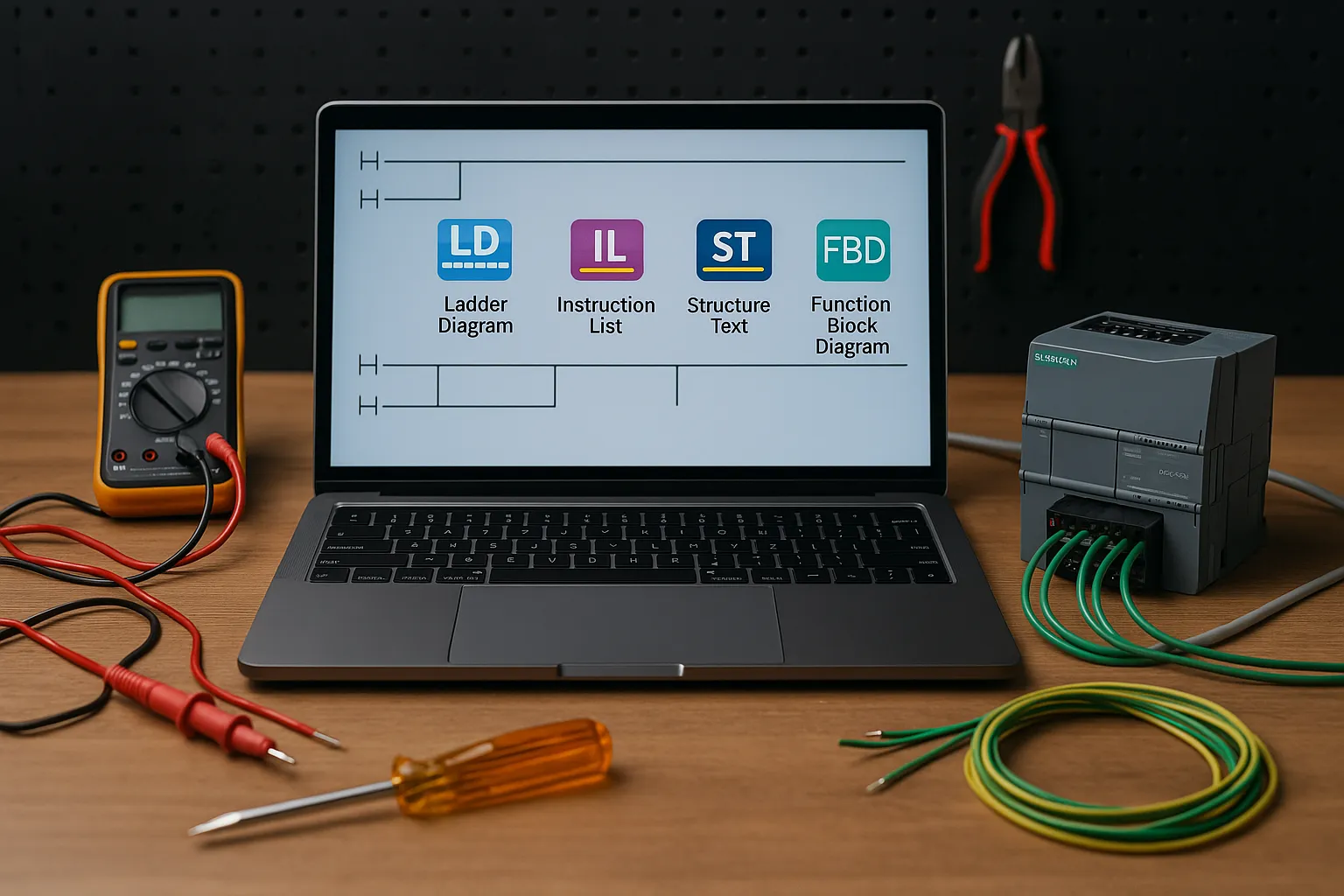

If you typed what are the PLC languages, maybe you didn't just do it out of curiosity. Maybe there is something that matters to you. A decision to make, a leap you would like to take, a challenge you feel approaching at work, and you don't know if you're ready yet.
The truth is that those looking for this information often don't just want a list.
He doesn't need to know they exist structured text, Ladders, function block and all the other languages provided by the standard, you can find that everywhere.
What he's really looking for, even though he might never say it out loud, is a sign, an indication that reassures him, proof that someone else has been through it and found a way out.
A confirmation that yes, you can work with PLCs in a modern, solid and respected way.
Maybe you're thinking that you've always done it this way, and that changing course now would make you feel inadequate. Or maybe it's the opposite: you feel like you're destined for something more, but no one around you seems to understand it.
And every time you try to explain yourself, they tell you that "with Structured Text it's fine as it is".
Meanwhile, you watch the world change, companies ask for connected systems, integrated data, intuitive dashboards, predictive diagnoses, you know it inside: you can no longer stay behind.
This is where this article begins. Not from a technical manual. But from you, from your legitimate doubts, and from all those questions that (until today) no one has had the courage or competence to face with you.
Why know the PLC languages It's useful, sure. But understand where their limits end — and what you can really do today with more advanced tools — can change your career.
And when you discover that you can not only program a PLC, but orchestrate industrial logic with .NET, C# and virtualized environments... then everything will take on another meaning.
But for now, let's start with the basics. I'll take you inside. I'll show you what's behind it. And if in the end you find yourself in what you are reading… you will know you are in the right place.
The real problem of PLC programming today
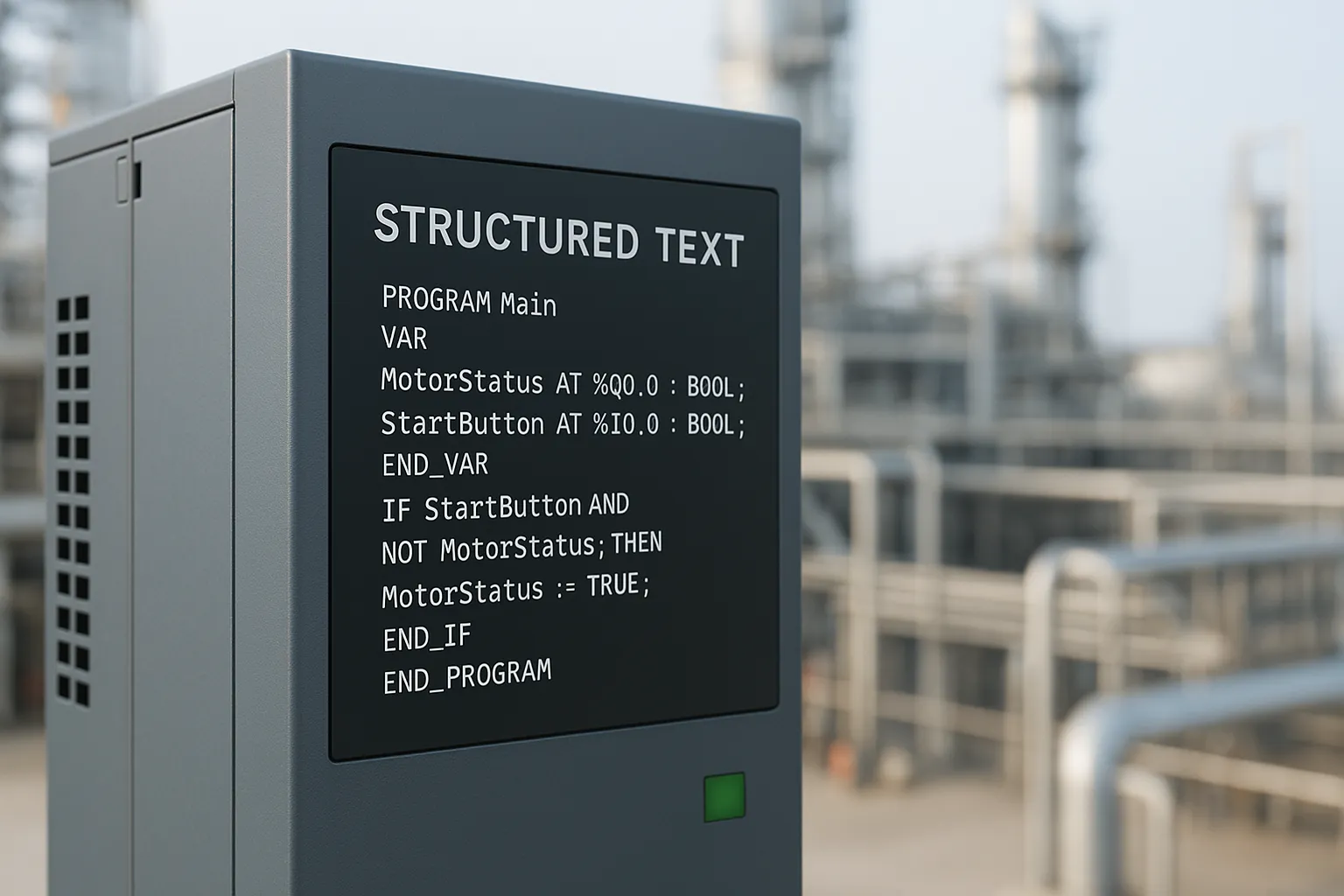
If you work with PLCs, you've probably been there too: hours spent on code that behaves strangely, no system to test it first, no version to go back to.
And all this just because the languages you use structured text, ladder, function block they are children of an era in which programming meant designing contacts, not designing software.
It's not your fault. But it's a reality that frustrates anyone trying to do their job well.
Monolithic logic, risky modifications, debugging in the field with the tester in hand… without even the possibility of simulating beforehand or writing an automatic test.
Meanwhile, outside the electrical panel, industrial software has already made a leap forward. Versioning, virtual environments, maintainable languages, reusable code.
This is not just a technical evolution. It is a concrete way to simplify work, reduce risks and return to feeling in control of your code.
And our journey begins from here.
The PLC languages you know: why they make you feel limited today

You have learned to use Structured Text, Ladder, Function Block. Maybe you use them every day, maybe you even handle them well. But something inside still doesn't return.
You write code, yes, but it always feels the same. Each project is a copy-paste of the previous one. The logic becomes complicated, and you are forced to fit functions into systems created for simpler things.
You would like modularity, abstraction, automatic testing, an IDE that really assists you, not just a gray grid with contacts and coils. But those languages, while reliable, have an insurmountable limit: they were not born for what we need today.
They ask you to interface with SCADA, with databases, with external systems, with the cloud. And you, with Ladder or FBD, can only try, or give up.
The worst? It's that you start to think that it's your fault, that you're not fast enough, up-to-date, brilliant enough.
But that's not the case.
The problem isn't you, it's the tools.
If you feel frustrated today, it's not because you're not up to par, but because you're trying to build modern architecture with tools from thirty years ago.
And the truth is that you have every right to demand more.
More from the tools. More from your profession. More from your career.
And when you discover that there is a world where programming a PLC means using C#, .NET, virtual environments and modular architectures... you will realize that that frustration was only the first sign that you were about to make a leap.
The possible leap: because today you can go beyond PLC languages
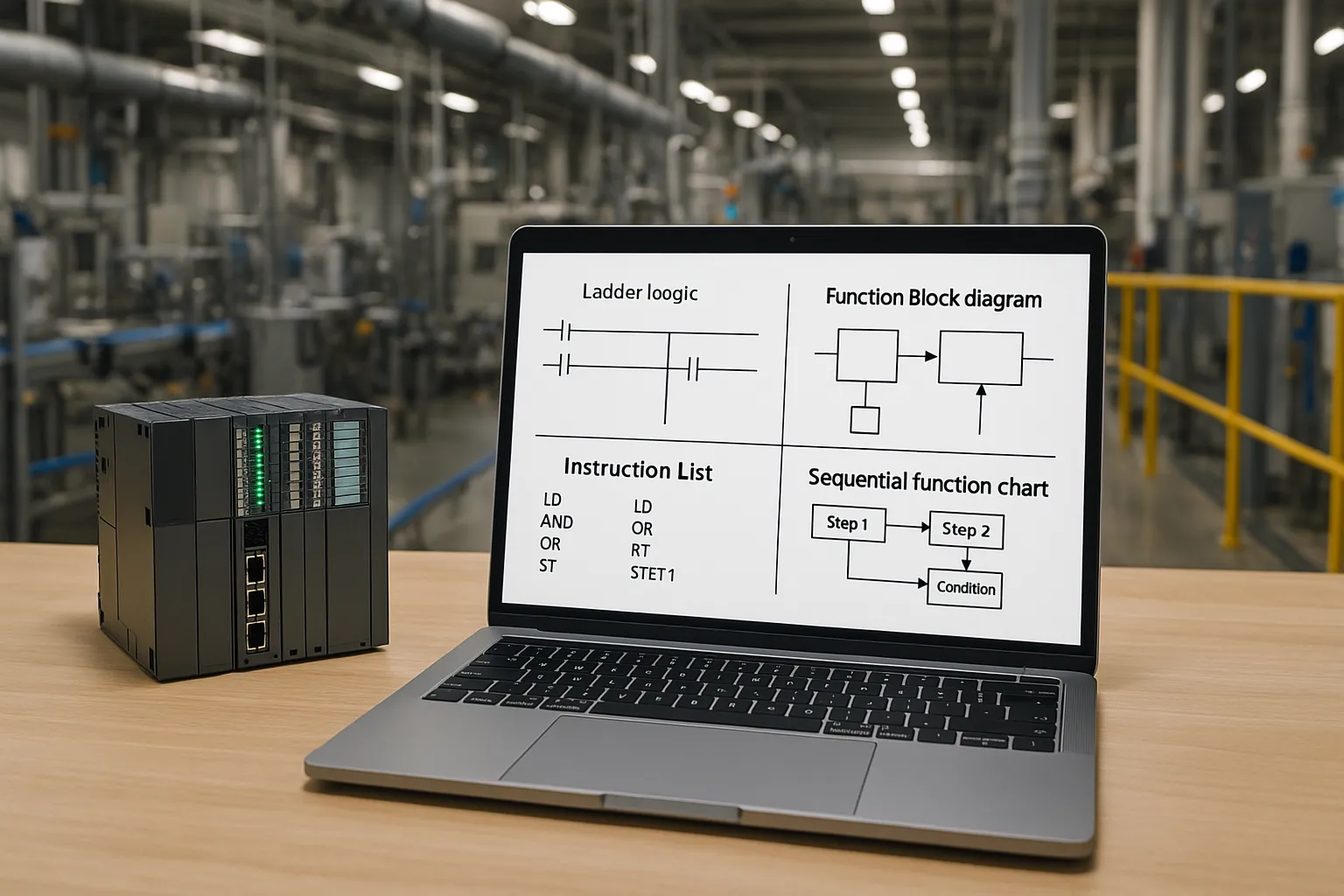
If you've ever felt shackled by rigid blocks, cryptic instructions, and simulations that only work when everything is plugged in, know that you're not the only one.
You are not wrong. It's the context that's limiting you.
But just today, something changed.
You are no longer forced to use tools that are 15 years late, closed environments and a way of programming that always leaves you with the impression of doing a half-solution.
Today you can use advanced languages like C# to orchestrate industrial systems, write testable, modular, reusable logic. You can create modern graphical interfaces, communicate with databases, cloud, REST APIs.
And we're not talking about science fiction, we're talking about .NET.
A solid platform, used around the world, with which you can build software that it does not replace the PLC, but completes it, gives him a voice, connects him to what was previously inaccessible.
The real leap is not learning another language. It is start thinking like a modern industrial developer.
And this transition can begin today, the moment you decide you want something more.
The PLC programming course it exists exactly for this: to give you concreteness, skills and vision to start designing, not just writing code.
The right practices: how to really write industrial software

Writing code that works is no longer enough.
In today's industrial planning, they matter maintainability, reuse, testability and architectural clarity.
It means separating logic from physical control. Use interfaces and patterns to isolate modules, handle exceptions, log events, update without rewriting everything from scratch.
It means building a software plant exactly as you would build a real plant: with solid foundations, clear paths, control systems, and expansion possibilities.
If you can't test the behavior of your code before putting it into production, you don't have a project: you have a risk.
With .NET and C#, all this is possible. And above all: it's natural.
Uses container for dependencies, separate responsibilities with elegance, exploit the power of automatic tests to validate each scenario.
You are no longer the programmer working alone in front of a ladder, but a structured mind that orchestrates real software architectures.
And in PLC programming course, all this is taught to you step by step, with examples, real cases and concrete tools.
Write tests for PLC logic? Yes, if you think like a developer

In the classic world of automation, testing means going into the field, activating a sensor, seeing what happens. Repeat. Write down. Correct.
But that world keeps you anchored to the physical presence, to the availability of the system, to the patience of the customer. And every mistake costs hours, trust and credibility.
Writing automatic tests for industrial logic, however, changes everything. There is no longer any need to "try", you need to verify.
With a structured architecture, you can simulate inputs (sensors, buttons, thresholds), verify output states, test critical scenarios and handle exceptions before they actually arise.
Do you have a valve that only needs to open after 5 seconds of continuous pressure? You test it. Do you have a safety device that must block the system if two signals arrive at the same time? You test it.
With C# and frameworks like xUnit or NUnit, you can write clean, versioned, documented tests that run in any environment.
It's not just a question of rigor. It is a question of control, reliability, professionalism.
In PLC programming course you learn to design testable logic and build a test suite that accompanies you in every evolution.
Because if code governs real machines, then it deserves real attention.
Evolved ideas for using a PLC today: if you don't see them, it's because no one has ever shown them to you
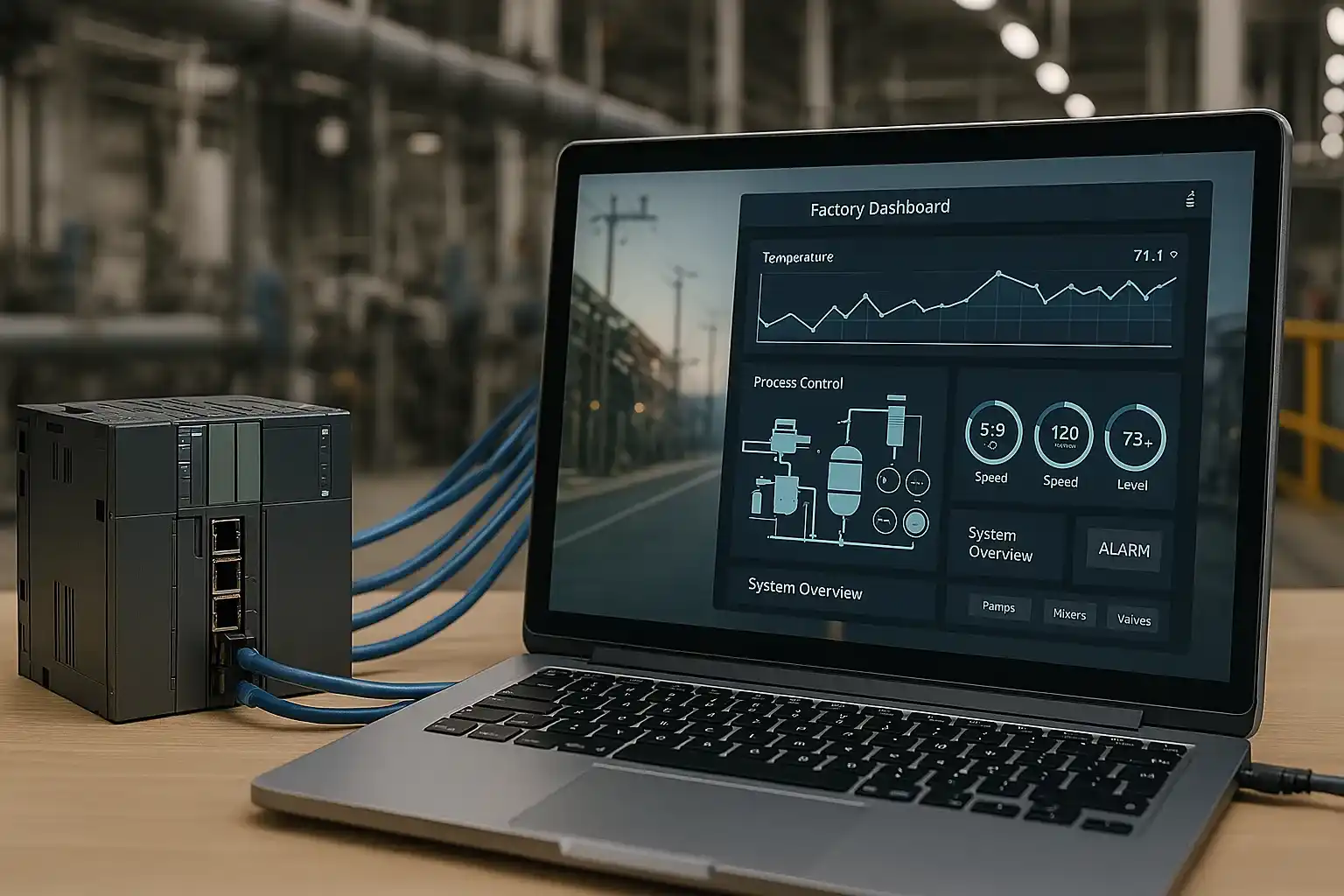
Many engineers think that using a PLC means activating digital outputs, reading sensors and running some automatic cycles on a timer basis, period. But that's no longer the case.
A modern PLC, programmed in C#, is an intelligent node in a software network. It not only executes logic: dialogues, learns, adapts. And it can also do it with advanced technologies, which until yesterday seemed out of reach.
Have you ever thought about controlling a system from one web app? To make multiple machines communicate with each other via REST API? To collect data and display it on a real-time dashboard? To train a predictive model that recognizes anomalies and warns before something breaks?
If you've never thought about it, it's not your fault. It's just that no one ever taught you that. No one ever told you that the PLC can step out of the picture, talk to the world, and become part of one complete software strategy.
In PLC programming course, you don't just "pass the contacts". You enter a new mindset, where each plant is a distributed system, governed by code, observable, testable, scalable.
The difference between a technician and an industrial developer is not in the number of years of experience. It's in the vision of what a PLC can really do today.
The architectural approach: what distinguishes a programmer from a system builder

In the traditional PLC world, code is born and dies inside the device.
Each logic is written tailored to the panel and the system, difficult to reuse, impossible to extend.
But when you start thinking like a modern developer, every function becomes a module, every rule a configuration.
Separate logic and physical interface it is the first step to building flexible systems.
With C# you can use classes, objects, abstractions to model complex behaviors and maintain them over time.
A control becomes a reusable method, a sequence a managed state, a parameter a configurable external variable.
You no longer write code from scratch, but compose architectures that live beyond the system.
With .NET you can integrate dependency injection, configuration files, structured logging and automatic tests.
The system becomes software, and the software has no limits.
In PLC programming course you don't learn to program a process: you learn to design a system.
Because the leap isn't in the code, it's in the way you start to think.
The future of industrial programming has already begun
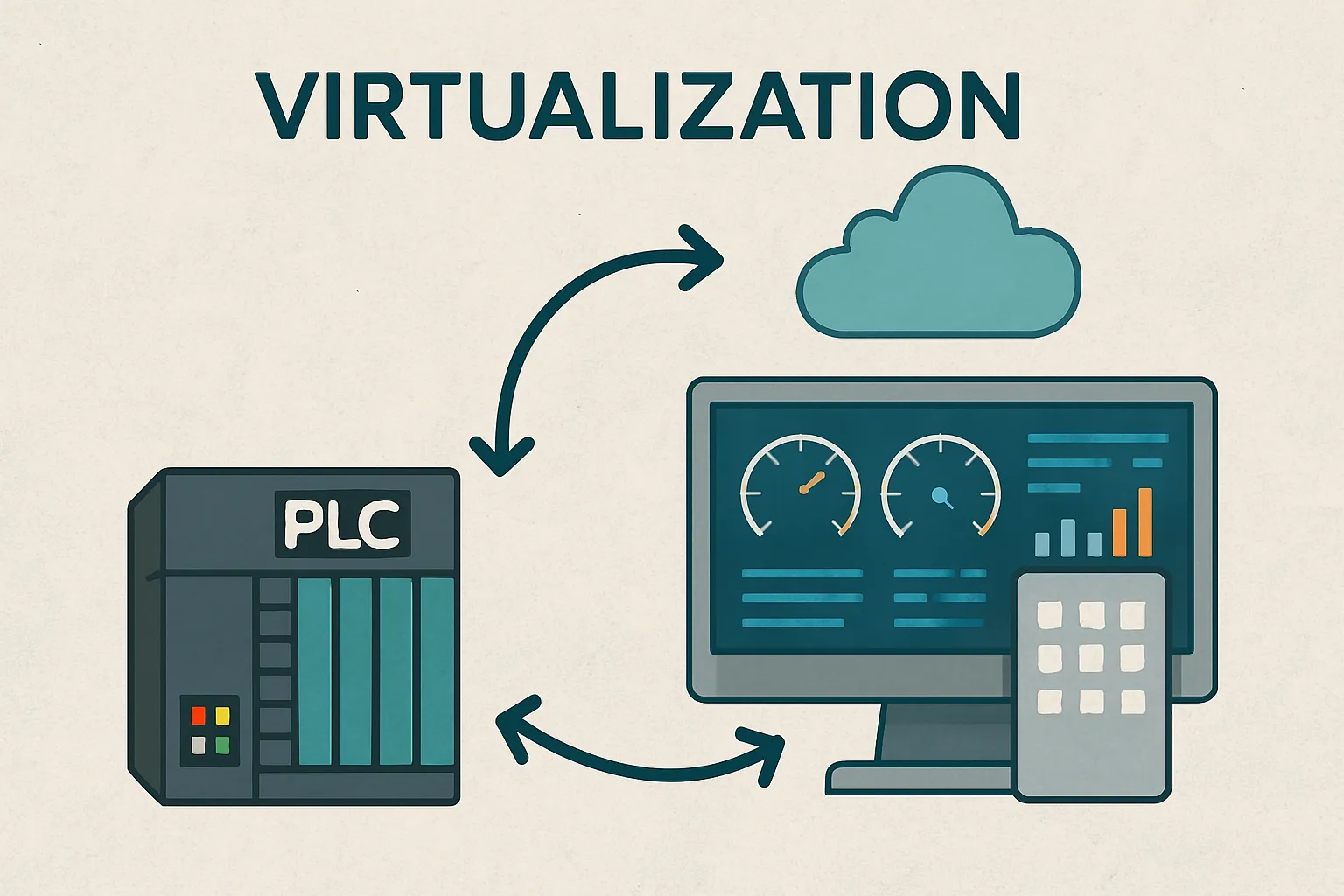
There is no longer any point in wondering whether it will be necessary to evolve. It has already happened, companies that innovate look for developers capable of building solutions.
The PLC programmer who writes only Structured Text or Ladder is increasingly squeezed into an operational role. Important, but replaceable.
Those who know C#, .NET, virtualized environments and modern methodologies, however, become a strategic part of industrial processes.
It is no longer enough to know “how to start an engine”. We need to understand how that same engine communicates with the rest of the system, monitors itself, controls it remotely and evolves with the data.
All this is not utopia, but what is already happening now in every advanced sector: pharmaceuticals, automotive, food, logistics.
And who is able to write modular, testable, replicable logic — using C# and .NET — he is no longer a technician. He is a designer of the new automation.
In PLC programming course you will learn not only to write code, but to be part of this change.
Because transformation begins when you stop wondering “What do I need to know?” and you start saying “this time, I want to be there too”.
What are the PLC languages? And what will your next language be
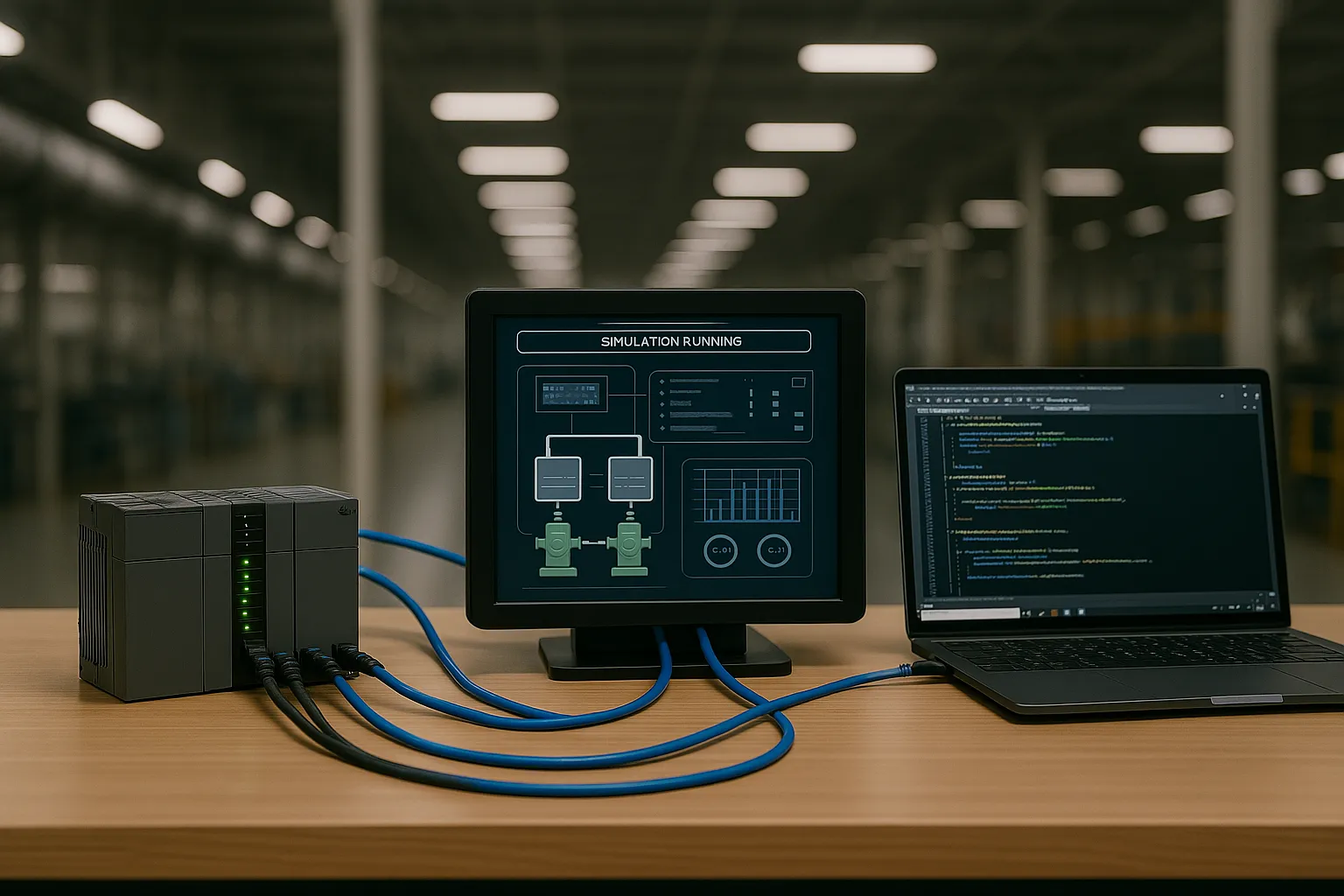
Now you know what PLC languages are. Get to know Structured Text, Ladder, Function Block Diagram.
You wrote logic on gray editors, dragged contacts, adjusted timers. You saw exits light up, signals flash, engines start.
Yet, if you have come this far, it is because something inside you is no longer satisfied.
Why it is not enough that the PLC works. You want to know how they communicate the data. You want to decide what to show to whom. You want to understand where the whole system is going.
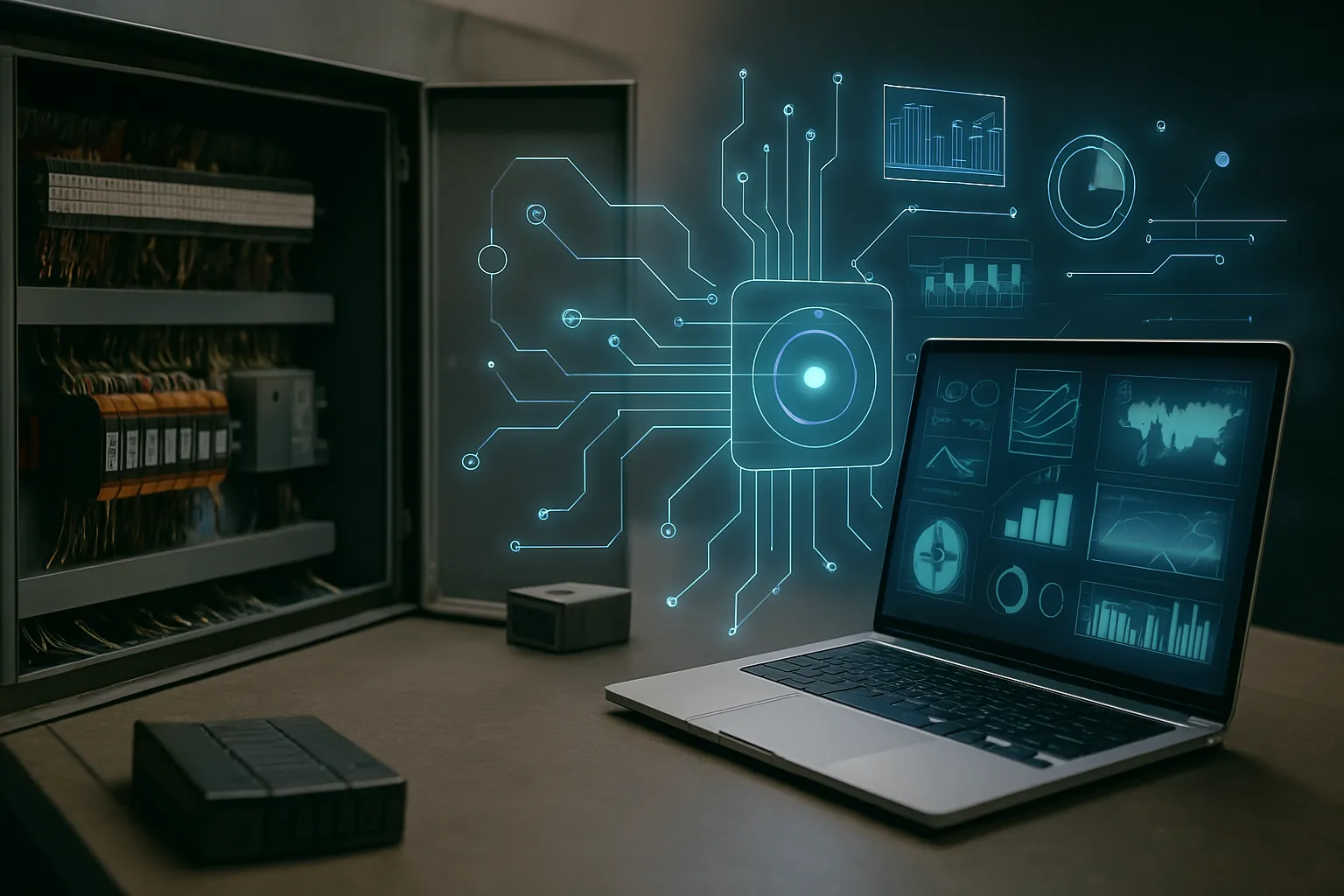
You have understood that automation does not end in the electrical panel. It starts there, but extends towards dashboards, APIs, cloud environments, web applications.
And right there a new language awaits you. A different way of thinking. What you find with .NET, C#, Visual Studio and modern advanced automation technologies.
The PLC programming course it's not just a technical update. It is a map for those who want to cross the border between "who commands the contacts" and "who orchestrates the systems".
Because that feeling that accompanies you, that thirst, it's not weakness. It's a sign that you're ready.
And those who are thirsty don't seek confirmation. Look for a language that takes it further.
And that language, today, is .NET.
Now that you know the PLC languages, it's time to choose which way to go

On the one hand, you can stay where you are. Continue writing ladders, adapt to the tools of the past, accept the limits you know. Work as always, test in the field, correct on the fly. Hope nothing goes wrong.
On the other, there is a new path. The one where you start using .NET, where your logic becomes software, where tests are automatic, projects versioned, and your colleagues look at you with different eyes.
We don't tell you it's simple. But we assure you of one thing: it is transformative.
Because getting out of the old way of working means breaking habits, overcoming fears, accepting that change doesn't come alone — but that must be chosen.
And those who choose .NET today do so because they have understood that every electrical panel has a heart, and that that heart can beat with more intelligence, more control, more future.
The PLC programming course it gives you the tools. But you decide whether to actually use them.
So ask yourself: do you want to continue drawing contacts... or writing the code that governs the system?
The road is there ahead. And don't wait.
Leave your details in the form below