

Are you an aspiring computer programmer and are you observing the rapid progress of Artificial Intelligence with concern?
You're not alone.
In recent times, AI tools can write code and generate programs have thrown many into uncertainty.
Those who are learning to program or dream of becoming a programmer ask themselves with anxiety: "is my future profession as a software developer destined to disappear, supplanted by machines?"
It's an understandable fear.
The media paints scenarios in which AI replaces entire categories of workers, taking away the jobs of millions of people.
Sensationalist headlines they fuel fear that AI will soon be able to do everything by itself, making professionals and specialists obsolete.
This climate generates a widespread sense of instability: is it still worth taking the path of programming, or will AI make the figure of the human programmer useless?
But let's stop for a moment and look at the story.
This isn't the first major technological change to spark panic among workers.
Every era has had its innovations "threatening", yet the final effect was never as expected.
Indeed, it has often been an acceleration of progress, which has eliminated some professions but has opened up new opportunities that were unimaginable until recently.
From the press to computers: the fear of progress

When Johannes Gutenberg invented movable type printing in 1440, scribes, the scribes who copied books and documents by hand, feared for their future.
Their thousand-year-old profession seemed on the verge of extinction.
In a way, they were right: copying texts by hand quickly became useless.
But the change did not mean less work: on the contrary, access to knowledge grew exponentially and new professional figures were born, from editors to journalists, up to written communication experts.
A few centuries later, in 1800s England, mechanized looms brought terror to artisanal weavers.
A group called the Luddites began destroying machinery for fear of losing their jobs.
Yet, in the long term, the textile industry created more jobs than it eliminated: production grew at unimaginable rates, costs fell and the sector employed thousands of people in new jobs.
Moving closer to the present day, there is an example that particularly resonates with the world of programming: the advent of computers in the 1950s and 1960s.
At the time, business calculations were done manually by “human computers,” people who specialized in complex mathematical calculations.
The introduction of the first electronic calculators seemed like a mortal blow to these professions.
Yet, what happened?
The number of employees in the industry exploded: computers needed maintenance, programming, optimization.
The figure of the programmer and the entire world of information technology that we know today was born.
AI is only the latest in a long series of revolutions

Today we are faced with a similar situation.
Artificial Intelligence, with its Large Language Models, like the loom or computers, is not destroying job opportunities, it is transforming them.
It is undeniable that some tasks will become obsolete: repetitive and purely executive jobs will be increasingly automated.
But this does not mean the end of programming, but rather an evolution of the role of the programmer.
Already today, tools like the LLM as copilot they can help generate code automatically, but they still require a human expert to evaluate its quality, fix errors and optimize its efficiency.
AI has no creativity, critical thinking or decision-making capabilities: it follows pre-existing patterns, but it cannot design complex software from scratch, nor understand the specific needs of a customer like a software architect would.
So, the real risk is not that AI replaces programmers, but that programmers don't understand how AI programming works are overcome by those who know how to make the most of it as an ally.
In the next paragraph we will see why the human factor remains irreplaceable in software development and how programming is still one of the most promising careers of the future.
AI as a threat: programmers' fears

The idea that AI can steal jobs It's not science fiction but a real fear, fueled by studies and newspaper headlines.
A recent report from the World Economic Forum predicts the loss of 14 million jobs worldwide over the next five years due to new technologies.
Similarly, Goldman Sachs estimates that nearly two-thirds of current jobs, in Europe and the US, are to some extent "exposed" to advanced automation.
Faced with these numbers, it is not surprising that many, including programmers, they feel threatened.
According to a recent survey, about 2 in 5 people fear that AI will eventually replace their job or do the main part of it.
This fear, understandable but often exaggerated, leads some to question their choice to be a computer programmer.
But is the vision of a future in which AI completely replaces developers really founded?
Or a different scenario is emerging, where programmers and AI work side by side?
In the next section we will see why the future is not as bleak as it seems.
The future is in your hands: become a programmer in step with the times, not a simple executor!
Do you want to be among those who participate in the revolution or among those who suffer it?
With our “AI Software Architect” course on .NET and C#, you will learn to design scalable systems, optimize code and integrate AI into your projects.
The market needs experts, not executors.
It only takes a few seconds.
Leave your details and we will set up a free introductory call: you will discover how our path can make you become a sought-after and well-paid programmer.
Fill out the form now!
Programmers and AI: why humans remain indispensable
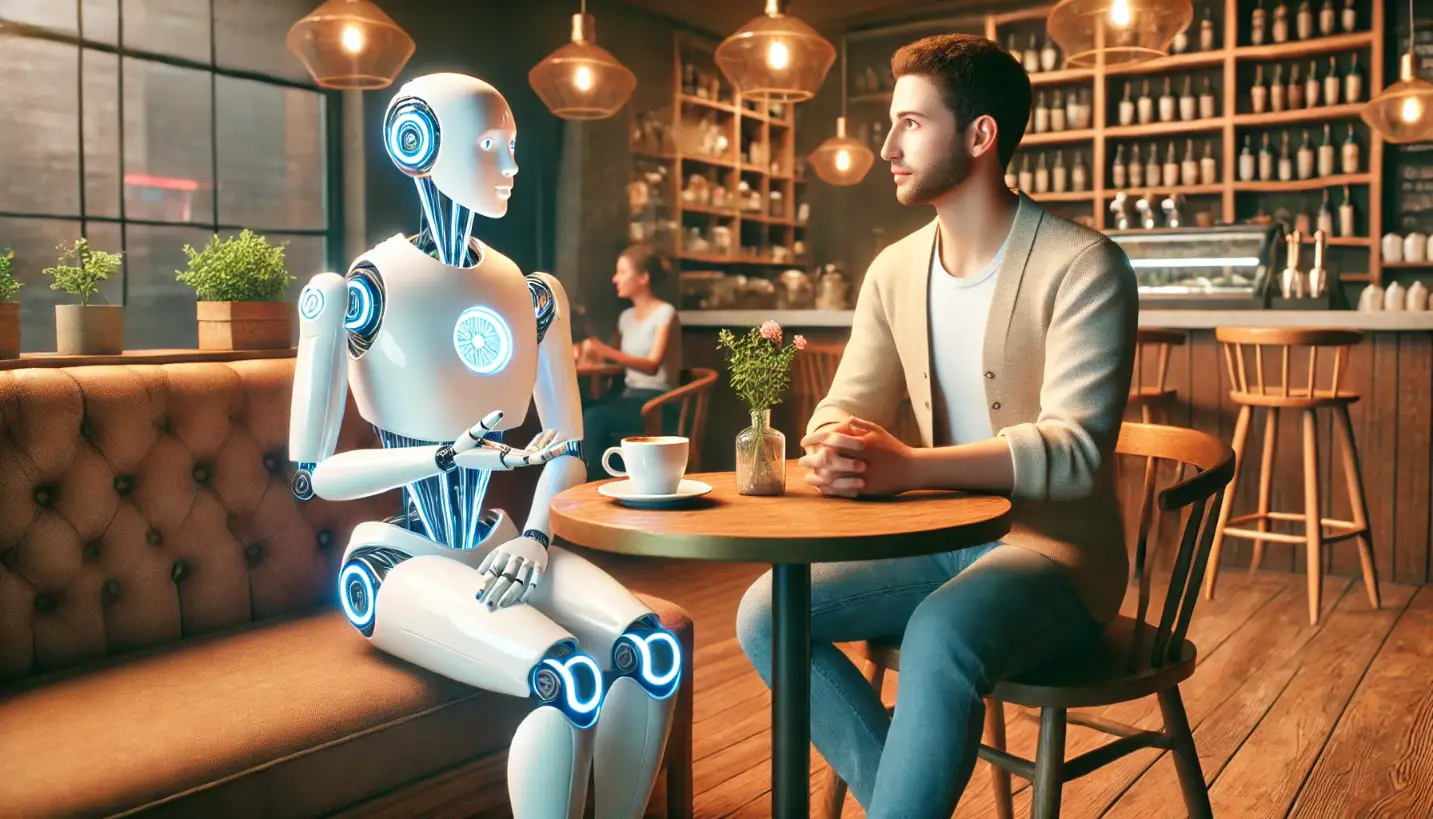
To balance the discussion, let's remember the words of a pioneer of information technology.
Ada Lovelace, the first programmer in history, wrote in 1842:
In other words, a machine follows instructions and data provided by humans: does not invent new concepts on his own initiative.
This observation, more than a century old, still holds a fundamental truth in the modern age of AI.
Artificial Intelligence, however advanced, it still has important limitations compared to the human mind.
For example, he struggles to fully understand the context of a problem, the nuanced understanding that comes naturally to an experienced programmer.
Furthermore, AI has no true creativity: it generates solutions based on training data, but cannot truly think outside the box like a human.
It is therefore no coincidence that the code is automatically generated must be reviewed often: It may appear to work, but it may contain hidden errors or suboptimal solutions that only the trained eye of a human developer can spot.
There are areas in which the presence of man is irreplaceable.
Solving complex problems often requires contextual and emotional intelligence that AI does not possess.
We think about the analysis of a customer's requirements, the architectural choices to be made by balancing pros and cons, or the need to consider ethical and security implications.
These are all aspects where human ingenuity, critical thinking and experience are needed.
Even on a practical level, AI should be seen as a complement, not a replacement.
Yes, some basic tasks will be automated, generating repetitive snippets (it's a small snippet of reusable code), unit testing, translating simple specifications into code, reducing the time programmers have to spend on these routine tasks.
But this frees precious resources, allowing programmers to focus on higher-level tasks.
Instead of writing every trivial part of a program from scratch, they will be able to dedicate themselves to design, optimization and innovation, guiding AI where it could not go on its own.
In summary, the human factor remains central in software development.
AI is a productivity amplifier, but it needs human minds to indicate its objectives, who verify the results and add that touch of creativity and critical sense that is impossible to replicate in silicon.
AI at the service of programmers: a daily ally
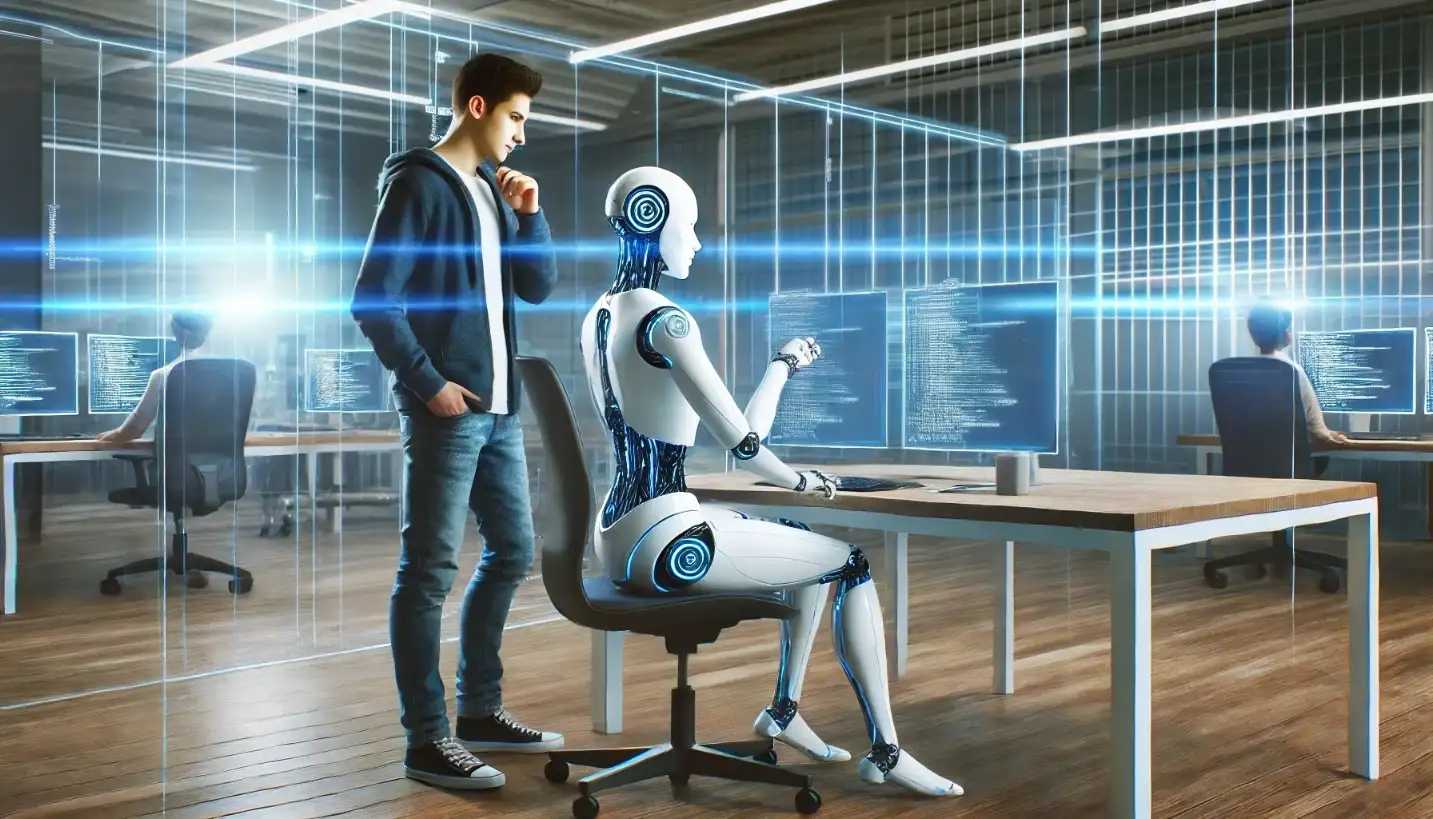
At this point it is clear that AI does not replace the figure of the developer, but it can actually enhance their capabilities.
And in fact many programmers are already using it as an ally in their everyday work.
According to the Stack Overflow 2023 survey, nearly half of developers (44%) already use AI tools to code, and another 26% plan to do so soon.
The most popular tools are real aces up the sleevereal aces up the sleeve that help you write code faster and with fewer errors.
No wonder: AI offers support on various fronts, making the programmer's life easier.
Here are some concrete examples of what it can do:
- Automation of repetitive tasks: generate standard portions of code (boilerplate - indicates portions of code that are standardized, repetitive and often necessary for the operation of a program, but which do not add specific logic to the application), routine scripts or basic documentation automatically.
- Intelligent debugging and code reviews: suggest fixes, find bugs in the code, and even detect security issues, like an assistant checking your work.
- From natural language to code: translate a textual description of a requirement directly into a working code skeleton, facilitating prototypes and early development.
In short, AI acts as a productivity amplifier for the programmer.
As Satya Nadella, current CEO of Microsoft, states:
"AI will not replace programmers, but will become an essential tool for them.
It's about empowering human beings to do more, not less."
The real difference will be knowing how to use these tools.
A recent saying summarizes the situation well:
“AI won't steal jobs: someone who knows how to use it will take it.”
In other words, programmers who take advantage of AI and learn to exploit it they will have a huge advantage on those who remain still.
Becoming a programmer today: a future of opportunities

Looking at the job market, the demand for programmers is far from declining, in fact, it continues to grow.
With ubiquitous digitalization, software developers they are among the most sought after professionals to the world.
We're not just talking about tech companies: practically every business, from finance to fashion, needs programming experts on its team.
The result?
A chronic shortage of qualified programmers.
It is estimated that 1.4 million developers were missing globally in 2021, a gap expected to rise to as many as 4 million by 2025.
In the United States, for example, the software sector will grow by 25% within the next 6/7 years, a growth rate much higher than average.
They are numbers that clearly indicate how opportunities abound for those who want to become programmers today and will also do so in the years to come.
In other words, the world is hungry for developers.
Investor Marc Andreessen made this statement in 2011, and never before has this vision become reality:
Every industry is becoming software-driven, from health to agriculture.
This means that the figure of the computer programmer remains fundamental: job positions are not disappearing, if anything they are evolving and multiplying in new areas.
Paradoxically, the advance of AI is creating new professional opportunities for programmers.
The search for developers with skills in fields such as AI and Machine Learning, data analysis, cybersecurity - all sectors that require solid programming foundations - is growing.
Those who enter the world of software development today, and continue to update themselves on emerging technologies, will have a broad and diversified career panorama ahead of them.
Instead of fearing AI, you might want to think about how you can use it to your advantage in your development career.
Companies will increasingly look for hybrid figures: programmers capable of combining traditional skills with mastery of AI tools.
Becoming one of these professionals means making yourself irreplaceable.
Embrace AI and jump-start your programming career
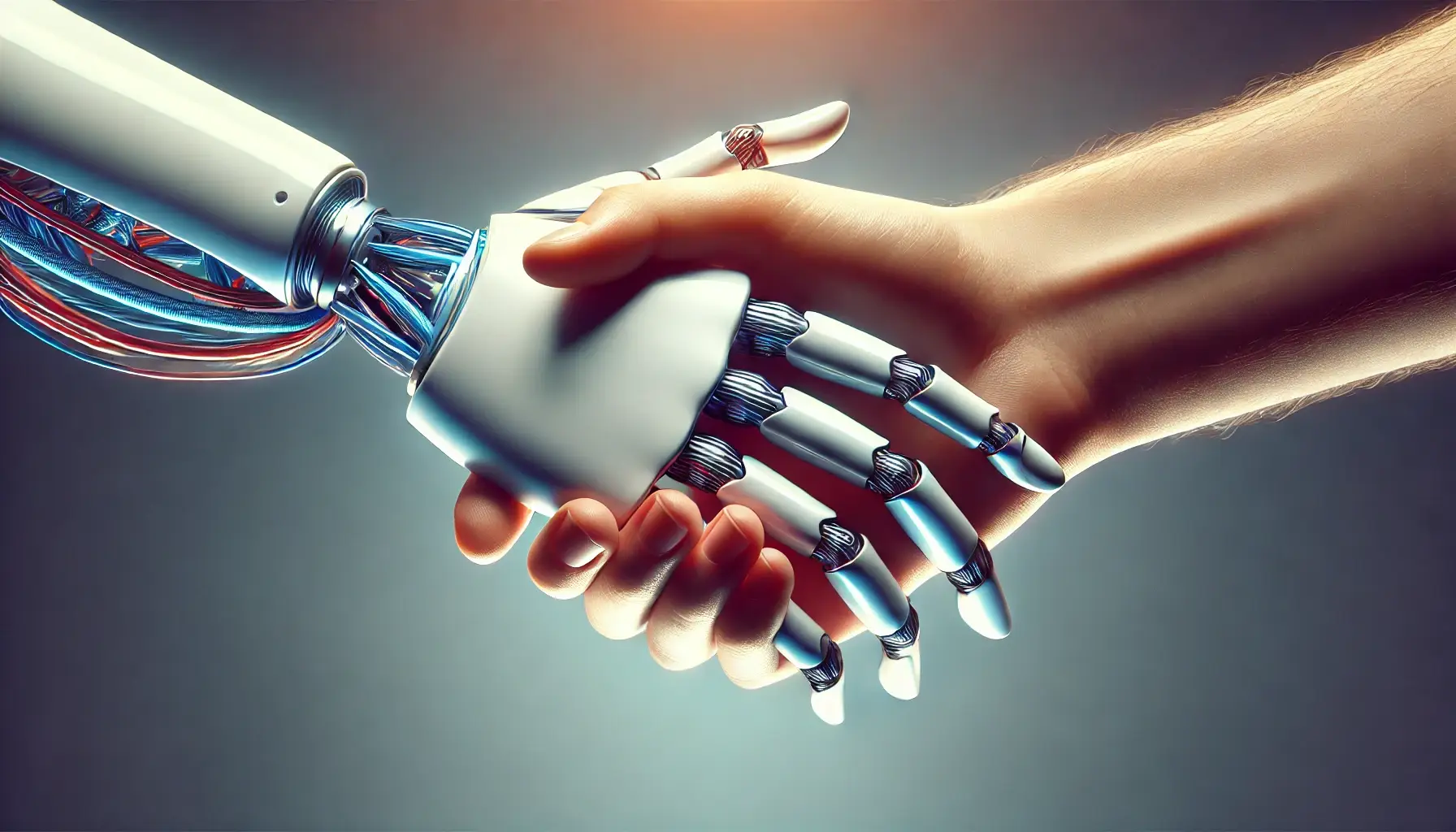
In conclusion, AI is not an enemy to escape from, but a technology to be embraced with an open mind.
We have seen how the role of the programmer is still solid and full of prospects.
Indeed, thanks to AI this job can become even more stimulating: with the right tools, a programmer can achieve results that were unthinkable just a few years ago.
The key is to maintain a high desire to learn and constantly improve.
As Steve Jobs said:
More than ever, in an era of rapid change, Knowing how to program teaches you to adapt, to solve problems creatively and not to fear innovation.
Now it's your turn to take the next step.
You have the opportunity to transform uncertainty into concrete opportunity.
Don't wait any longer: fill out the form below to access our "AI Software Architect" course based on .NET and C#.
This is a practical and advanced path that will give you the skills to design robust and scalable systems, master the most requested enterprise technologies and understand how to best integrate AI into software architectures.
Invest in yourself and your training, and you will see that Artificial Intelligence will become your most precious ally.
Act now!
Become the programmer companies are looking for.
Our "AI Software Architect" course will give you the skills necessary to become a sought-after professional who can choose the companies to work with and the projects to which to contribute.
Places are limited!
We deliberately keep a small number of students for each class, because the quality of education is our priority.
We don't believe in crowded and impersonal courses: we want each participant to receive the support necessary to truly grow.
With smaller groups, we can follow each student more carefully, ensuring that no one is left behind.
Your growth is our primary interest.
Book a free introductory call now and find out how to transform your career into a high-value one.
Reserve your place now by leaving your details, before someone else gets ahead of you and secure this opportunity!
Leave your details in the form below