.NET architecture for teams that want control instead of endlessly chasing the codebase
This category shows how design patterns, DDD, and CQRS help you make stronger structural decisions, remove useless technical debt, and build .NET systems that do not collapse as the domain evolves.
Design patterns are not recipes to copy: they are answers to real problems
Every time I see a project with classes named FactoryManagerHelperService, I know I am looking at a misuse of the pattern: someone learned the name without understanding the problem that pattern is supposed to solve.
A design pattern is a consolidated solution to a recurring problem.
The Repository does not exist to satisfy an abstract architectural requirement: it exists because separating domain logic from data access makes code testable, replaceable, and readable by anyone who knows the pattern.
If nobody in your project can explain why a given layer exists, that layer probably should not exist.
My approach to patterns is pragmatic.
First I understand what the actual problem is, then I evaluate whether a known pattern solves it better than a custom solution.
Very often the answer is yes: not because patterns are magic, but because they represent decades of mistakes other people have already made.
This category exists to help you understand patterns as thinking tools, not checklists.
When you know why Repository, CQRS, Mediator, or Specification exist, you stop applying them mechanically and start using them where they produce real value.
When architecture becomes an economic problem
Software architecture is not an academic topic.
It is an economic problem that manifests over time.
A poorly designed system does not collapse on day one.
It holds.
Then it slows down.
Then every change takes twice as long.
Then key people become irreplaceable because only they know the dark corners of the code.
Then testing becomes impossible.
Then the emergency refactoring arrives, which usually costs five times what doing things right from the start would have cost.
When a team asks me for help with a struggling system, I almost always find the same root causes: excessive coupling between components, no clear boundaries between domain and infrastructure, business logic scattered everywhere, no naming consistency.
These are all symptoms indicating the absence of a conscious architectural model.
Patterns do not eliminate domain complexity.
They make it governable.
And the difference between governable complexity and chaotic complexity is often the difference between a company that can release and one that is afraid to change anything.
| Symptom | Common architectural cause | Pattern-based intervention |
|---|---|---|
| Every change breaks something unexpected | Strong coupling between modules | Separation with Repository, Mediator, domain events |
| Nobody can test the key functions | Logic mixed with infrastructure | Clean Architecture, Dependency Inversion |
| Bugs multiply under load | Shared state and missing boundaries | Aggregate Root, Bounded Context, CQRS |
| Team slows as the system grows | No shared language on the code | DDD and Ubiquitous Language |
DDD, CQRS, and Clean Architecture: when to use them and when to avoid them
One of the most expensive mistakes I see in teams is adopting DDD, CQRS, or Clean Architecture because "that is how it is done" or because they saw them in a YouTube talk.
These are high structural complexity patterns: they bring real benefits only when the domain justifies them.
DDD makes sense when the complexity of the system lives in the business domain, not in the infrastructure. If you are building a contract management system, approval workflows, or complex pricing logic, DDD gives you the tools to model that domain explicitly and in a way shared with the business. If you are building a CRUD with some validation, DDD is overkill.
CQRS makes sense when the read and write models have very different requirements: performance, denormalized projections, asymmetric scalability. If you apply CQRS to a system where reading and writing have the same simplicity, you are adding layers without adding value.
Clean Architecture makes sense when you want the domain to not depend on the infrastructure and for the system to be testable independently of the database, framework, or UI. But it requires discipline: without a deep understanding of the dependencies between layers, it becomes a labyrinth of useless interfaces.
The principle I always use: apply structural complexity only where the complexity of the problem justifies it.
Simple code that works is always better than complex code that follows a pattern.
How to introduce patterns in an existing project without blocking the team
Nobody has the luxury of rewriting everything from scratch.
Patterns must enter existing systems incrementally, without blocking deliveries and without frightening the team.
My approach is always by risk and impact priority.
I do not start with the layer that would be most satisfying to refactor: I start with the code that causes the most problems, that nobody wants to touch, that slows down every sprint.
Often it is business logic scattered across controllers, direct database access everywhere, or a three-thousand-line class that does everything.
The first step is not to introduce a pattern: it is to understand where the code produces friction and why.
Only then do you choose the tool.
Sometimes extracting a method is enough.
Sometimes a Repository is needed.
Sometimes the problem is an unrecognized Bounded Context mixing incompatible responsibilities.
What does not work is imposing an architecture from above and expecting the team to respect it without understanding it.
Patterns are adopted when the team understands the problem they solve.
Training is part of the process, not a separate prerequisite.
How to read the articles in this category
The articles you find here are not tutorials that teach you to implement a pattern in twenty minutes.
They are analyses of real problems, with the reasoning that leads to choosing a certain structure and the consequences that choice produces over time.
Some articles start from a symptom: a system that does not scale, a test that is impossible to write, a function that nobody can modify without fear.
From there they arrive at the pattern that solves that specific problem, explaining why it works and where it stops working.
If you want to use this category most effectively, I recommend not reading it in alphabetical order by pattern.
Start from the symptom you recognize in your system, find the article that addresses it, understand the reasoning, and then evaluate whether the context is similar enough to make the same solution applicable.
Patterns are not copied.
They are understood and adapted.
Analyses, cases, and articles on design patterns, DDD, CQRS, and .NET architecture
11 articles found

Clean Architecture in C#: Structure a Project That Actually Scales
How to implement Clean Architecture in C# without dogma, with real structure, layer dependencies, testing strategies and practical trade-offs.

7 architectural patterns to eliminate technical debt
90% of projects accumulate debt by copying architectures without context. 7 criteria to choose patterns that avoid slowdowns.

Technical debt in software: complete guide to management and resolution
Technical debt slows down teams and generates bugs. Discover causes, impacts and strategies to manage and resolve it without rewriting everything.

The Unit of Work pattern explained for those who want to write code that doesn't cheat
Scattered bugs? Saves without logic? The Unit of Work pattern saves you before it's too late. Learn how to implement it with Entity Framework Core.

Design Patterns in C#: Transform code chaos into architectures that stand the test of time
The Secret to Evolving Architectures: Master Design Patterns in C#. Write less, plan better.

Because what I'm about to tell you could save your development team (and your company) from the technical collapse that no one sees coming
Learn how to prevent technical collapse and protect your development team from complex architectures, before they crash your business.

Domain Driven Design: the fastest way to write testable and reality-aligned code
Domain Driven Design helps you model your domain, reduce architectural confusion, and achieve clean, testable code.

Is the Singleton Pattern an Ally or a Saboteur? Few people know how to use it and you will be one of them
Singleton in C#: how to use it safely, clearly and without the typical mistakes of those who improvise.

CQRS isn't just a pattern - it's the breakthrough you've been looking for
CQRS is the answer to unmanageable code. Find out now and change your way of designing software.
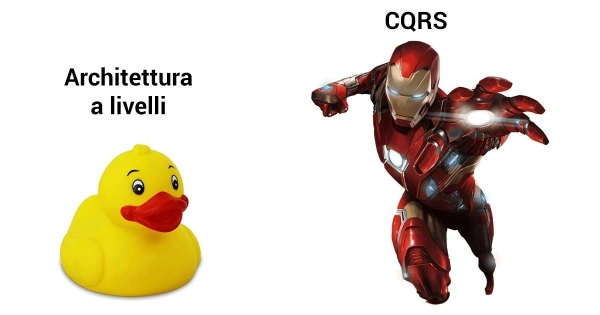
How the CQRS architecture can take your applications to new heights
Build super-fast .NET applications with this powerful pattern and CQRS architecture!
When architecture stops being theory
Architecture stops being theory when software must be maintained for years, coordinated across multiple people, and changed without fear. At that point patterns, boundaries, and responsibilities are not decorative ideas: they are what prevent hidden costs, regressions, and improvised decisions.
Frequently asked questions
Design patterns are proven solutions to recurring software design problems. They should not be applied by habit, but only when the problem they solve is actually present: complexity in dependency management, excessive coupling between modules, duplicated logic. Applying them indiscriminately increases complexity instead of reducing it.
Design patterns, such as Singleton, Repository, or Factory, concern structure at the class and component level. Architectural patterns, such as CQRS, DDD, or Clean Architecture, concern the organization of the entire system: how layers relate, where responsibilities reside, how data flows. The former are used inside the latter.
Domain-Driven Design in .NET is applied by structuring code around the business domain: entities, value objects, aggregates, and repositories reflect the language of the business. In practice this means choosing meaningful names for classes and methods, isolating domain logic from infrastructure details, and building a clear bounded context before thinking about technical patterns.
No. CQRS separates read and write models and can be useful even in simple form, without Event Sourcing. Event Sourcing adds event persistence as the source of truth instead of current state: it is significant complexity that is only justified when the history of operations has autonomous business value. Combining them without a solid reason creates overhead without benefits.
Sources and references
Martin Fowler, Patterns of Enterprise Application Architecture
The definitive reference for anyone working on enterprise systems. Fowler catalogs patterns with a rigor few authors have matched. I recommend it not to memorize recipes, but to understand the reasoning behind every structural choice: why a boundary exists, when it becomes a constraint, and when it becomes a relief.
Martin Fowler, Patterns of Enterprise Application Architecture
Eric Evans, Domain-Driven Design
The book that changed how technical teams talk to the business. DDD is not a checklist of classes to create, but a way of building models that actually reflect the domain. I cite it because whenever a project becomes hard to explain, the problem is almost always the absence of a shared language between those who build and those who decide.