Retrieval, embeddings, and vector search for teams that need grounded answers instead of noise
This category shows how to design RAG pipelines in .NET that connect models, semantic retrieval, and business data so responses become more grounded, more contextual, and more useful in production.
RAG: why the model alone is not enough in enterprise contexts
A language model, however powerful, has two structural limitations that make it unusable in many business contexts: its knowledge stops at the training cutoff date, and it knows nothing about your data.
RAG, Retrieval Augmented Generation, solves both problems.
Instead of relying solely on the model's memory, the system retrieves the most relevant documents at query time and provides them as context.
The model responds based on this specific information, not on statistical generalizations.
The result is a response that can cite sources, that stays current without retraining anything, and that does not invent data because it has it right there.
This is why RAG has become the reference pattern for enterprise applications that need to answer on technical documentation, internal procedures, regulations, or corporate knowledge bases.
But RAG is not a plugin you install: it is an architecture that must be designed.
The quality of retrieval determines the quality of the response far more than the model chosen.
And retrieval depends on how documents were indexed, chunked, and how well the search system understands the user's query.
Chunking, embedding, and retrieval: the choices that determine quality
The three fundamental steps of a RAG pipeline are document chunking, embedding generation, and retrieval.
Each introduces trade-offs that directly impact final quality.
Chunking: how a document is split determines what enters the context. Chunks that are too short lose sentence context; chunks that are too long consume tokens and dilute relevance. Semantic chunking, which respects paragraph or section boundaries, produces better results than fixed-window chunking but requires more preprocessing work.
Embedding: the choice of embedding model affects the quality of semantic search. OpenAI models like text-embedding-3-small and text-embedding-3-large are good defaults for Italian and English; for highly specialized domains it may be worth evaluating models fine-tuned on your own corpus.
Retrieval: pure vector search finds chunks semantically similar to the query, but can miss documents relevant on specific keywords. Hybrid search, combining vector search and full-text BM25, produces more robust results and is used by default in Azure AI Search. Reranking adds a further classification step to improve precision.
| Choice | Impact on quality | Trade-off |
|---|---|---|
| Small chunk size | High precision, limited context | More chunks to retrieve |
| Large chunk size | Rich context, diluted relevance | More tokens consumed |
| OpenAI embedding | High quality, indexing cost | Dependency on external API |
| Hybrid search | Robustness, better recall | More complex infrastructure |
RAG with Semantic Kernel in .NET: the practical architecture
Semantic Kernel in .NET provides the abstractions needed to build a RAG pipeline without coupling the code to a specific provider.
The design allows switching from Qdrant to Azure AI Search by changing configuration, not application code.
The typical pipeline is structured in four phases: indexing (preprocessing + chunking + embedding + storage in the vector store), retrieval (query embedding + similarity search + optional filters), augmentation (injection of relevant chunks into the prompt), and generation (model call with the enriched prompt).
In .NET the critical point is the async management of the entire flow: calls to embeddings, the vector store, and the model are all I/O-bound operations that benefit from correct async/await and, where possible, parallelization.
A common mistake is waiting sequentially for operations that could run in parallel, multiplying latency.
The other critical point is testability: Semantic Kernel's interfaces allow replacing real components with mocks for tests, but this requires a conscious design of the composition root to avoid non-injectable dependencies.
When RAG is not enough and which alternatives to consider
RAG is powerful but not universal.
There are scenarios where the pattern is not the right answer.
When questions require reasoning on structured data, an LLM that generates SQL or calls tools that query the database directly produces better results.
RAG on a textual dump of structured data is a solution that works in prototypes and degrades in production.
When the document base is very large and heterogeneous, retrieval quality tends to degrade because relevant documents get lost in the mass.
In these cases Graph RAG, which builds a graph of relationships between concepts instead of indexing flat text, can significantly improve recall on complex queries.
When latency is a tight constraint, a RAG pipeline with retrieval, reranking, and generation may be too slow for certain use contexts.
The options then are pre-caching responses on frequent queries, reducing retrieval steps, or using faster models even at the cost of quality.
The choice of AI architecture is never final: it must be reassessed as you understand real usage patterns and the limits that emerge in production.
Analyses, cases, and articles on RAG, vector search, embeddings, and retrieval
8 articles found

AI memory is the way to turn a model into a system that actually learns
A model has limited memory, find out how you can build persistent memory with RAG and make the AI more powerful.

Vector indexing is the trick that makes research in artificial intelligence immediate
Vector indexing is the mechanism that allows Qdrant and other vector databases to respond quickly even with millions of saved data.
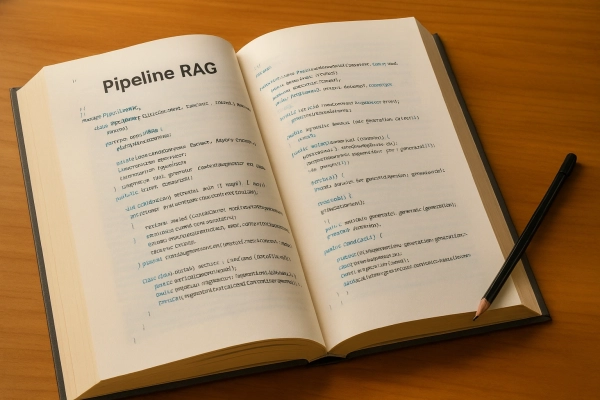
RAG pipeline: the path that connects documents to artificial intelligence responses
The RAG pipeline connects business documents to AI responses, ensuring a stable, reliable and truly useful flow.

Qdrant vector database the heart of semantic search and RAG
Qdrant is a vector database that stores and searches embeddings in a fast and scalable way, giving real memory to artificial intelligence systems

RAG in software development: reliable AI answers without hallucinations
RAG connects real data and AI models to obtain reliable answers in software development, reducing errors and hallucinations
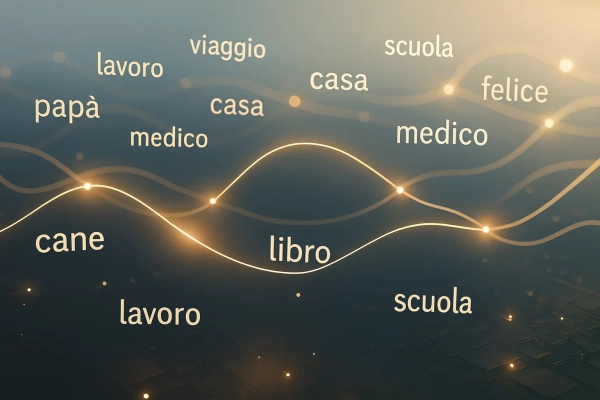
Semantic search: the natural way to find information beyond keywords
Semantic search uses meaning to find more accurate and natural information, overcoming the limitations of keyword-based search

Embedding AI, the secret language that allows artificial intelligence to understand your data
AI embeddings transform texts into numbers useful for models and enable semantic and RAG search, making the software more intelligent and reliable.
When RAG makes a real difference
RAG makes a real difference when a company has documents, procedures, data, and know-how scattered across systems that must become reliable answers. That is where a well-designed pipeline reduces hallucinations, improves context, and turns AI from a promise into an operational tool.
Frequently asked questions
RAG, Retrieval Augmented Generation, is an architectural pattern that allows an LLM to answer based on specific documents instead of only its pre-trained knowledge. It is important in enterprise contexts because it reduces hallucinations, keeps responses up to date without retraining the model, and allows proprietary data to be used securely.
Fine-tuning modifies the model weights to adapt it to a specific style or domain. RAG does not touch the model: it retrieves relevant information at query time and provides it as context. RAG is preferable when data changes frequently, when source traceability is important, or when the cost and time of fine-tuning cannot be justified.
With Semantic Kernel in .NET you define a VectorStore (Azure AI Search, Qdrant, or in-memory for tests), index documents with embeddings generated by a model like text-embedding-ada-002, and build a pipeline that retrieves the most relevant chunks and injects them into the prompt before the model call. The result is a response grounded in your documents.
RAG is not enough when questions require multi-step reasoning on structured data (SQL or tool use is better), when retrieval latency is incompatible with the user experience, or when documents to be indexed are so large and poorly structured that retrieval quality degrades. In these cases agents with tool use, graph RAG, or hybrid pipelines are considered.
Sources and references
Qdrant documentation
Qdrant is the vector database I use and recommend for self-hosted or cloud RAG systems. Its documentation is excellent for understanding filtering, payload, collection management, and performance. I cite it as a practical alternative to Azure AI Search when more infrastructure control is needed or when the project is not fully Azure-based.
RAG for Knowledge-Intensive NLP Tasks, Lewis et al., 2020
The original Facebook Research paper that defined the RAG pattern. I cite it because reading the primary source clarifies the original model's limitations, the role of the retriever and generator, and why many modern implementations diverge from the original architecture in ways that are worth understanding.